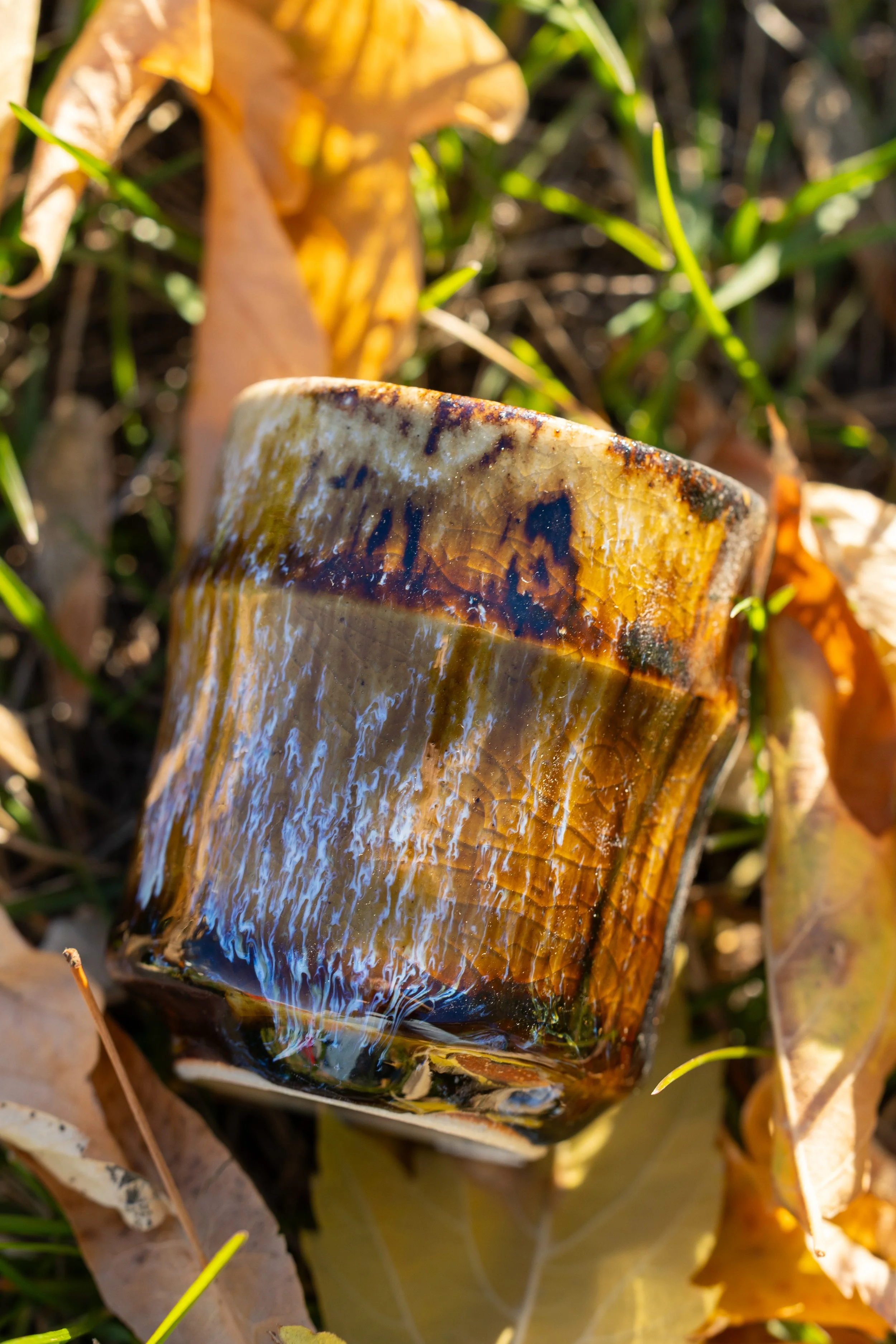
Building Corbridge Pottery: Salt, Wild Clay, in Logan, Utah
Hey — I’m Adam. I make pots here in Logan, Utah.
It didn’t start that way.
The first time I sat down at a wheel, I couldn’t center the clay. It buckled and wobbled under my hands. I remember walking out of the studio with dried slip on my jeans and one small, crooked bowl that probably should’ve gone straight back into the reclaim bucket.
But something about it stuck.
I didn’t grow up planning to become a potter. I came to clay later — after school, after a few jobs that didn’t quite fit. I needed work that felt honest. Something physical. Something that pushed back a little. Clay does that. It doesn’t lie to you. If you rush it, it shows. If you’re distracted, it shows that too.
Over time, what started as curiosity turned into something steadier. The more I worked, the more I wanted to understand not just how to make a pot — but how fire, material, and place shape the final piece.
Living and working in northern Utah has a way of getting into what you make. The dryness, the light, the mineral soil — it all feels present. That’s part of why I’m building a Utah salt kiln here in Logan. Salt firing isn’t the easy route. It’s slower. Less predictable. Harder to control. But when the salt vapor hits the clay at high heat and fuses with the surface, the results carry the mark of fire in a way glaze alone never quite does.
There aren’t many people building a Utah salt kiln, especially in this part of the state. That challenge is part of the draw. I’m not interested in copying surfaces I can buy out of a bucket. I’m interested in process — in what happens when you commit to something that takes time to learn.
Corbridge Pottery is still growing. The kiln is still in progress. The testing is ongoing. Some pieces come out better than I expected. Some go straight into the shard pile. That’s part of it.
What I’m working toward is simple: honest Logan Utah pottery shaped by place, material, and fire. Work that feels steady in your hands. Pieces meant to be used — not just looked at.
This blog is where I’ll document that process — the kiln build, the experiments, the setbacks, and the pieces that finally feel right. If you’re interested in following along as this studio takes shape, I’m glad you’re here.
— Adam