Logan Utah Salt Fired Pottery | Utah Salt Kiln Project
If you search for salt fired pottery in Utah, you won’t find much.
That’s part of the reason I’m building a salt kiln here in Logan.
But the real reason goes back to my time at Utah State University.
While I was studying there, I had the chance to be part of three salt firings. I still remember the first one — the heat rolling off the kiln, the rhythm of feeding in salt, the waiting. There’s a moment in a salt firing where everything feels suspended. The kiln is sealed, temperature is climbing, and you know something irreversible is about to happen.
When we unloaded that first firing, I was hooked.
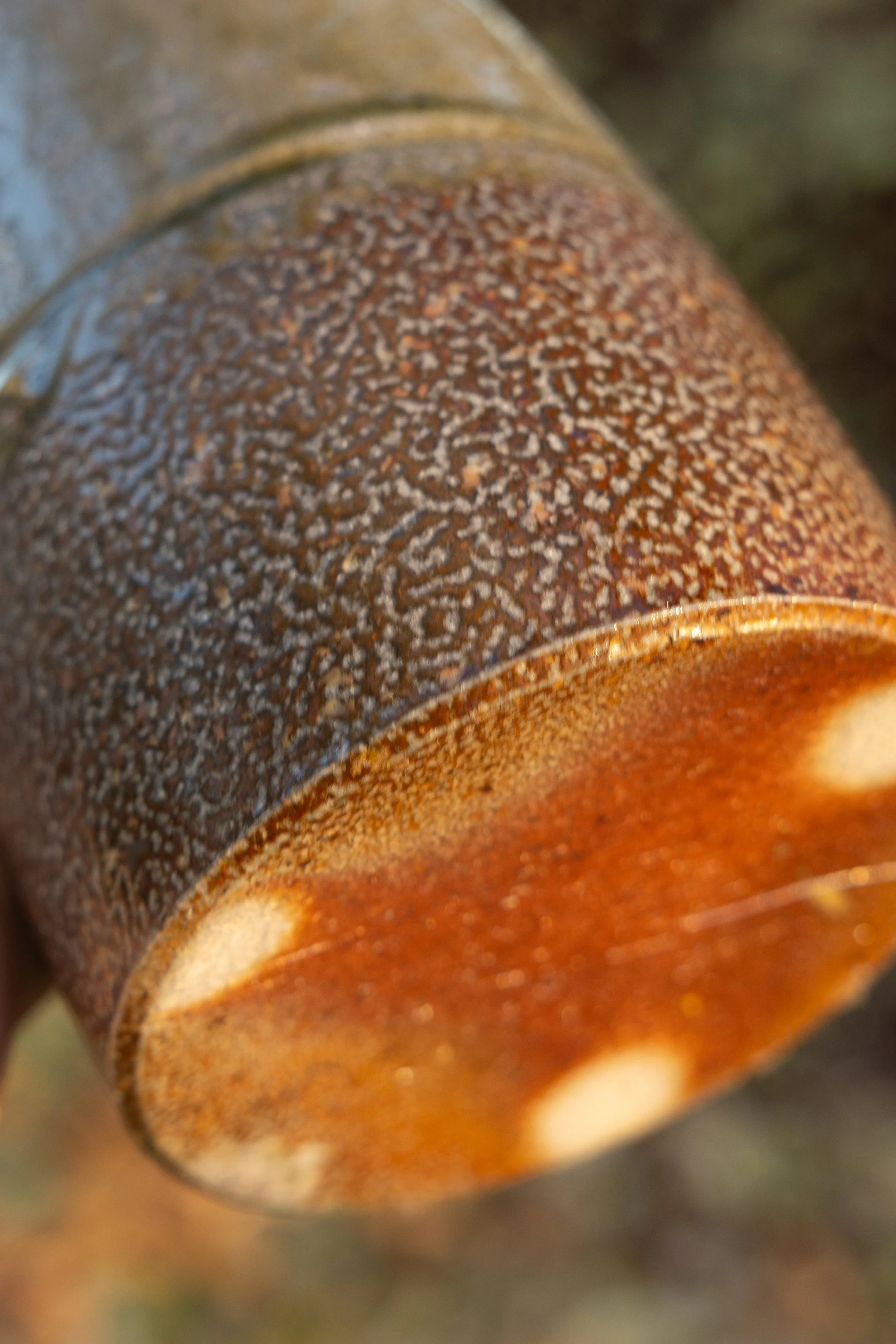
The surfaces weren’t painted on. They weren’t controlled in the usual way. The flame had marked them. The vapor had moved through the chamber and left evidence behind — soft orange peel texture, flashing where the heat hit hardest, subtle variations that couldn’t be repeated exactly.
It felt alive.
That was the first time I saw what a Utah salt kiln could produce. And from that point on, I knew I wanted one of my own.
Salt firing works differently than most electric kiln firings. At around 2,300 degrees, rock salt is introduced into the kiln. The salt vaporizes instantly. The sodium bonds with silica in the clay body, creating a natural glaze surface formed entirely by atmosphere and heat.
The kiln doesn’t just fire the pots. It finishes them.
After those firings at Utah State, I started thinking long term. I knew building a salt kiln wouldn’t happen overnight. It meant planning, saving, learning, and committing to a process that doesn’t offer quick results.
So I did.
I’ve spent years dreaming about it. Saving for materials. Studying kiln design. Paying attention to flame paths, stacking patterns, burner systems, and how local clay bodies respond to sodium vapor.
Now I’m at the point where I can build one — and I am.
There aren’t many active salt kilns in northern Utah. Building a Utah salt kiln here in Logan feels both ambitious and necessary. If I’m going to make Logan Utah salt fired pottery, I want it to be rooted in process, not convenience.
This kiln won’t just be equipment. It will shape the identity of the work. There will be failed firings. Adjustments. Long cooling cycles. Learning curves. That’s expected.
But every time I think back to those three firings at Utah State University, I remember why this matters.
Salt firing isn’t just a technique I admire.
It’s the process that made me fall in love with clay in the first place.
— Adam