Designing My Salt Kiln: Early Decisions and Direction
Building a salt kiln doesn’t start with bricks.
It starts with questions.
Before I ever mix fire clay or stack a single course, I’ve had to slow down and think through what this kiln is actually for. Not just technically — but practically. What kind of salt fired pottery do I want to make? How often will I fire? How much space do I realistically need?
Salt kilns aren’t casual projects. Once they’re built, they define the studio.
Why Build Instead of Rent?
I first fell in love with salt firing during my time at Utah State University. Being part of those firings showed me what atmospheric firing could do — how flame and sodium vapor shape a surface differently than any brushed glaze.
But access is limited. Salt kilns aren’t common in Utah, especially in northern Utah. If I want salt fired pottery to be central to my work, I can’t depend on borrowing kiln space forever.
So building my own Utah salt kiln became the long-term plan.
Size Matters
One of the first decisions is scale.
Too small, and you’re constantly firing half loads.
Too large, and it becomes expensive and inefficient to run.
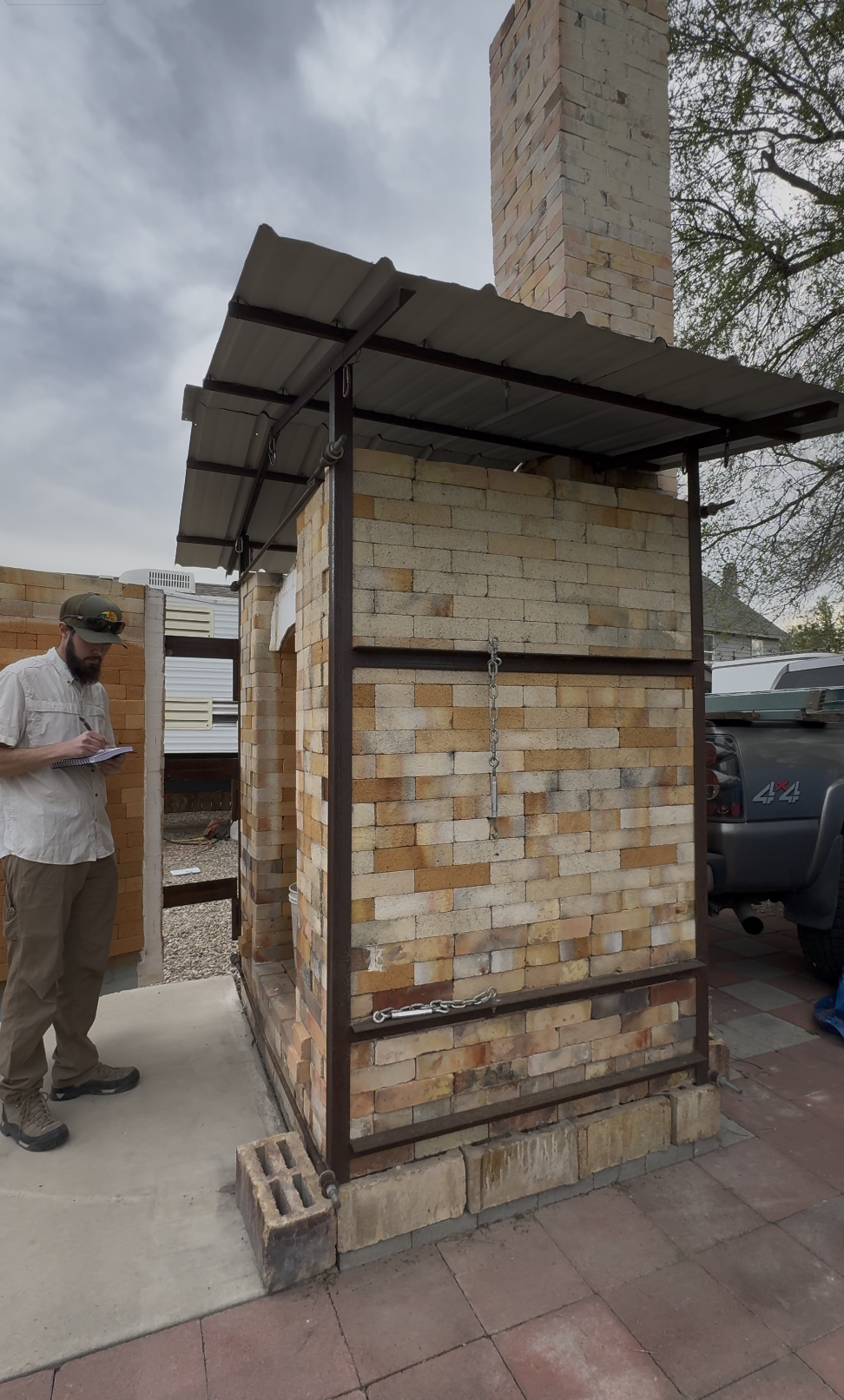
Right now, I’m designing for a kiln that supports steady production without becoming overwhelming. I want enough chamber space to explore stacking patterns and flame path variation — because that’s where salt firing becomes interesting — but not so large that each firing becomes a massive financial commitment.
Salt firing isn’t just heat. It’s fuel, time, and planning.
Fuel and Flame Path
A Utah salt kiln needs to be gas fired. Electric kilns don’t allow for the atmospheric movement required for salt vapor to travel properly through the chamber.
That means burner placement matters. Flame path matters. Exit flue size matters.
The kiln isn’t just a box that gets hot. It’s a controlled environment where combustion and airflow determine how the salt moves. If the flame doesn’t travel well, the surfaces won’t develop properly.
I’ve spent time studying traditional updraft and downdraft designs, looking closely at how other salt kilns manage heat distribution. There’s a balance between efficiency and character. Too even, and you lose some of the atmospheric variation. Too chaotic, and you risk uneven firing.
The design has to serve the kind of salt fired pottery I want to make.
Materials and Longevity
Salt vapor is corrosive. It eats at kiln brick over time. That means material choice matters from the beginning.
High-quality firebrick. Proper arch support. Replaceable components where needed.
This Utah salt kiln isn’t a short-term experiment. It’s a long-term commitment. I want it built to last.
Location and Climate
Northern Utah adds its own considerations.
Dry climate. Winter temperature swings. Wind exposure. All of that affects firing consistency and fuel consumption. The kiln placement needs to account for ventilation and safety, especially when introducing salt at peak temperature.
A kiln doesn’t exist in isolation. It exists in a landscape.
Looking Ahead
Right now, I’m still in the design and planning phase. Sketches. Measurements. Research. Budgeting. Conversations.
There’s a difference between dreaming about a kiln and committing to one.
This salt kiln will shape the identity of my salt fired pottery for years to come. Every early decision — size, fuel system, airflow — will influence how surfaces develop and how often I can fire.
The bricks aren’t stacked yet.
But the direction is clear.
— Adam
