What Is Salt Fired Pottery? | Salt Fired Pottery Utah
If you’re new to ceramics, you might hear the term salt firing and wonder what it actually means.
Salt firing is a traditional high-temperature kiln process where common rock salt is introduced into the kiln during the peak of the firing. When the salt hits the intense heat — usually around 2,300°F (cone 9–10) — it vaporizes instantly.
That vapor changes everything.
The sodium from the salt bonds with silica in the clay body, creating a thin glaze surface directly on the pot. Instead of applying glaze with a brush, the glaze forms inside the kiln through chemistry and flame.
The surface isn’t painted on.
It’s created by atmosphere.
How Salt Firing Works
Pots are loaded into a high-temperature kiln (usually gas fired).
The kiln is brought up slowly to its target temperature.
At peak heat, salt is introduced through small ports in the kiln.
The salt vaporizes and moves through the chamber.
The sodium bonds with silica in the clay and forms a glaze layer.
Because the vapor moves differently depending on flame path and placement, no two pieces come out exactly the same.
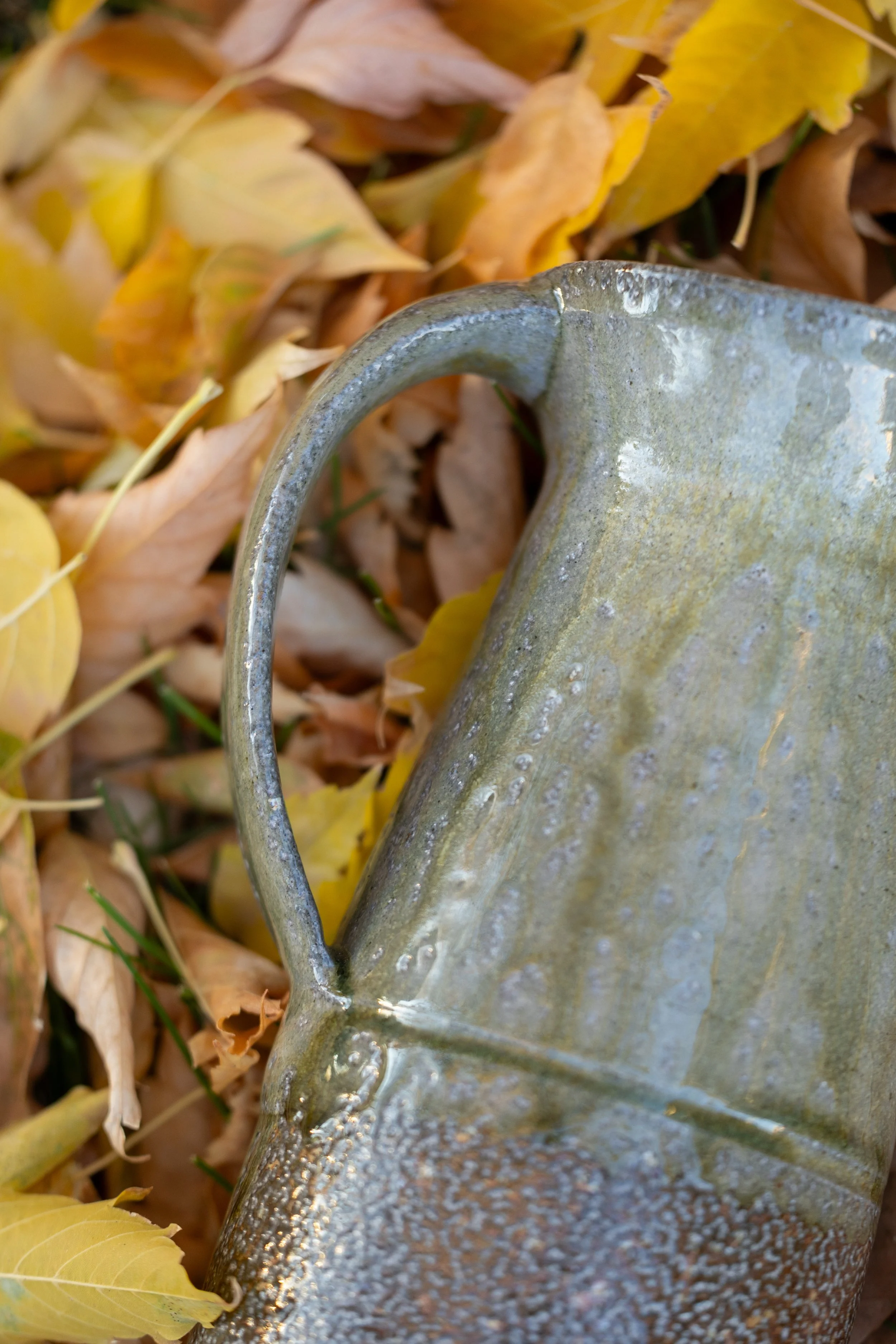
What Salt Fired Pottery Looks Like
Salt fired pottery is often recognized by:
A subtle “orange peel” texture
Soft, glassy surfaces
Warm flashing from flame contact
Natural variation in tone and sheen
The results can range from quiet and earthy to dramatic and heavily textured, depending on how the kiln is fired.
Why Potters Choose Salt Firing
Salt firing is more demanding than many modern electric kiln processes. It requires:
A kiln designed to withstand sodium vapor
Careful ventilation and firing control
Patience through long firing and cooling cycles
So why choose it?
Because salt firing allows the kiln itself to become part of the creative process. Flame, atmosphere, and chemistry all leave visible marks on the surface. The pot carries evidence of how it was fired.
It’s a collaboration between clay, fire, and time.
Is Salt Fired Pottery Functional?
Yes. When properly fired, salt fired pottery is fully vitrified and durable. The glaze layer formed by sodium bonding with silica creates a strong, food-safe surface suitable for everyday use.
Salt firing has a long history in ceramics, but it continues to attract potters who value atmospheric surfaces and high-fire tradition. It’s less predictable than many modern methods — and that unpredictability is part of its appeal.
As I continue building and firing my own salt kiln here in northern Utah, I’ll be sharing more about how this process shapes the work coming out of my studio.
— Adam