Why Handmade Pottery Costs More Than You Think
Every now and then, someone picks up a mug, turns it over, sees the price, and pauses.
I don’t blame them.
We live in a world where you can walk into a store and buy a ceramic mug for a few dollars. It’ll hold coffee. It’ll survive the dishwasher. It’ll look clean and uniform.
So why does handmade pottery cost more?
It’s not just the clay.
When I make a mug here in Logan, it doesn’t begin and end on the wheel. It starts with wedging clay — preparing it so there are no air pockets. Then throwing. Then trimming the foot once it reaches the right dryness. Then pulling and attaching a handle. Then slow drying so it doesn’t crack.
Then the first firing.
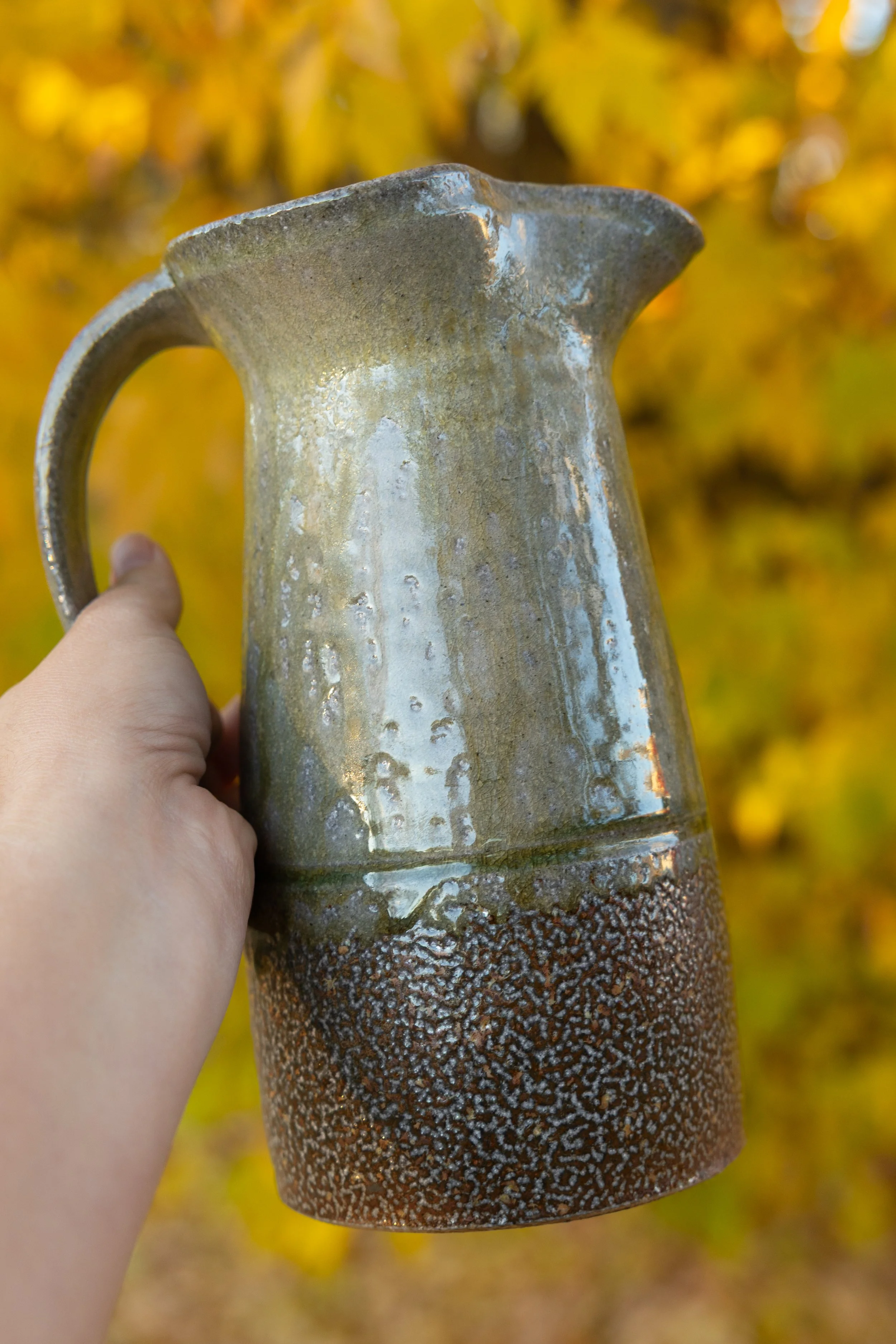
Then glazing — or in the case of salt fired pottery, stacking carefully inside a kiln where flame and vapor will shape the surface.
Then the firing itself.
A high-fire salt firing can take 12 hours or more. It requires fuel. Constant attention. Adjusting burners. Watching cones. Introducing salt at peak temperature. Then sealing the kiln and waiting.
Then cooling.
Then unloading — which is part celebration, part reality check.
Some pieces don’t make it. Some warp. Some crack. Some simply don’t meet the standard I want associated with my name.
Those never leave the studio.
When you hold a finished piece of handmade Logan Utah pottery, you’re holding hours of labor — not just minutes at a wheel.
You’re holding:
Material costs
Kiln construction and maintenance
Fuel
Studio overhead
Years of learning
And the pieces that didn’t survive the process
Mass-produced ceramics are efficient by design. Handmade pottery is slow by design.
It’s not just about buying a mug. It’s about supporting a process that values material, fire, and craft over speed.
And here’s something that matters to me personally:
When someone buys a handmade piece, I know where it’s going. It’s not anonymous. It leaves my hands and enters someone’s daily routine. That connection has weight.
Handmade pottery costs more because it carries more — more labor, more risk, more intention.
That doesn’t mean it’s for everyone.
But for the people who value it, the difference is felt every morning when they reach for the same cup.
— Adam Corbridge
Still choosing slow over easy, one firing at a time.
More of the process lives at adamcorbridgepottery.com
