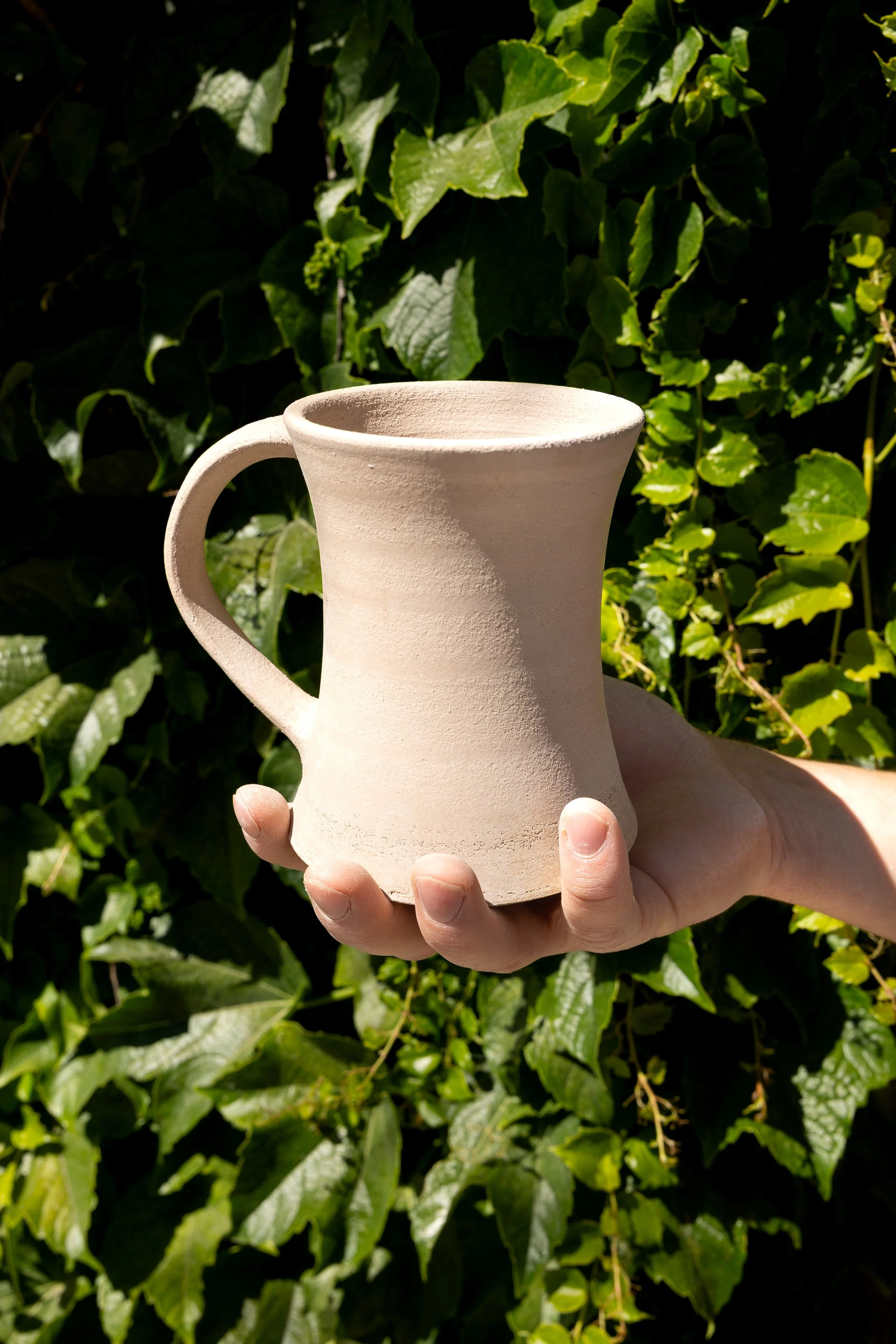
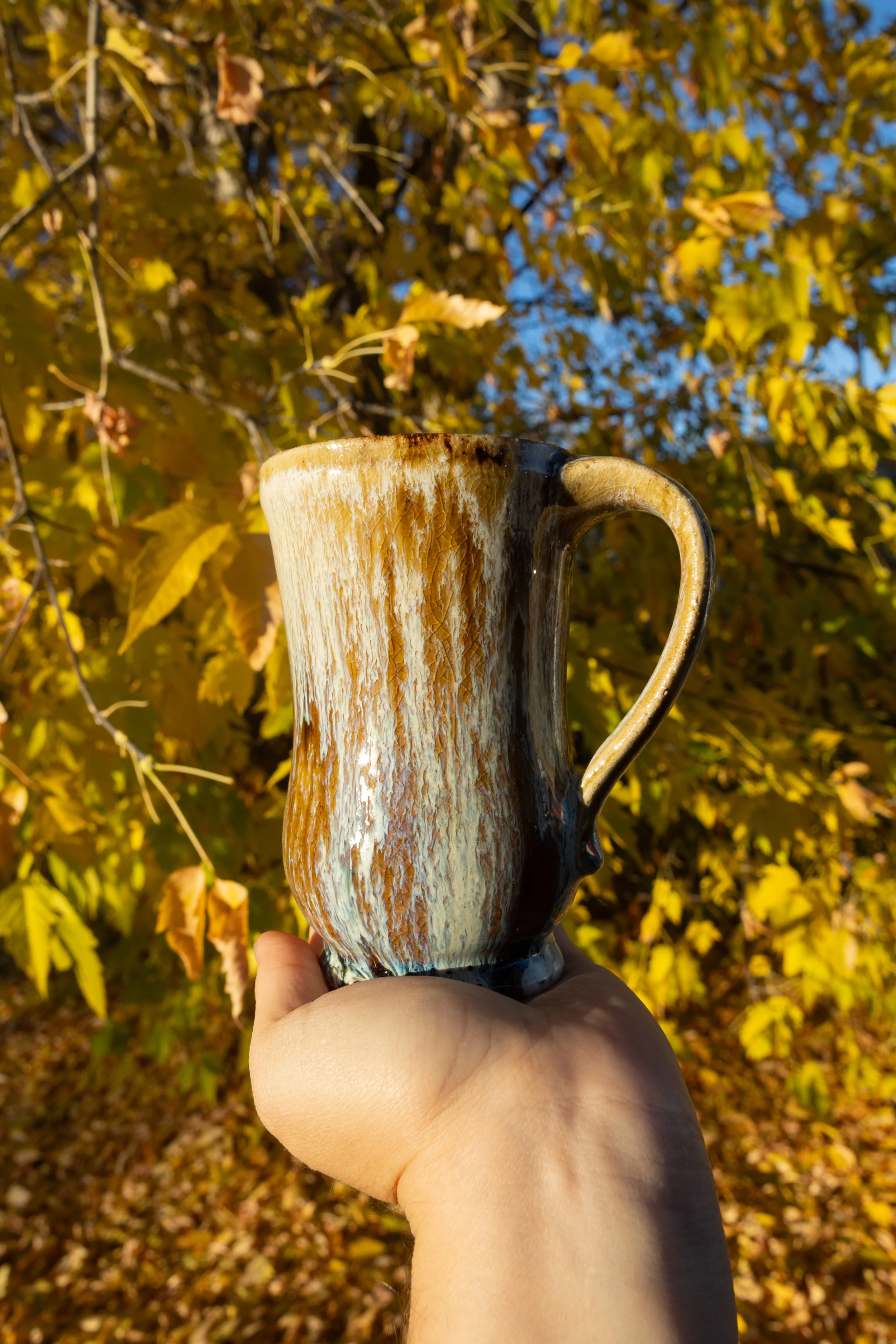
What Makes a Good Mug? (From a Potter’s Perspective)
A mug seems simple.
It holds coffee. Or tea. Or whatever gets you through the morning.
But from a potter’s perspective, a mug is one of the hardest forms to get right.
I’ve thrown hundreds of them. Maybe more. And I still pay attention to every single one.
Because a good mug isn’t just about how it looks on a shelf.
It’s about how it feels at 6:30 in the morning when someone hasn’t had caffeine yet.
Weight
The first thing I notice when I pick up a mug — mine or someone else’s — is weight.
Too heavy, and it feels clumsy. Too light, and it feels fragile.
A good mug has balance. It feels steady in your hand without reminding you it’s there. Salt fired pottery tends to carry a little more presence because of high-fire clay bodies, but that weight has to be intentional.
You shouldn’t have to think about it.
The Rim
This might be the most important part.
The rim is where the mug meets you. It should feel smooth without being overly rounded. Too thick, and it feels bulky. Too thin, and it feels sharp or fragile.
When I’m trimming and finishing a mug, I pay attention to that edge. It’s a small detail that changes the whole experience.
The Handle
Handles are where a lot of mugs fail.
A handle has to fit naturally — one finger, two fingers, maybe three — depending on the size of the form. It needs space without being oversized. It needs strength without being thick.
And it has to attach well. Structurally and visually.
I’ve cut off more handles than I care to admit because something felt slightly off. If the balance isn’t right, the mug won’t get used.
The Surface
This is where salt fired pottery becomes interesting.
A subtle orange-peel texture. A soft gloss where the flame hit. A slight variation in tone. These details don’t scream for attention, but they create depth.
In Logan Utah pottery — especially high-fire work — surface isn’t decoration layered on top. It’s part of the clay’s story.
But even surface has to serve the function. If it’s too rough at the lip, it distracts. If glaze pools too heavily near the handle, it affects grip.
A good mug feels intentional from top to bottom.
The Bottom
Most people don’t think about the foot of a mug.
Potters do.
If the base isn’t trimmed well, it can feel heavy or unfinished. If it’s too sharp, it scratches tables. If it’s not flat, it rocks.
The bottom is quiet — but it matters.
Why It Matters
When someone buys handmade Logan Utah pottery, they’re not just buying an object. They’re buying something they’ll interact with every day.
A mug lives in routine. It becomes part of mornings, conversations, late nights.
That’s why I keep making them.
Because when a mug works — when the handle fits, the rim feels right, the weight balances — it disappears into use.
And that’s the goal.
Not to impress on a shelf.
To feel right in someone’s hand.
— Adam Corbridge
Probably trimming another mug foot and thinking about coffee.
You can see what’s coming out of the kiln at adamcorbridgepottery.com