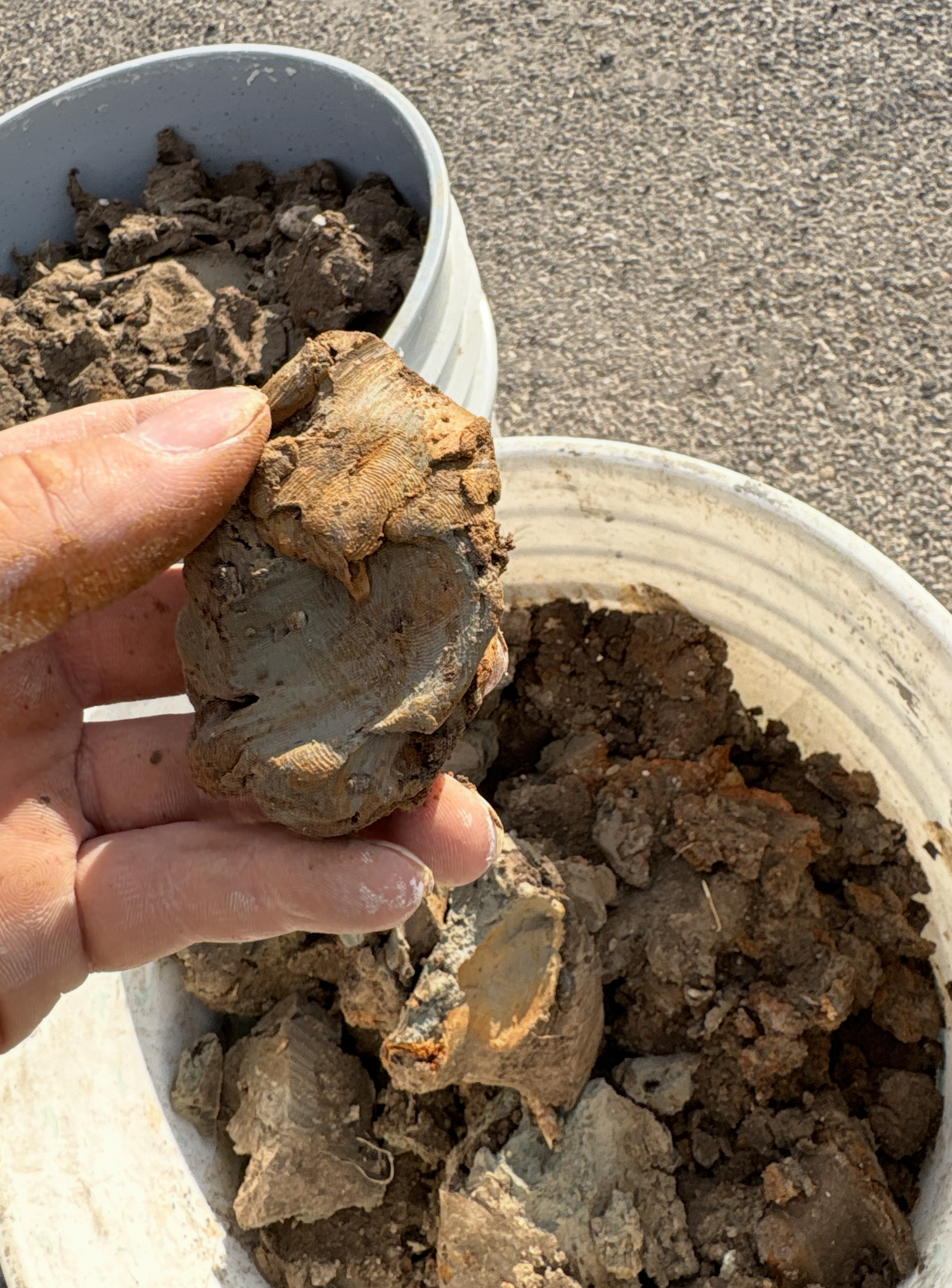
Common Problems With Utah Wild Clay (And What I’m Learning So Far)
When people talk about wild clay, it’s usually romantic.
Dig it up. Process it. Fire it. Connect to the land.
What they don’t always talk about are the cracked test tiles sitting on the shelf. Or the bowl that split clean in half while drying. Or the sample that melted into a warped puddle at cone 10.
Utah wild clay is beautiful in theory.
In practice, it’s humbling.
Over the past year, I’ve been collecting and testing small samples around Cache Valley. I’m still early in the process, but a few consistent problems keep showing up.
1. Cracking During Drying
This has probably been the most common issue.
Some Utah wild clay deposits have high shrinkage rates. They feel plastic when wet — promising, even — but as they dry, fine cracks begin to form. Sometimes it’s surface cracking. Sometimes it’s a full structural split.
That tells me there may be:
Too much clay content without temper
Uneven particle sizes
High shrinkage characteristics
I’ve started experimenting with adding sand or grog to reduce stress during drying. Sometimes it helps. Sometimes it just reveals the next problem.
2. Warping in the Kiln
Even when a test tile survives drying, firing introduces a new variable.
Some wild clay Utah samples warp significantly at higher temperatures. Edges lift. Surfaces twist. You can see the stress lines in the clay.
This usually means the clay body isn’t balanced — not enough structure to handle high-fire conditions.
It’s a reminder that just because clay exists in the ground doesn’t mean it wants to become a pot.
3. Melting Too Early
Iron-rich clays can be beautiful — deep reds, warm browns — but they can also melt faster than expected.
A few of my Utah wild clay tests have slumped at cone 10, especially when used too thickly. That’s useful information. It may mean the clay is better suited as a slip or glaze ingredient rather than a full throwing body.
Failure in this case is just data.
4. Staying Too Porous
On the other end of the spectrum, some deposits barely vitrify even at high temperatures. They remain chalky and porous, which limits their use for functional pottery.
That doesn’t make them useless — but it changes the conversation. Maybe they’re better for sculptural work. Maybe they need blending.
Wild clay rarely works straight from the ground without adjustment.
Why Keep Going?
There have been more failures than successes so far.
But every now and then, a test tile comes out of the kiln and surprises me. The color deepens. The surface tightens. The iron freckles just enough. It holds together.
Those moments make the cracked tiles worth it.
Working with Utah wild clay forces me to slow down. It makes me pay attention to shrinkage, to mineral content, to firing temperature in a way commercial clay doesn’t require. It reminds me that pottery starts in the earth long before it reaches the wheel.
I’m not trying to prove that every hillside in northern Utah can produce functional pottery.
I’m just learning what this ground wants to be.
And that process — even when it fails — feels important.
— Adam Corbridge
Salt firing, wild clay, and building slow work in Logan, Utah
Learn more at adamcorbridgepottery.com