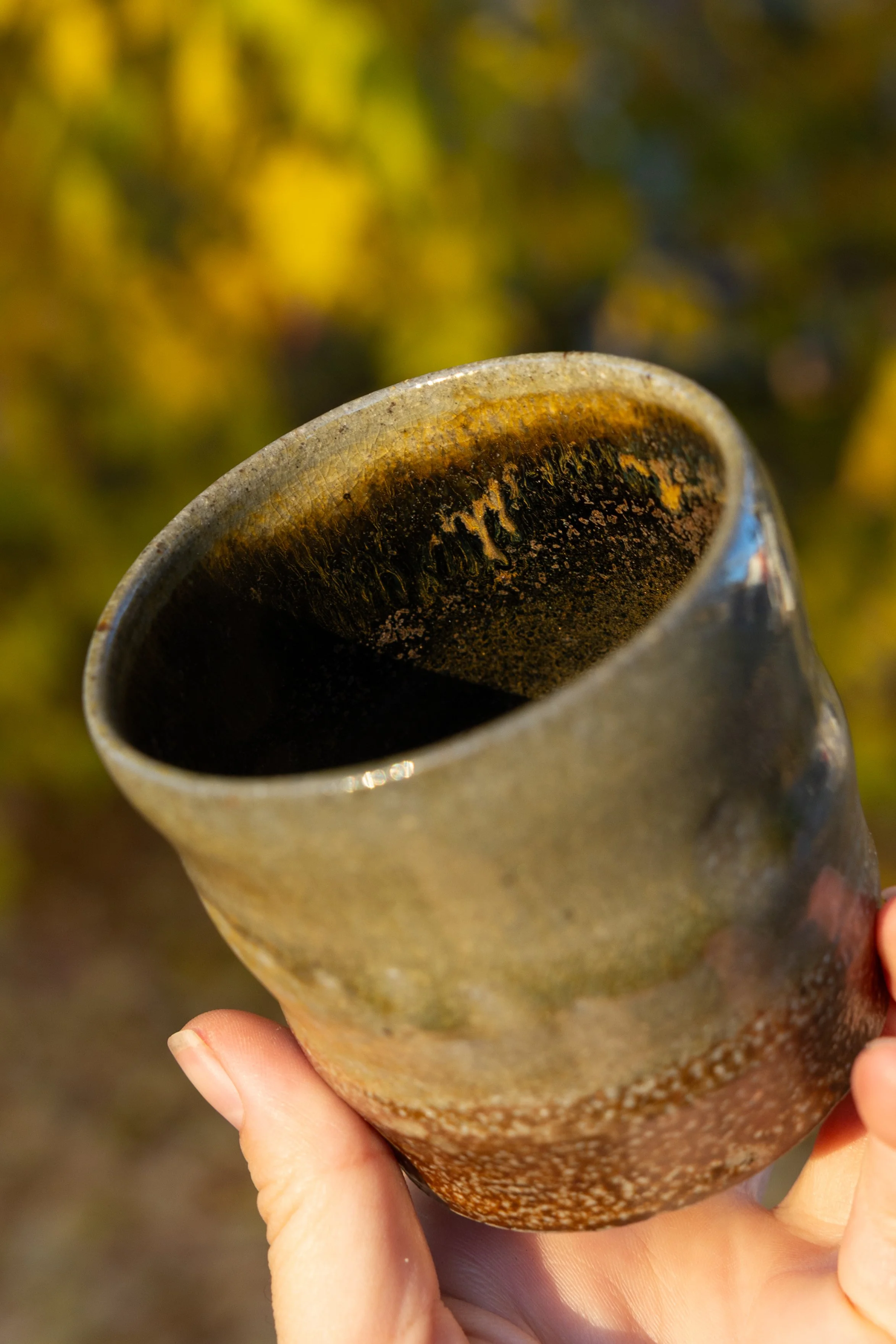
Why You Always Grab the Same Mug
You probably have one.
It’s not the brightest. Not the newest. Not the one you bought because it matched your kitchen. But when you open the cabinet in the morning, half awake, that’s the one your hand goes to.
You don’t think about it. You just reach.
I think about that mug when I’m throwing.
In my studio, a mug starts as a cylinder. Even walls. Clean base. Nothing dramatic. But I’m not thinking about how it will look on a shelf. I’m thinking about that early morning moment — when someone isn’t evaluating it, they’re just using it.
The mug you always grab earns that position slowly.
It feels right in the hand. The handle doesn’t force your fingers into an awkward shape. The balance doesn’t tip forward when it’s full. The rim meets your mouth without drawing attention to itself. It disappears into the act of drinking.
That disappearance is the goal.
A lot of pottery tries to stand out. Big gestures. Heavy texture. Aggressive glaze breaks. There’s nothing wrong with visual impact, but if a mug demands your attention every time you use it, it eventually becomes tiring.
The mug you reach for without thinking has restraint.
When I pull a handle, I’m paying attention to negative space as much as the clay itself. Two fingers? Three? Where does your thumb land? The curve should support the weight of the mug when it’s full — not just empty. A handle can look good and still feel wrong once you add twelve ounces of coffee.
Weight distribution matters more than appearance.
I also think about wall thickness constantly. Too thin, and the mug cools too quickly and feels fragile. Too thick, and it becomes heavy before it’s even filled. At high fire — cone 10 — the clay vitrifies fully. That density adds subtle weight. So I adjust while throwing, knowing what the kiln will do later.
None of this is obvious when you look at the mug sitting on a table.
But you feel it over time.
The mug you always grab has survived dishwashers. It’s been set down harder than it should have been. It’s knocked against a sink once or twice. It’s lived through daily use without chipping at the rim or loosening at the handle.
Durability builds trust.
And trust builds habit.
When someone tells me they use one of my mugs every morning, that matters more than hearing that it “looks beautiful.” Beauty fades into the background of routine. Function doesn’t.
I make pottery to be used. Not rotated seasonally. Not preserved for special occasions. A good mug should earn scratches on the foot ring. It should show faint wear where your fingers rest. It should feel better after a year than it did on day one.
That kind of familiarity can’t be faked with glaze.
It comes from proportion. Compression at the base. A rim that’s resolved. A handle that was attached with intention, not speed. A firing that fully matured the clay so it can take real use.
Why do you always grab the same mug?
Because it doesn’t ask anything from you. It just works.
That’s what I’m after in the studio — work that slips quietly into someone’s life and stays there.
Made for daily use.
If you’re looking for a mug that earns its place in your cabinet — not just on a shelf — you can see what’s currently available at adamcorbridgepottery.com. I release work in small batches, and it’s built for exactly that kind of steady, everyday use.
Adam Corbridge
adamcorbridgepottery.com