Process · From clay to table
Patience in every piece.
Forms are thrown, trimmed and dried. Glazes are mixed from recipes developed in the studio. Then a cone 10 firing finishes the job. Here's what happens between.
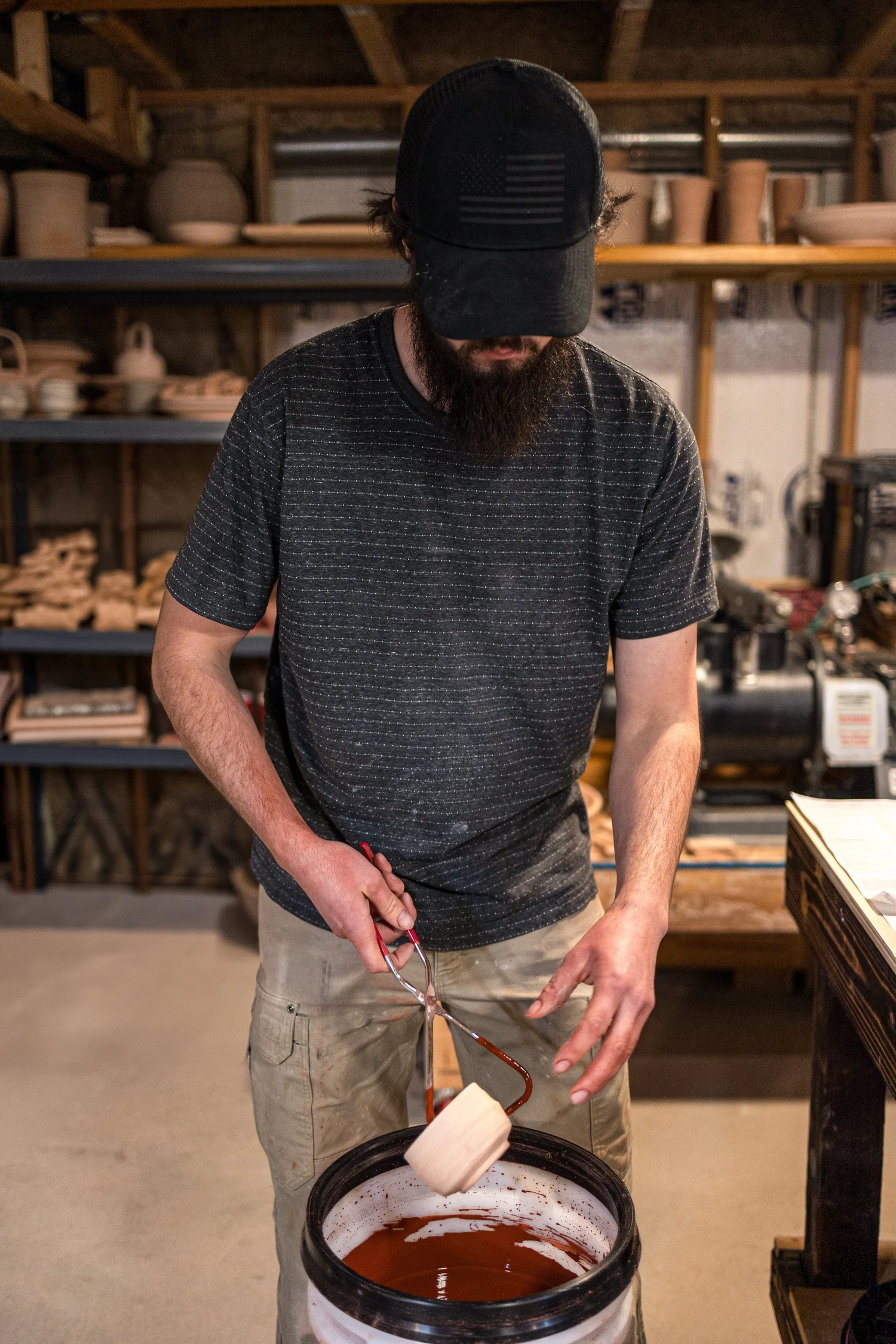
Coming next
Wild Utah clay, in the glaze.
Adam is collecting wild clays from the northern Utah landscape and testing them on tiles, in slips and in glazes. Nothing in the shop is made with them yet; the tests are on the blog as they happen.
Why bother? Commercial materials are predictable. Wild clay has iron, minerals and grit that show up in the surface and the color, and no two batches are quite the same.
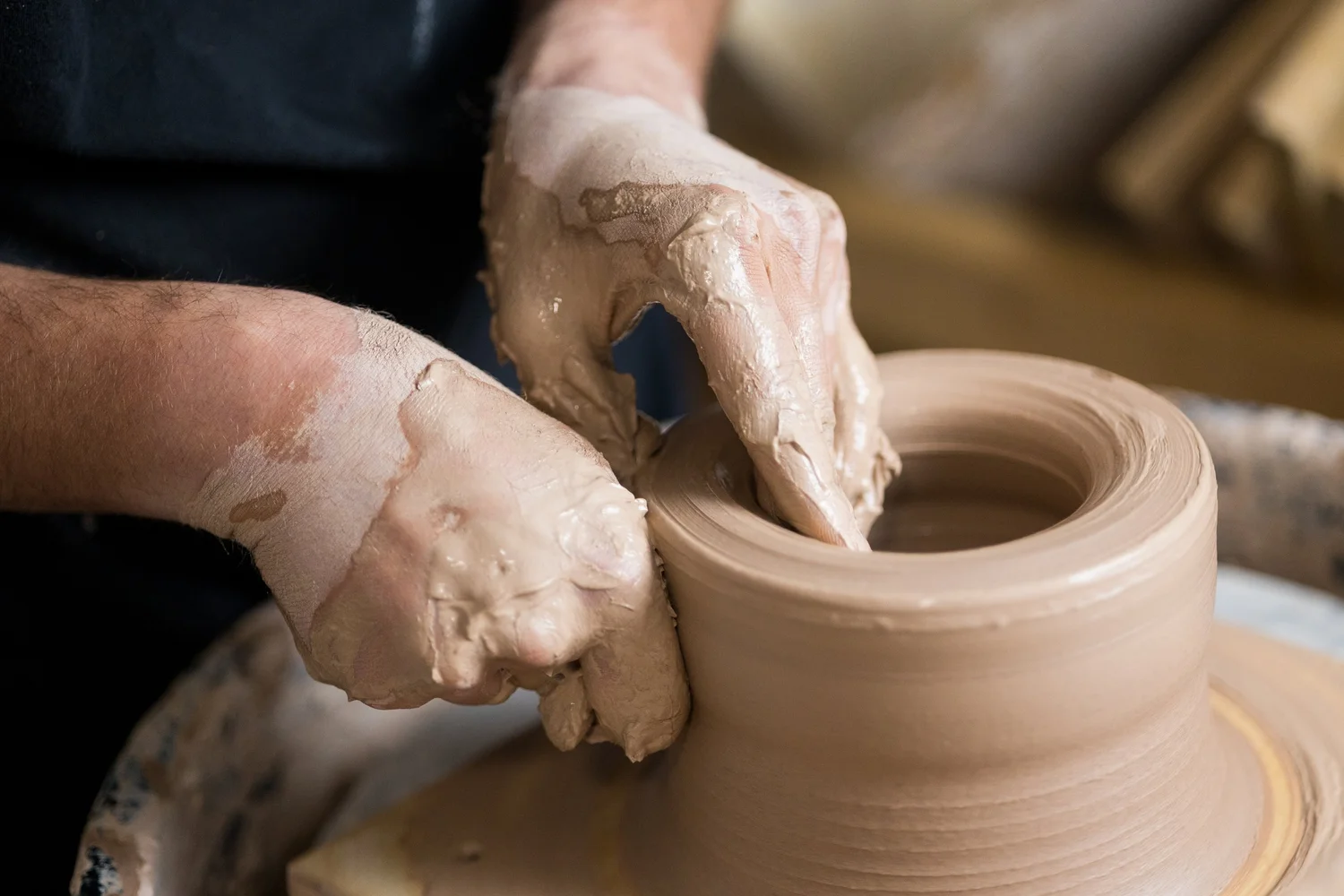
The wheel
Thrown in small batches.
Every form is thrown on the wheel, a few at a time. Weight, proportion and how a piece feels in the hand are decided here. Mugs are thrown with the handle in mind. Bowls are thrown so the foot can be trimmed to sit flat and light.
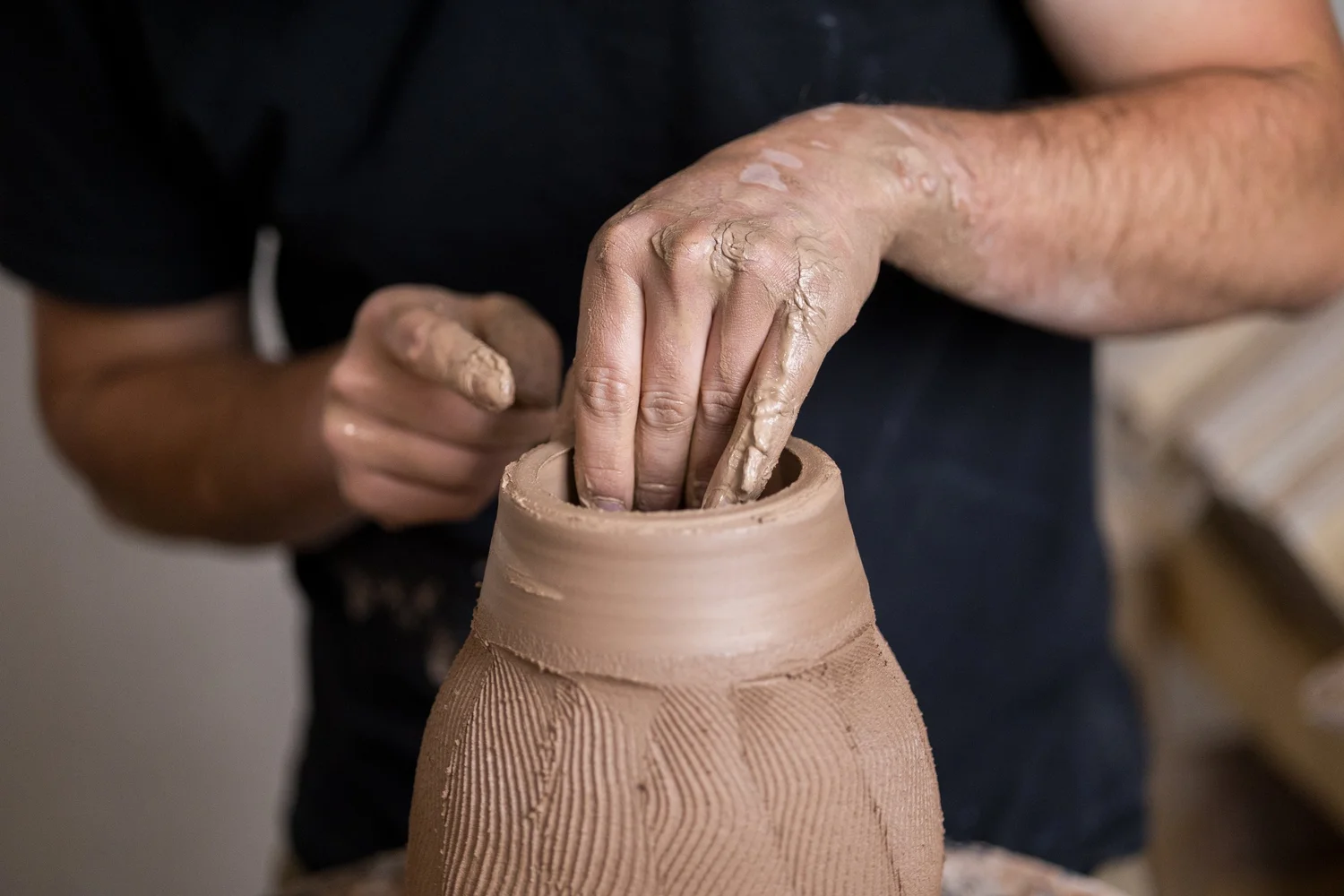
Trimming and drying
Slow, so nothing cracks.
Once a piece is leather hard, it's trimmed, carved and given its foot. Handles are pulled and attached. Then everything dries slowly, sometimes for weeks in a Logan winter, before a first bisque firing makes it strong enough to glaze.
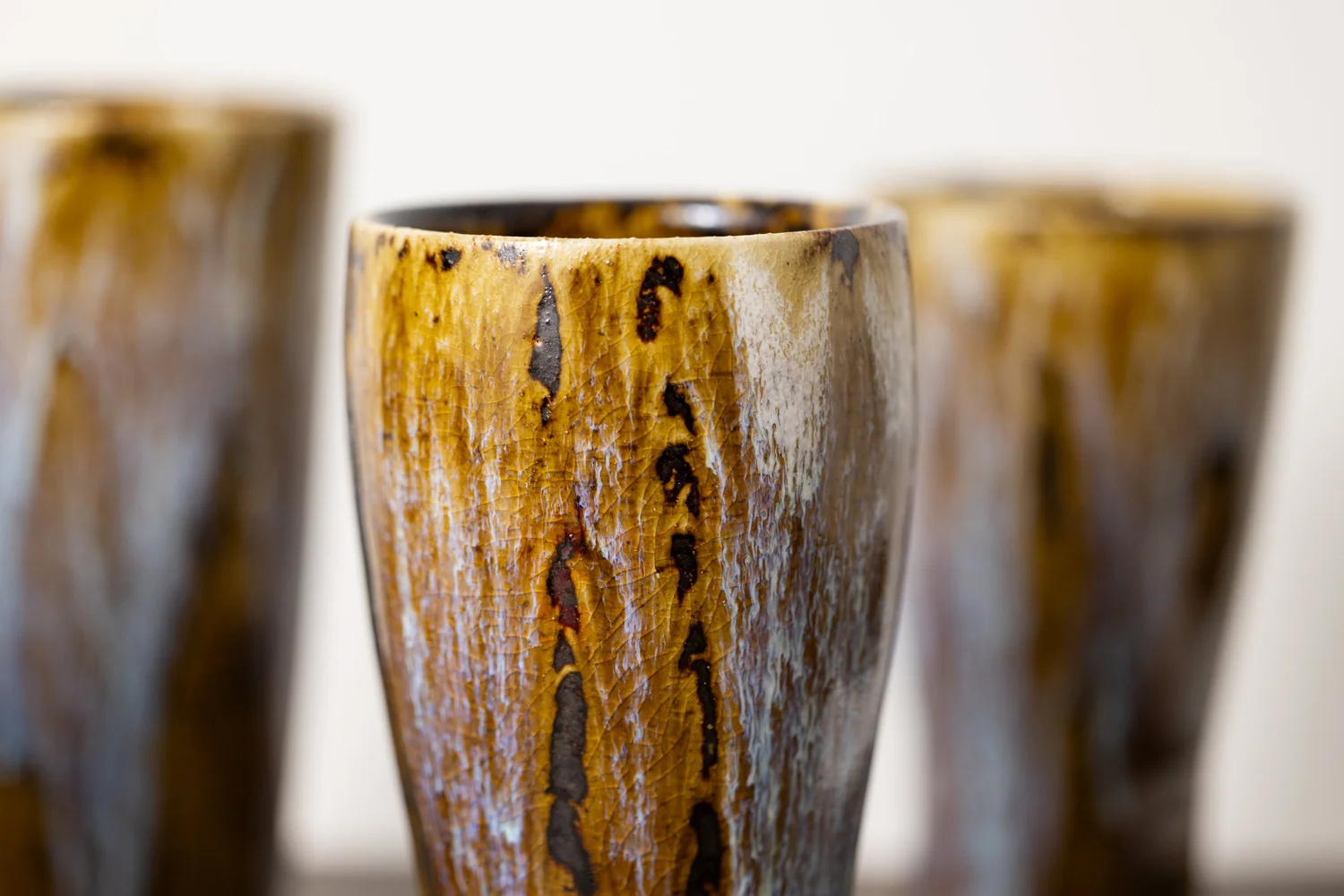
Glaze and fire
Chemistry, then fire.
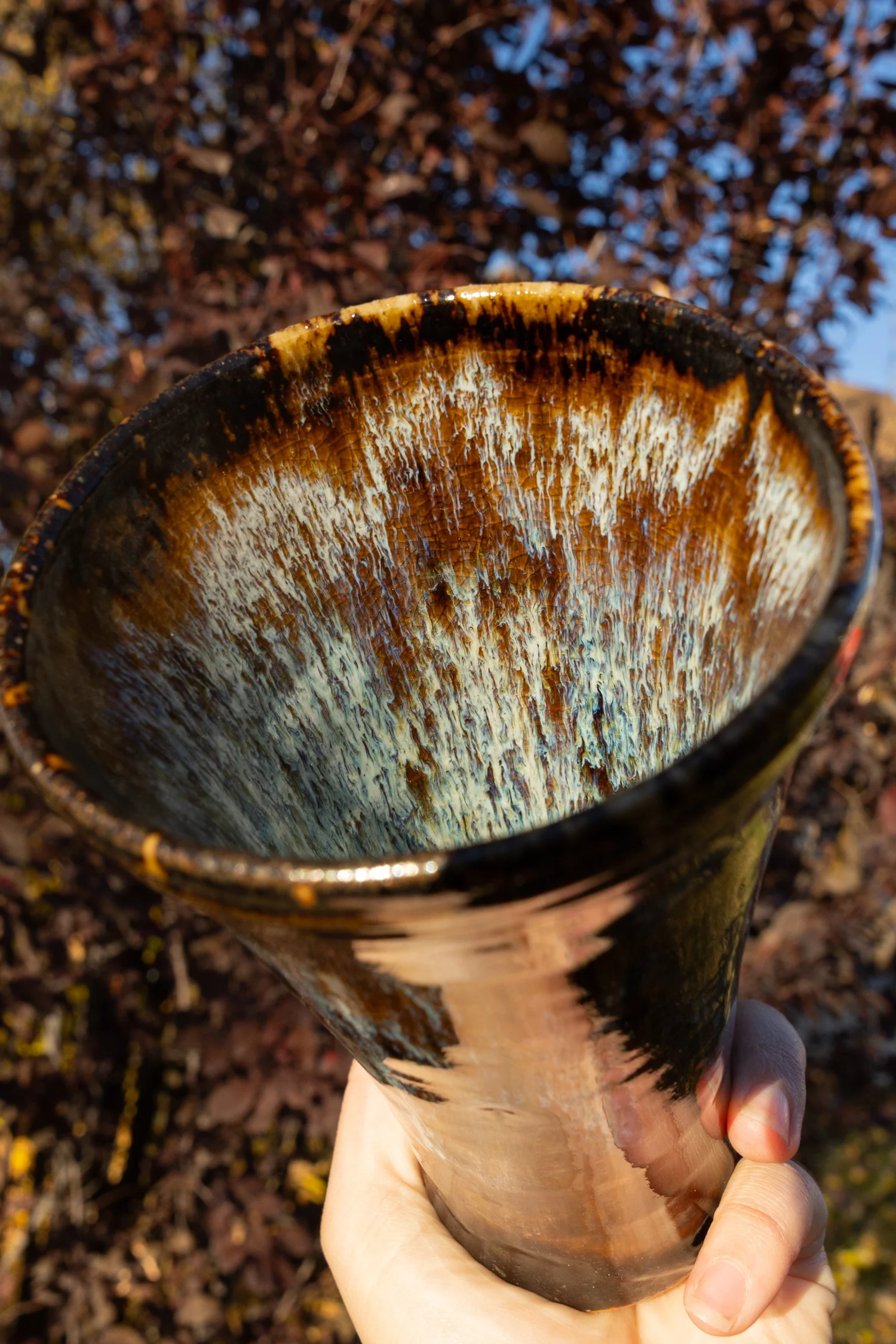
Glazes are formulated in the studio and recorded firing after firing. The Numoku glaze and the iron reds you see in the shop came from that testing. Then the kiln is loaded and brought to cone 10, where the clay vitrifies into dense, durable stoneware.
What's next: a salt kiln. Adam is building one in Logan. Once it's firing, salt vapor will move with the flame and leave orange-peel texture and flashing on every surface it reaches.
In order
Four steps, no shortcuts.
Mix and test
Glazes mixed in the studio and tested on tiles.
Throw
Forms thrown on the wheel in small batches.
Trim and dry
Trimmed, carved, slow-dried, bisque fired.
Fire
Glaze fired to cone 10.
Bring a piece home
Made to be used every day.
Shop what's available now, or commission something made for your table.