Explainer · Two minutes
Why salt firing.
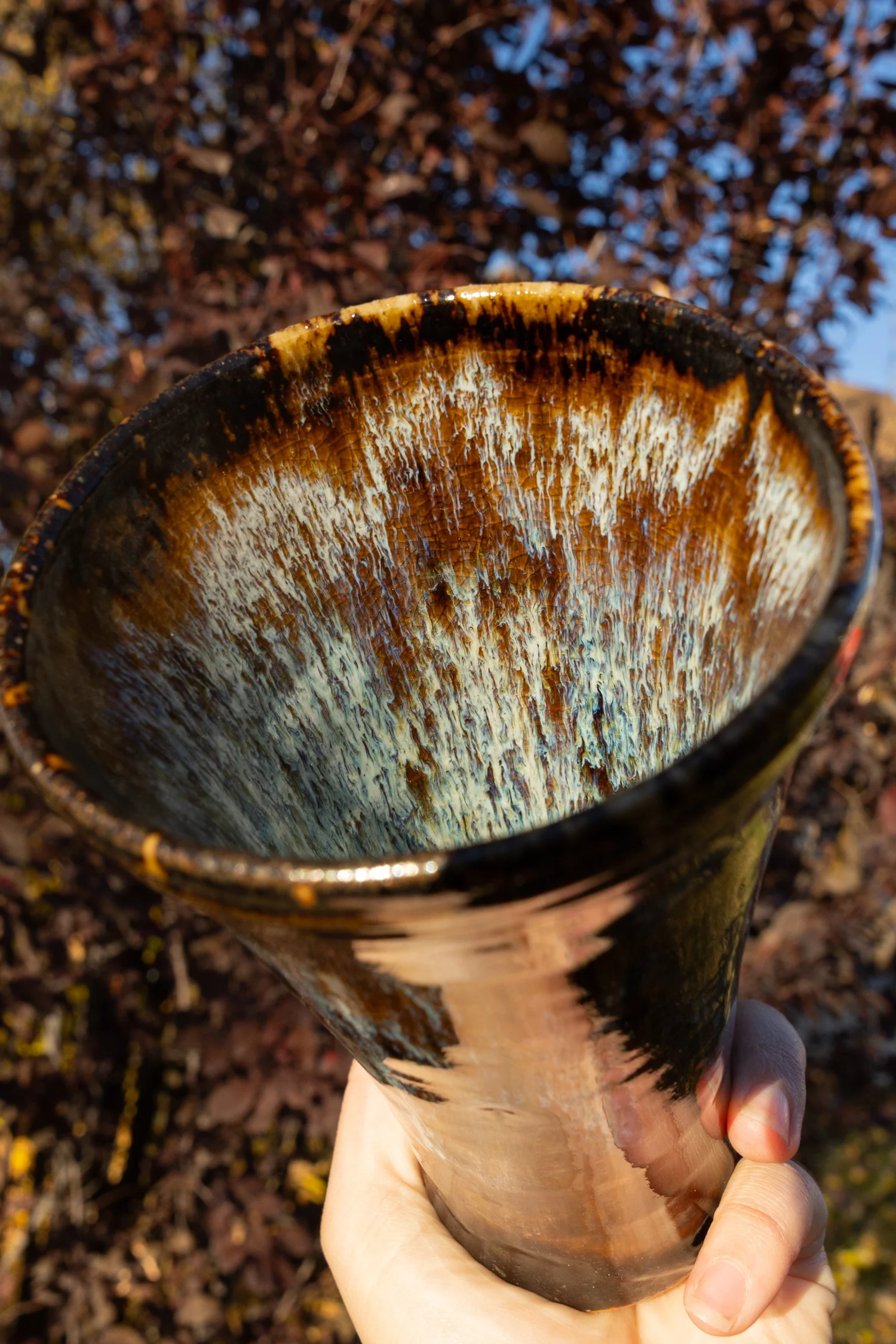
Most pottery comes out of an electric kiln looking exactly as planned. Salt firing gives up some of that control to the kiln, the flame and the atmosphere, and gets back a surface nothing else can make. It's why Adam is building his own salt kiln in Logan.
What happens in the kiln
Four things, in order.
Heat
The kiln climbs to cone 10, hot enough that the clay itself vitrifies, dense and non-porous.
Salt
Salt is introduced into the firebox. At that temperature it vaporizes instantly.
Reaction
Sodium travels with the flame and reacts with silica in the clay, forming a glaze on every surface it reaches.
Record
Flame path, shelf position and atmosphere leave orange peel, flashing and drips. The piece records its own firing.
Is it food safe?
Yes, when fired to full temperature on a properly formulated clay body. Adam's stoneware is fired to cone 10, and the salt kiln he's building will fire to the same temperature.
Why does it age well?
The surface is bonded to the clay, not sitting on it. It doesn't fade, and small marks of use blend into the texture instead of standing out.
Why no two alike?
Because the kiln finishes the surface. Two cups a shelf apart will come out differently, and that variation is the signature.
Read more
From the blog.
Bring a piece home
Made to be used every day.
Shop what's available now, or commission something made for your table.