About Adam · Potter and builder
A potter and builder in Logan, Utah.
Adam Corbridge throws functional stoneware in small batches and fires it to cone 10: mugs, bowls, platters and pitchers made to be used every day. Between firings he is digging wild Utah clay and building a salt kiln by hand.
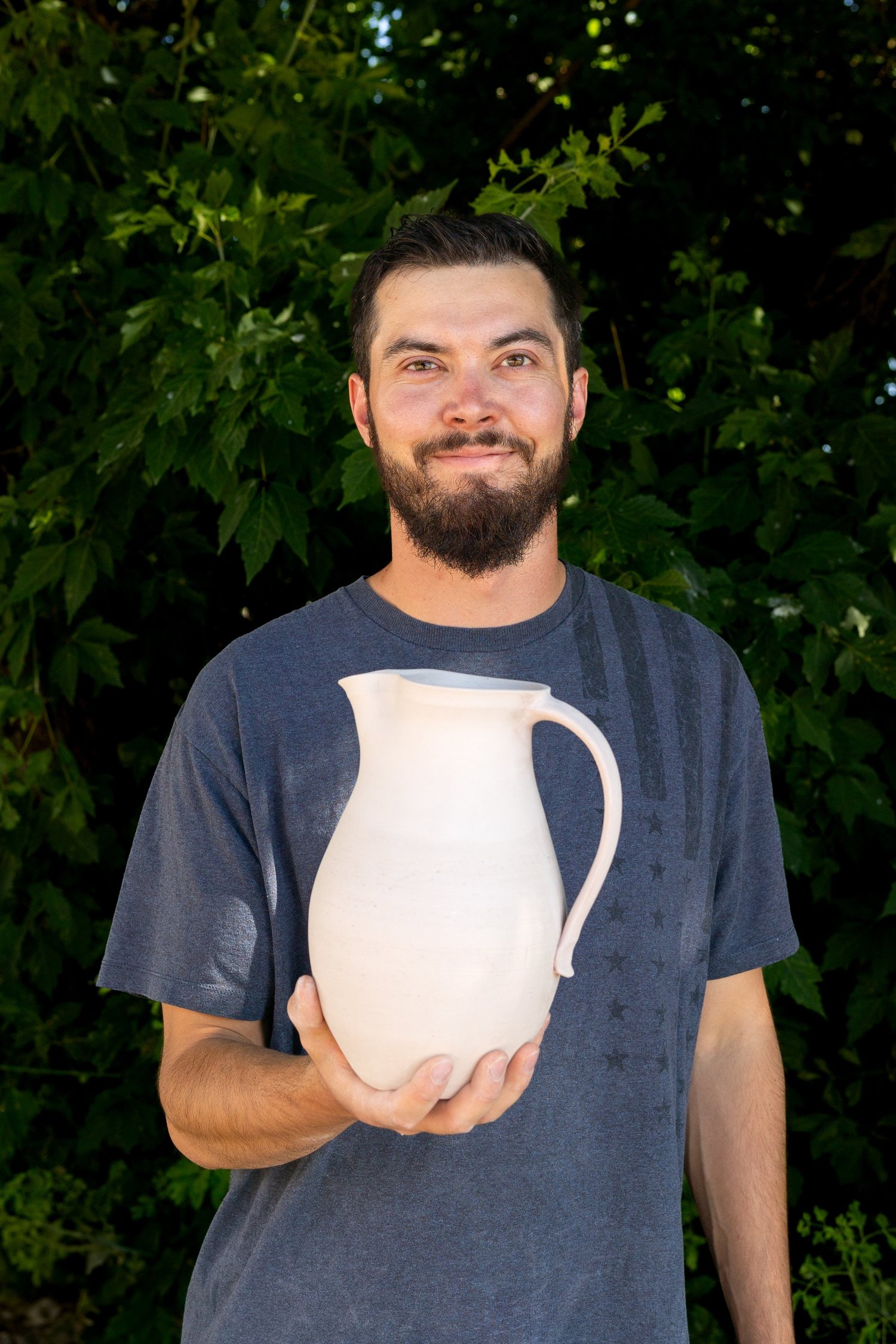
The story
Form first. Surface second.
Adam found the wheel in high school and stayed late in the ceramics room whenever the door was open. In 2015 his work was juried into the national K-12 ceramics exhibition at NCECA in Providence, where it won three awards: the Bailey's Pottery Equipment Award, the Giffin Grip Student Award and the Artistic Achievement Award.
At Utah State University he studied ceramics and learned to see a pot as one structure, where every rim, handle and foot has to agree. It is also where he was first invited into salt firings, and where atmospheric firing took hold of him.
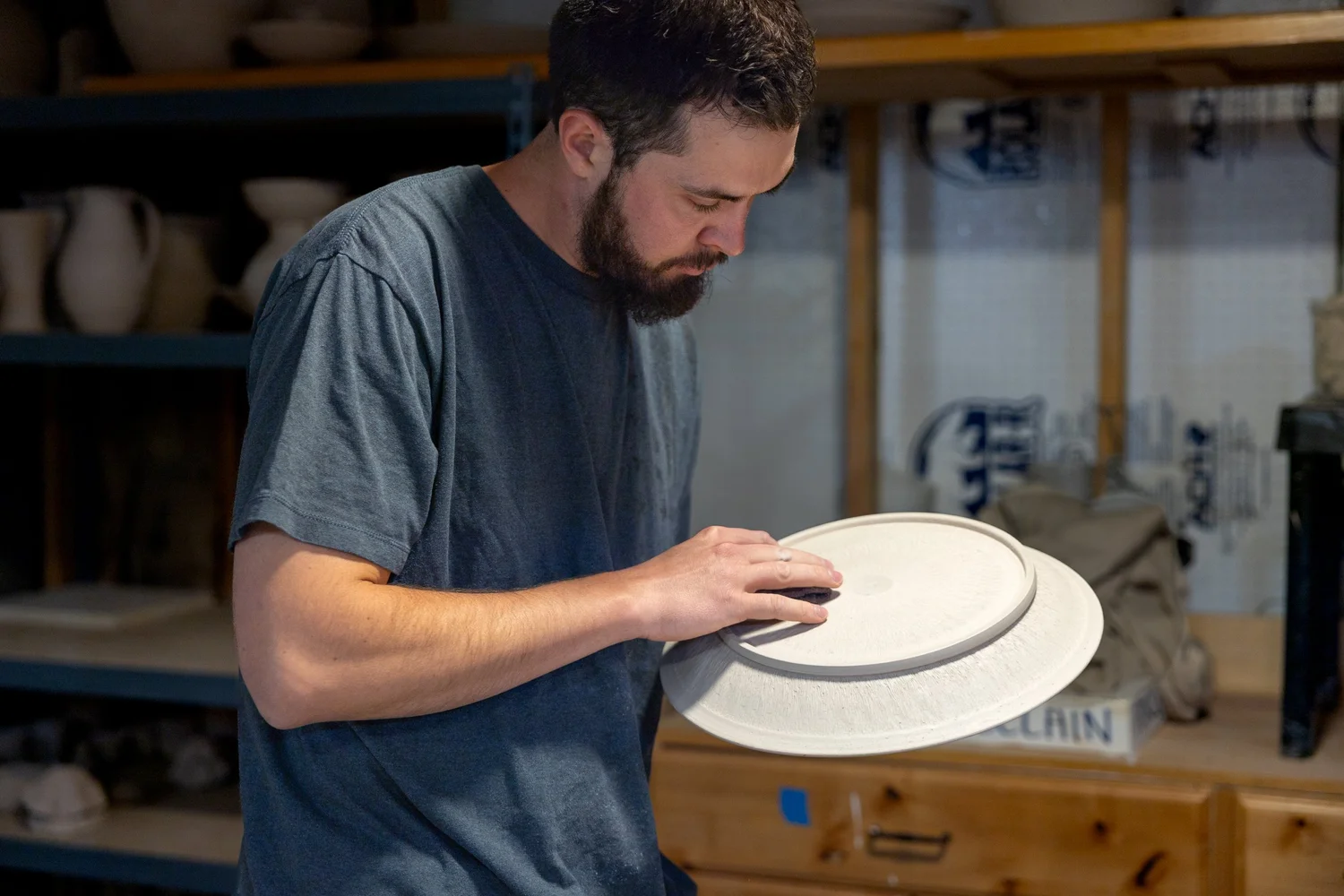
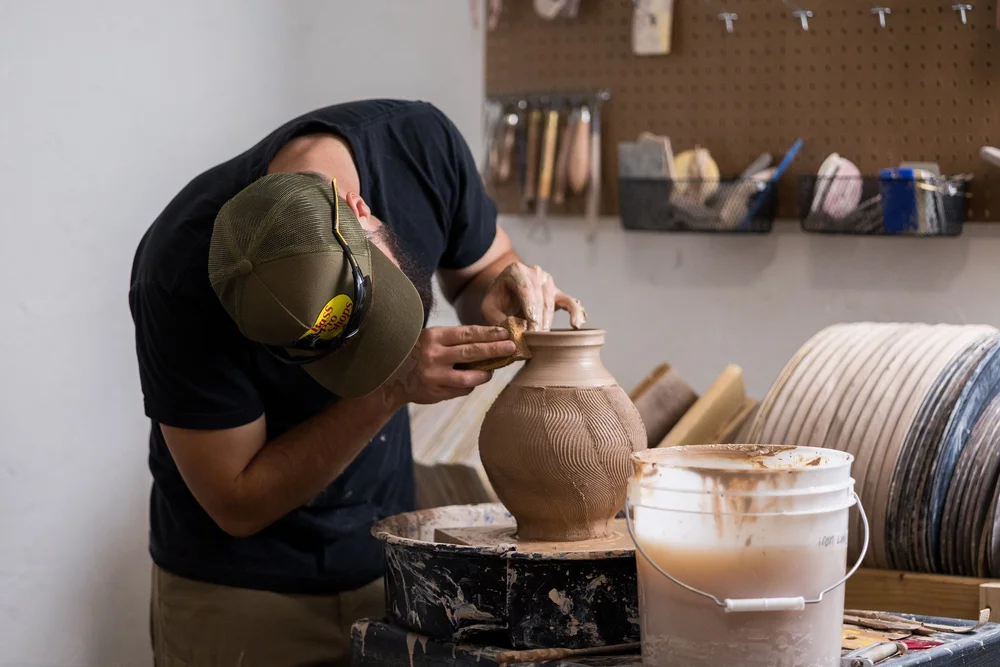
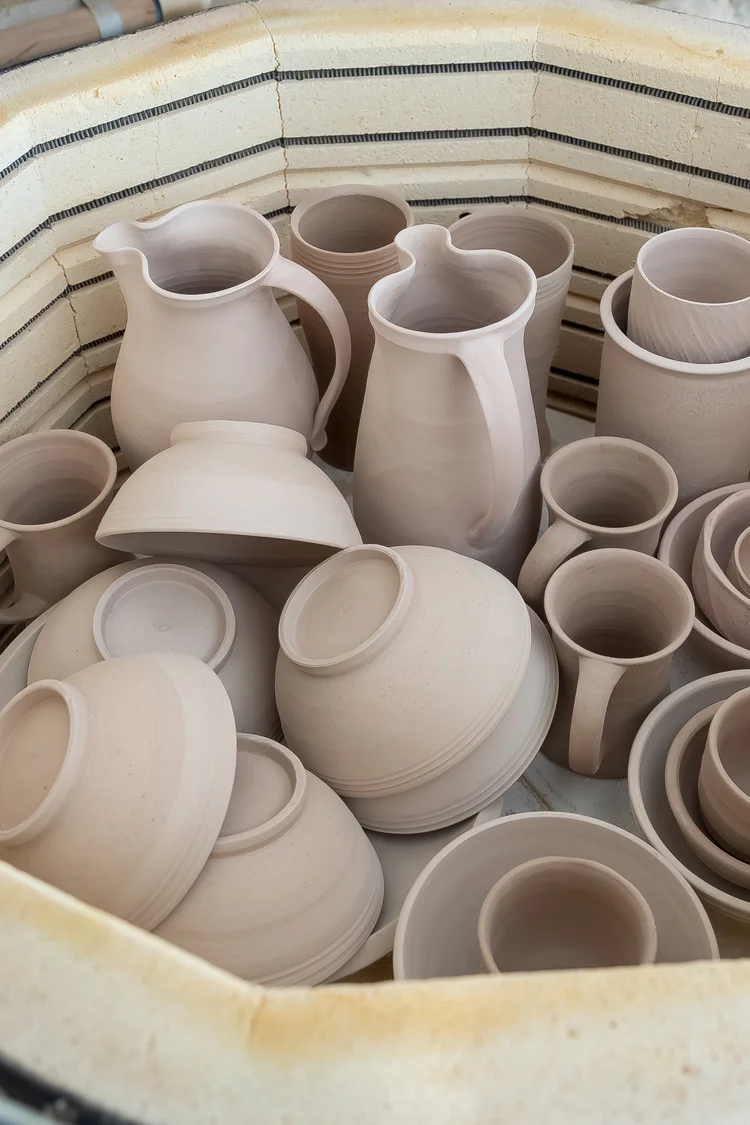
Today he works from his studio in Logan. Pieces are thrown a few at a time, trimmed, dried slowly and fired to cone 10, where the clay vitrifies into stoneware that handles the dishwasher, the microwave and years of daily use. Every glaze is mixed in the studio and recorded firing after firing; the Numoku and iron red pieces in the shop came out of that testing.
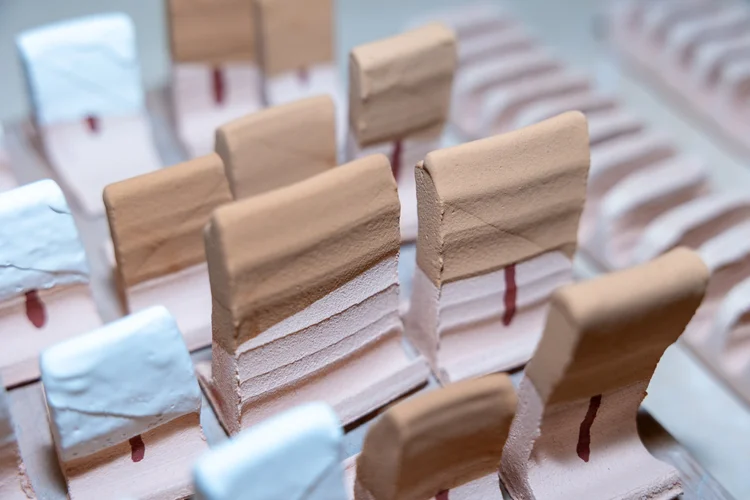
Wild clay research · Northern Utah
Testing wild Utah clay for glazes and slips.
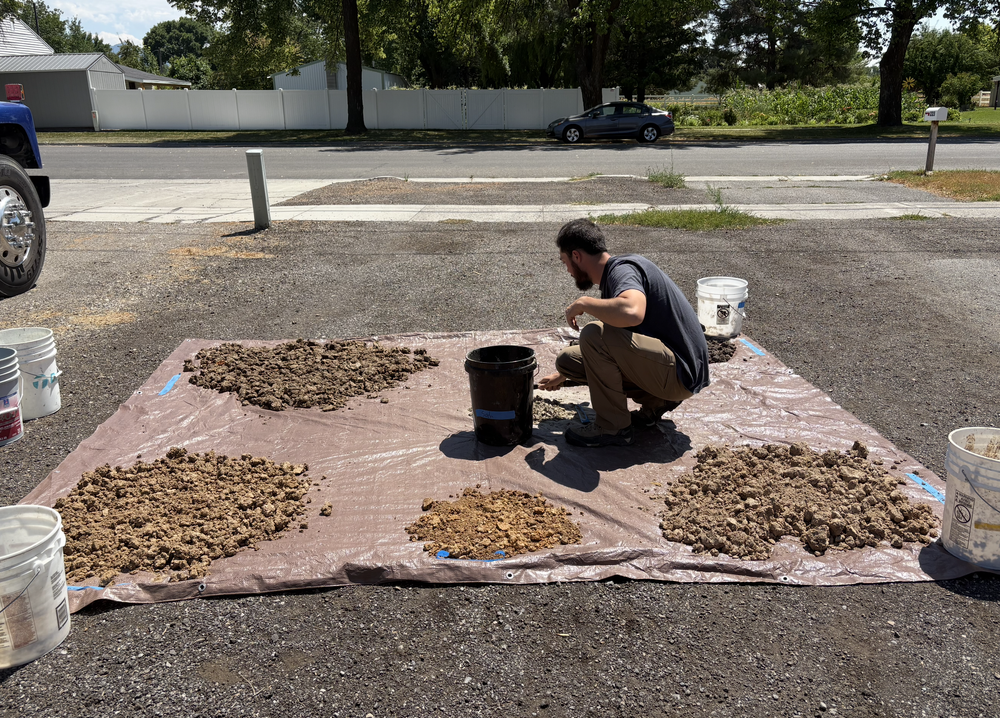
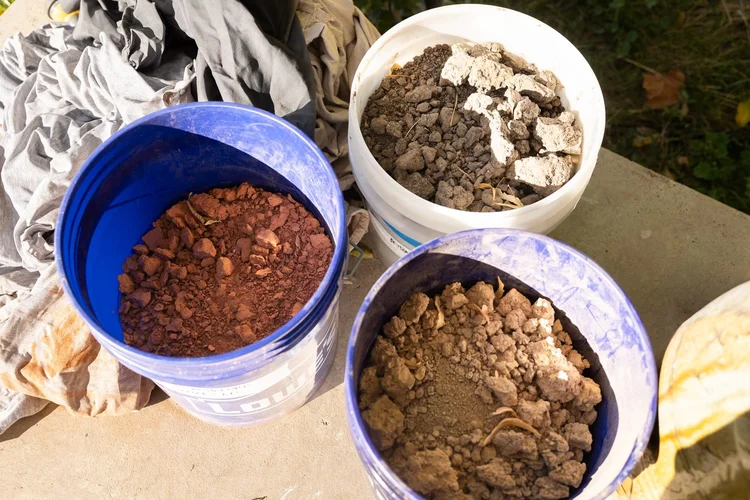
Adam collects clay from deposits around northern Utah, turns it to slurry and dries it by hand, then fires it on test tiles at cone 10 to see how it behaves. Some deposits are smooth and plastic on the wheel. Others are sandy, crack while drying or barely vitrify, and those results matter just as much.
Utah clays often carry a lot of iron. A deposit that will never hold up as a mug might still become a slip or a glaze, and that is where the research is heading: surfaces with the color of this valley, without giving up the durability everyday pottery needs.
Nothing in the shop is made with wild clay yet. Every dig and test goes on the blog as it happens.
The kiln build · Logan, Utah
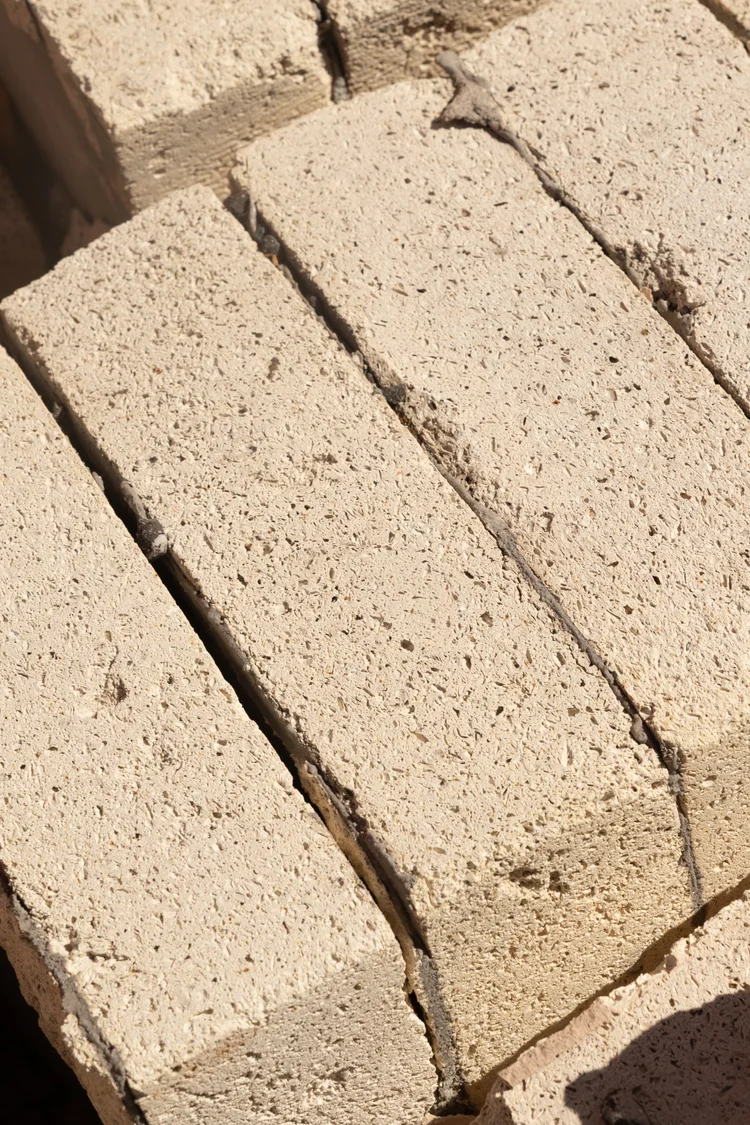
Building a salt kiln in Logan, Utah.
In a salt firing, salt goes into the kiln at peak temperature, turns to vapor and travels with the flame. Where it lands it leaves orange-peel texture and warm flashing, so the kiln itself becomes part of the surface. Adam fell for it during firings at Utah State, and salt kilns are rare in northern Utah, so he is building his own.
It is designed as a gas-fired kiln sized for steady production and built to stand up to salt vapor. The concrete pad is poured in the backyard, and the build is going slowly and carefully, with the decisions and the costs written up along the way.
The salt kiln isn't firing yet. Everything in the shop today is cone 10 stoneware fired in the studio.
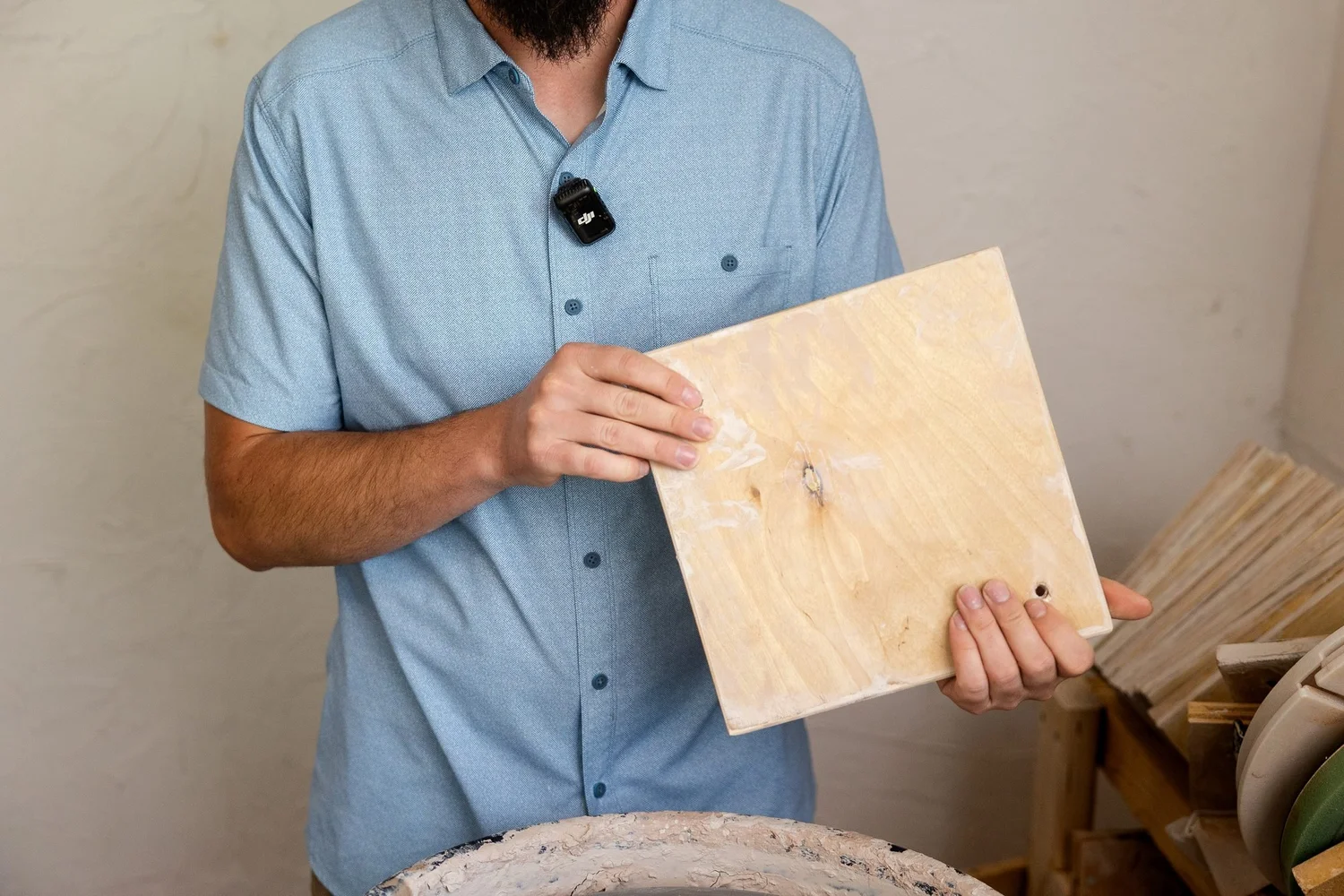
The studio
Come see the work in Logan.
Studio visits and local pickup are by appointment. Adam posts the throwing, the glaze tests and the kiln build as they happen on YouTube, TikTok and Instagram.
The photos and videos on this site are by Sarah Rasmussen Productions, a photo and video studio in Logan, which also built the site.