The Limits of Utah Wild Clay
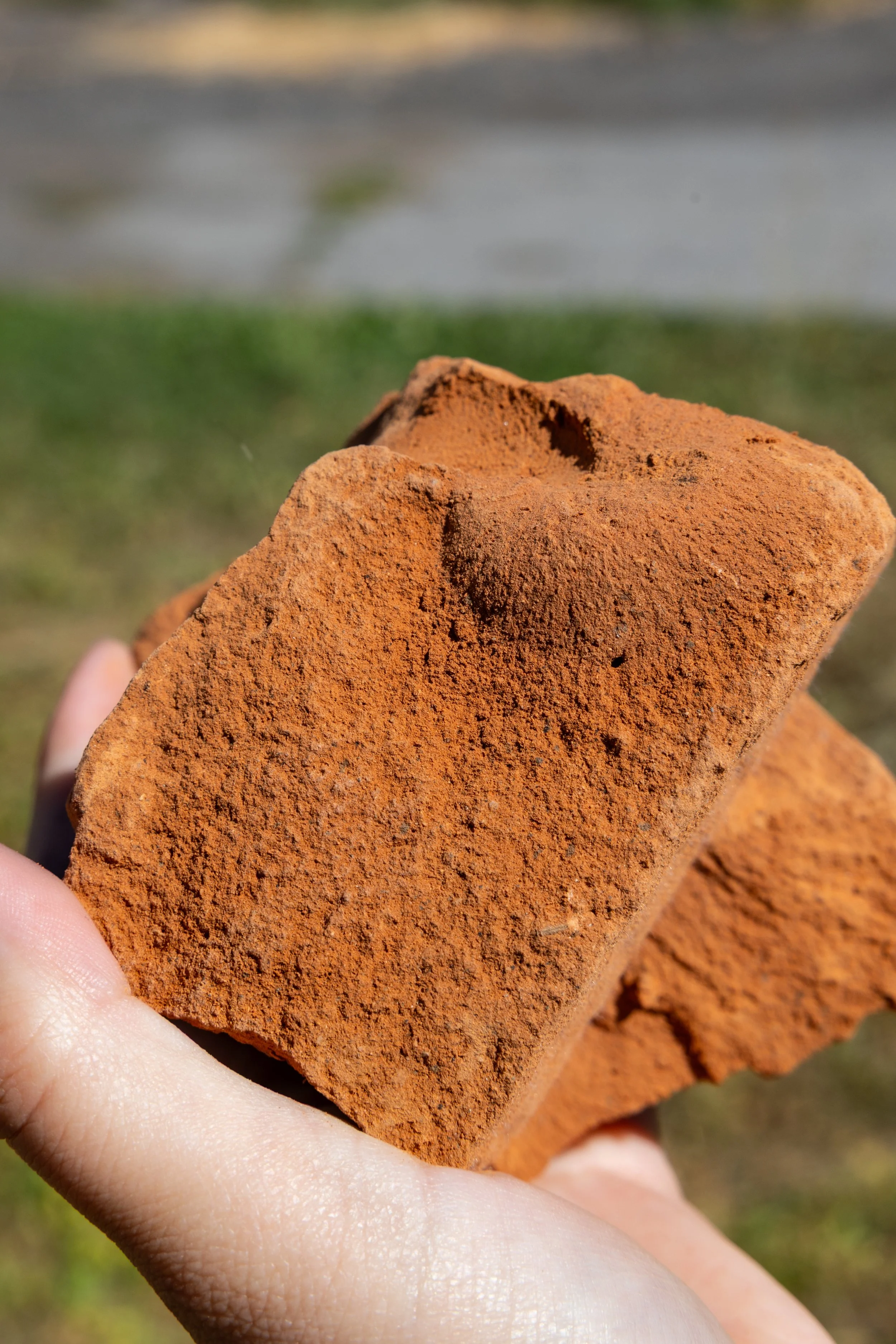
There’s something romantic about digging your own clay.
You picture pulling material straight from the earth, processing it by hand, turning it into mugs and bowls that carry the place they came from. There’s a purity to the idea — local clay, local work, grounded in the landscape.
I felt that too.
The first time I collected Utah wild clay, I wasn’t thinking about its limits. I was thinking about possibility. About connection. About the idea that the ground beneath my boots could become functional pottery.
But wild clay doesn’t care about romance.
It cares about chemistry.
The first batches I processed were unpredictable. Some felt beautifully plastic on the wheel — smooth, workable, promising. Others were sandy and short, barely holding together. A few cracked badly during drying. One warped so much in a high-fire test that it looked like it had given up halfway through.
That’s when I started paying attention differently.
Utah wild clay varies from deposit to deposit. Some are high in iron. Some contain impurities that burn out. Some shrink dramatically. Some barely vitrify at cone 10. And vitrification matters if you’re making functional work.
A mug can’t just look good.
It has to survive repeated heating and cooling. It has to resist water absorption. It has to hold up over time.
Some wild clay simply won’t do that on its own.
That realization was disappointing at first.
There’s a strong pull to believe that local clay should be able to become anything. That if you just process it well enough or fire it hot enough, it will cooperate.
But clay isn’t obligated to be a mug.
Some deposits are better suited for slip. Some for glaze testing. Some might work blended with a commercial clay body. Some are simply better left as material study.
And that’s okay.
The limits of Utah wild clay aren’t failures — they’re boundaries.
Working with local material has taught me more about patience and humility than convenience ever could. Commercial clay bodies are engineered to perform consistently. Wild clay is not.
It forces you to test. To blend. To adjust expectations.
If I’m building functional Logan Utah pottery that people will use every day, I can’t ignore performance. I can’t sacrifice durability for romance.
That doesn’t mean I stop digging.
It means I dig with clearer eyes.
Some clay wants to be structural.
Some clay wants to be surface.
Some clay wants to teach you what it can’t become.
Understanding those limits is part of respecting the material.
And respect goes further than idealism ever will.
— Adam Corbridge
Trying to respect what the clay wants to be.
Follow the experiments at adamcorbridgepottery.com