Why Pottery Warps: And How to Design Against It
Clay moves. It is supposed to. Warping happens when that movement is uneven, and most of the time the unevenness is designed in before the pot ever dries.
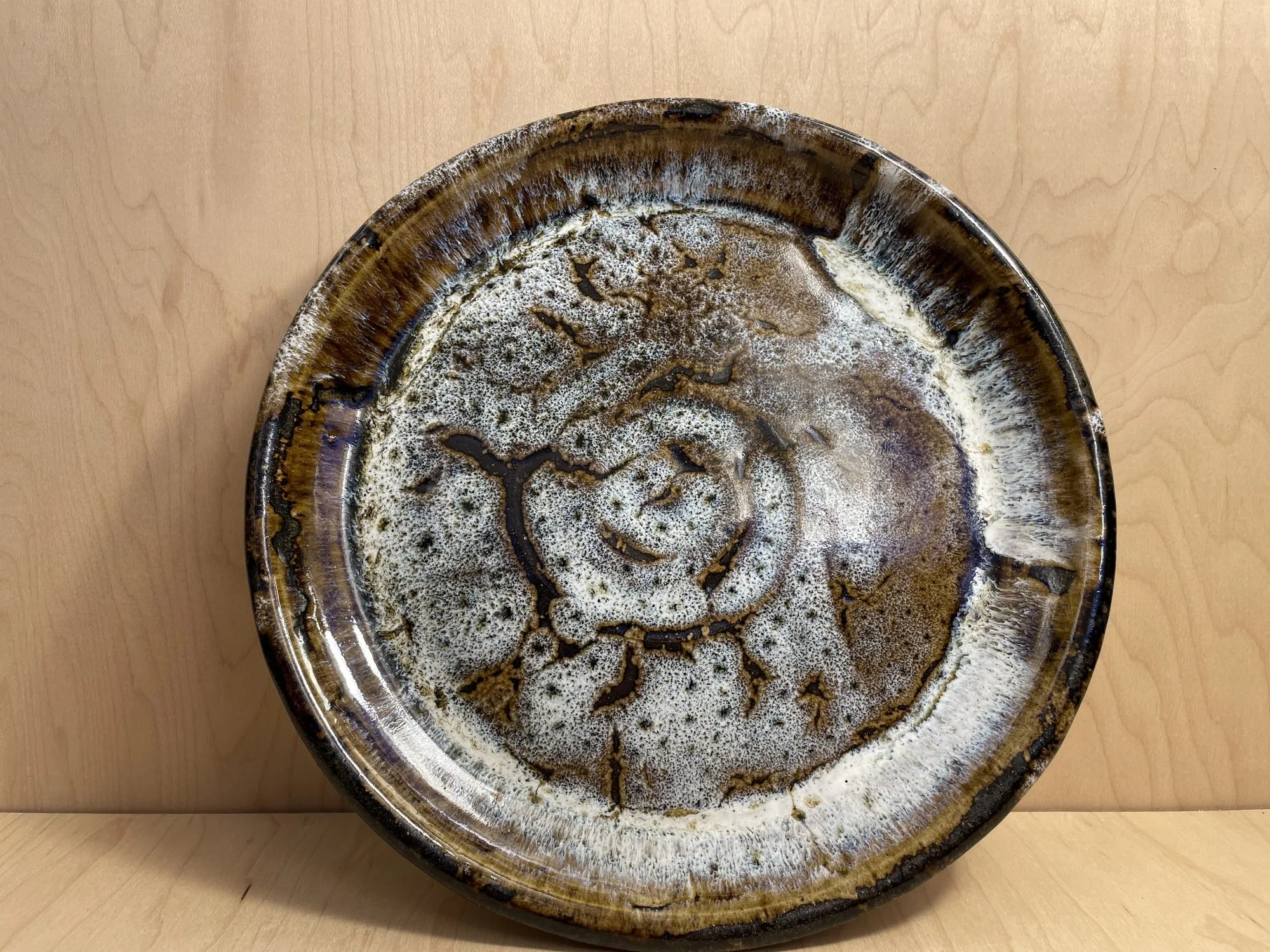
Cone 10 stoneware can shrink 12 to 14 percent from wet to fired. Warping comes from differential shrinkage, when one part of a pot shrinks more or faster than another. Even walls, strong base compression, gradual transitions and a balanced foot design against it.
- Uneven wall thickness is the most common cause of warping
- Compress the floor more than feels necessary to prevent S cracks
- Drying control helps, but it cannot fix a form with the wrong thickness ratios
Shrinkage is not the problem
From wet to bone dry, clay shrinks. From bone dry to cone 10, it shrinks again. That movement is not a flaw. It is the material doing its job. A typical cone 10 stoneware might shrink 12 to 14 percent from wet to fired. That number alone is not the problem. The problem is differential shrinkage, when one part of a piece shrinks more or faster than another.
Uneven walls
Uneven wall thickness is the most common cause. If the base of a bowl is thick and the walls are thin, the walls dry and shrink first. The base resists. Stress builds at the transition. Sometimes you get a subtle wobble. Sometimes you get a crack.
Good design evens that out. I aim for gradual transitions. Not paper thin rims over heavy bodies, and not bulky feet under delicate walls. Thickness should taper on purpose, not abruptly.

Compression
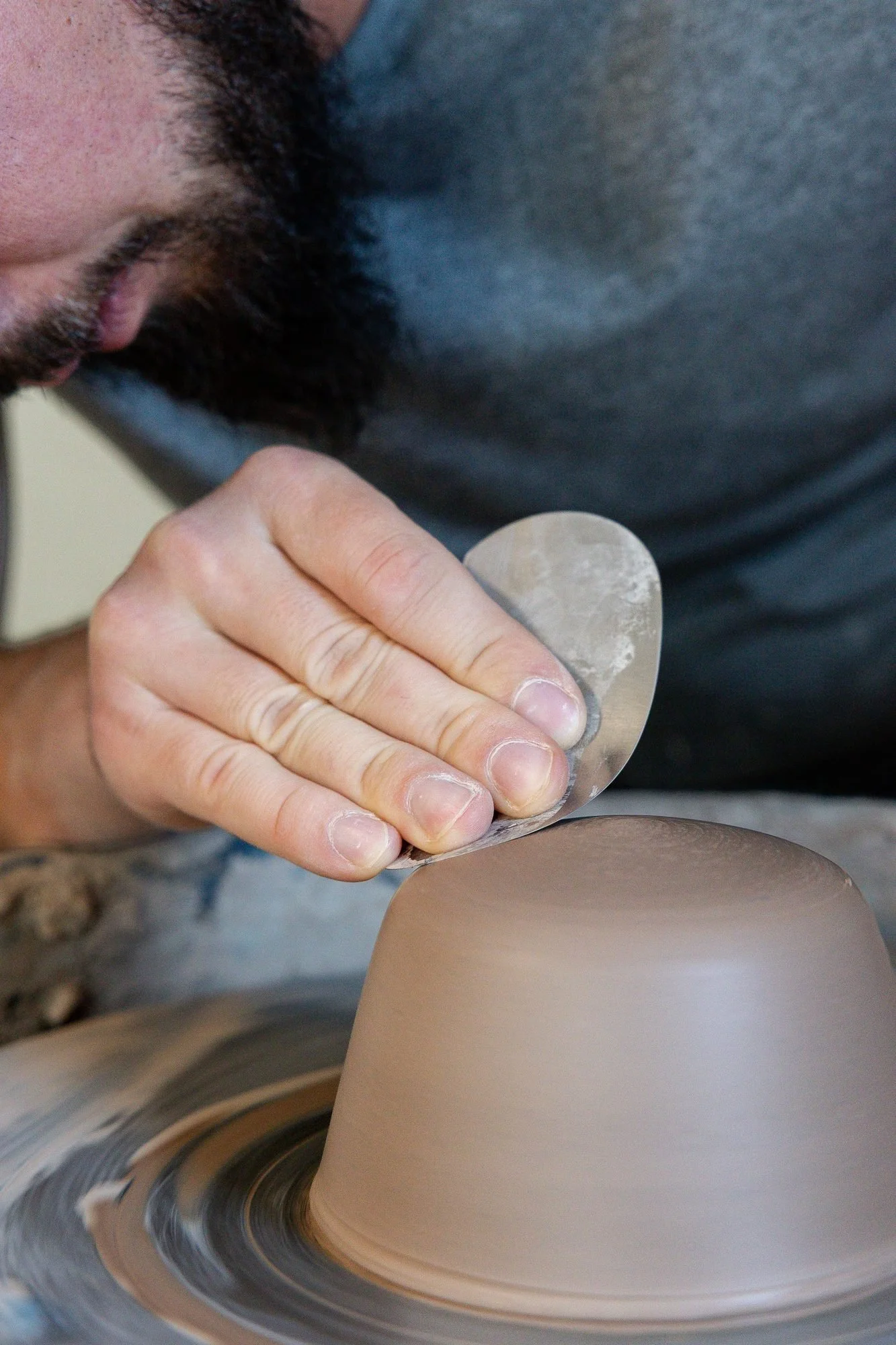
When you throw, clay particles align with the spin of the wheel. If you do not compress the base thoroughly, those aligned particles can separate slightly during drying. That is how S cracks form, especially in wide forms. I compress the floor of a piece more than feels necessary. Then I do it again. That pressure realigns the particles and strengthens the structure before shrinkage begins.
Foot rings
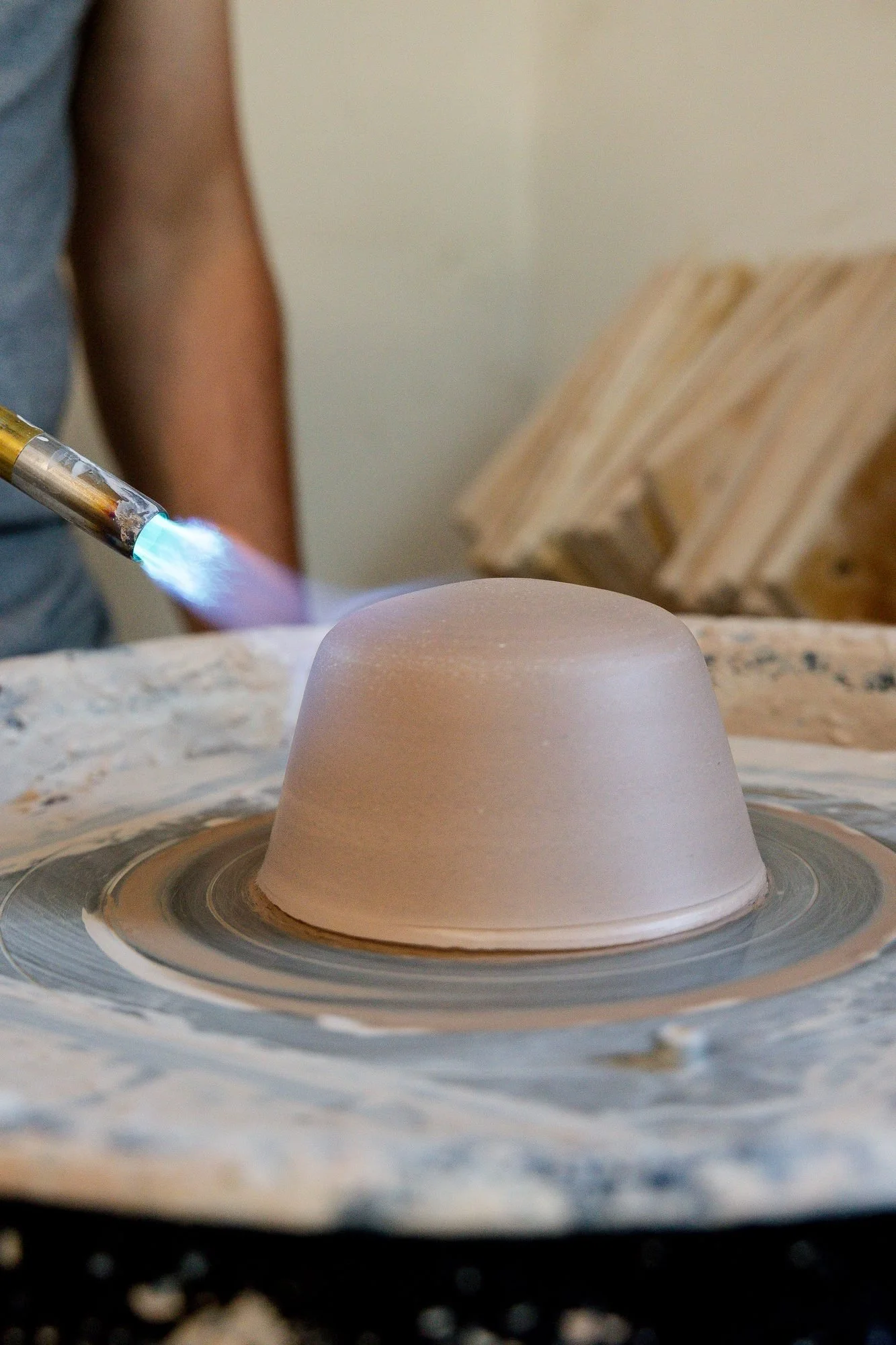
A sharply defined foot with a thin outer edge can dry faster than the inside of the base. If trimming removes too much support, the piece can settle unevenly during firing. A foot should lift the form visually, but it also needs structural integrity.
Cone 10 amplifies everything
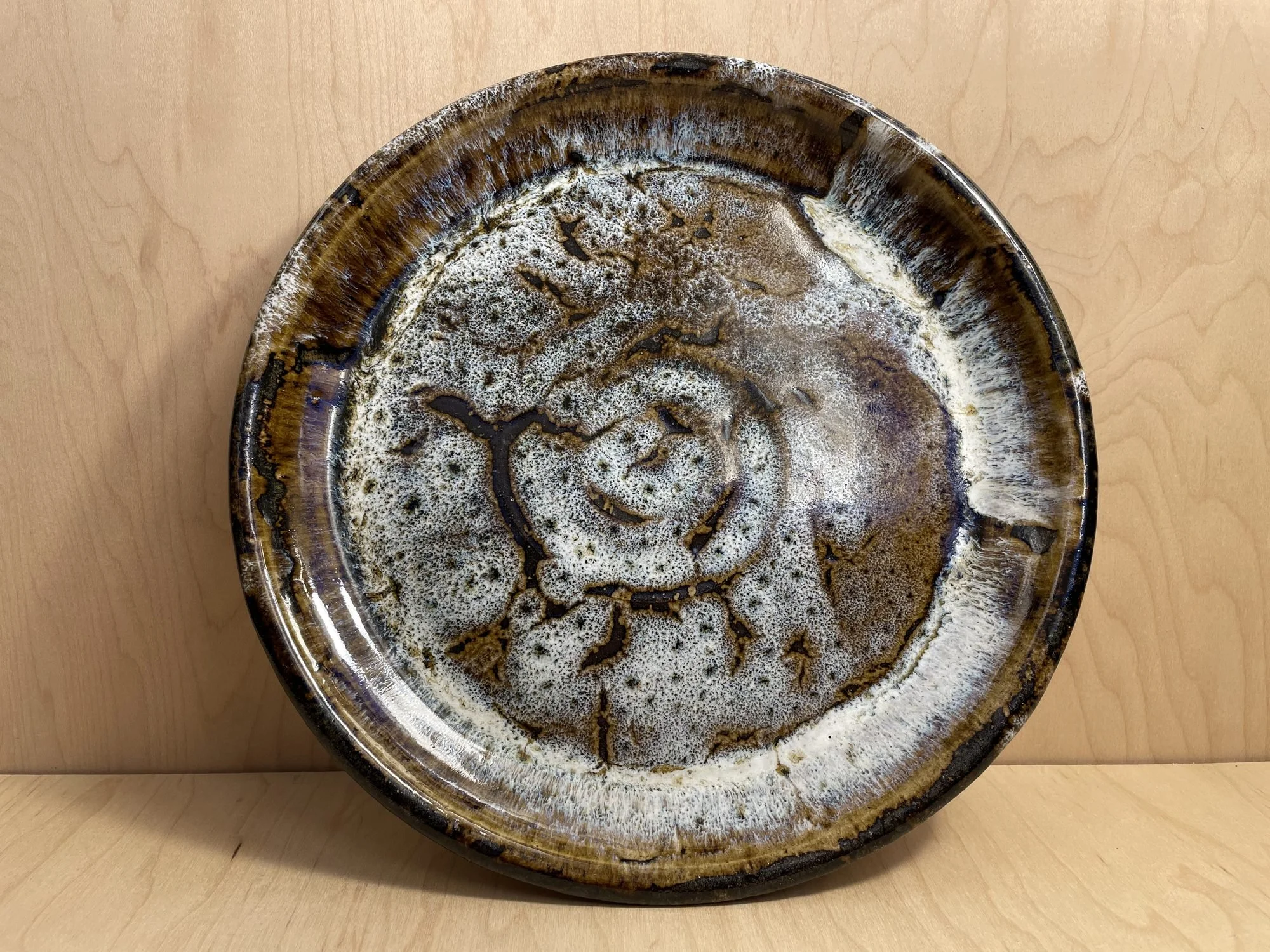
High fire increases vitrification. The clay body becomes dense and glass like at the particle level. If internal stresses exist before firing, cone 10 will not hide them. It will amplify them. Large bowls and wide platters show this quickly.
Drying control helps, but it cannot fix poor design. You can tent a piece with plastic, flip it at leather hard and slow the process down. But if the thickness ratios are wrong or compression was rushed, the movement is already built in.
Designing against it
- Consistent wall thickness
- Strong base compression
- Gradual transitions
- Balanced foot design
- Thoughtful trimming timing
- Controlled drying
It is less dramatic than blaming the kiln, but it is more accurate. When a pot comes out flat, balanced and quiet on the table, that is not luck. It is planning.
Cut a few practice bowls in half with a wire right after throwing. Seeing the actual wall and floor thickness in cross section teaches you more about warping than any number of finished pots.
If a pot shifts, twists or cracks, it does not leave the studio. Designing against warping is how fewer of them end up in that pile.
