Bisque firing vs glaze firing: what each one actually does
Two trips through the kiln, two completely different jobs. One makes the pot safe to handle. The other makes it a pot.
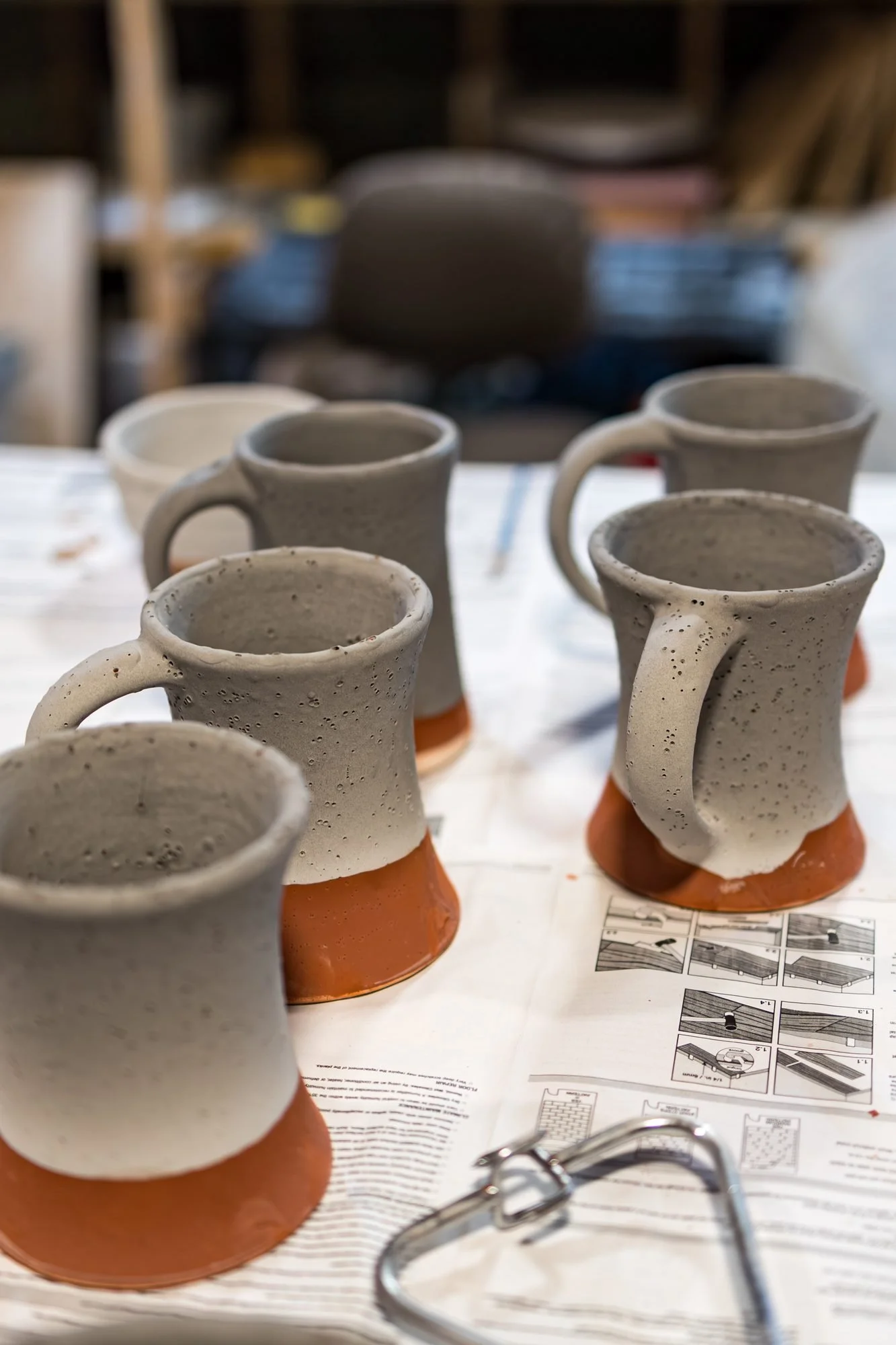
A bisque firing is a low first firing that turns dry clay into hard, porous ceramic so it can be glazed without falling apart. A glaze firing is the hot second firing, cone 10 in my case, that melts the glaze into glass and finishes the clay body underneath it. Bisque makes the pot handleable. Glaze firing makes it a finished, usable pot.
- Bisque: low temperature, no glaze, pot comes out hard but still absorbent
- Glaze firing: high temperature, glaze melts, clay matures and tightens
- Most pots go through both, and the order is not optional
Most people who visit my studio in Logan assume a pot goes in the kiln once. Then they see a shelf full of pale, chalky, obviously unfinished pots and ask why I would fire something that looks like that.
Fair question. Those pots have already been fired. They are just not done. Almost everything I make gets fired twice, and the two firings have almost nothing in common except the kiln.
Bisque firing: making the pot survivable
A bone dry pot is the most fragile thing in the room. You can snap a handle off with a thumb. If you dipped it in a bucket of glaze, which is mostly water, it would soften and slump or just come apart in your hands.
The bisque firing fixes that. It is a slow, relatively low firing, and its only real job is to chemically change the clay so it can never turn back into mud. Water that was bound up inside the clay minerals burns out for good. Organic material in the clay burns off. What comes out is ceramic: hard enough to handle without fear, but still porous, like an unglazed flower pot.
That porosity is the point. A bisqued pot soaks up water like a sponge, and that is exactly what lets glaze stick to it.
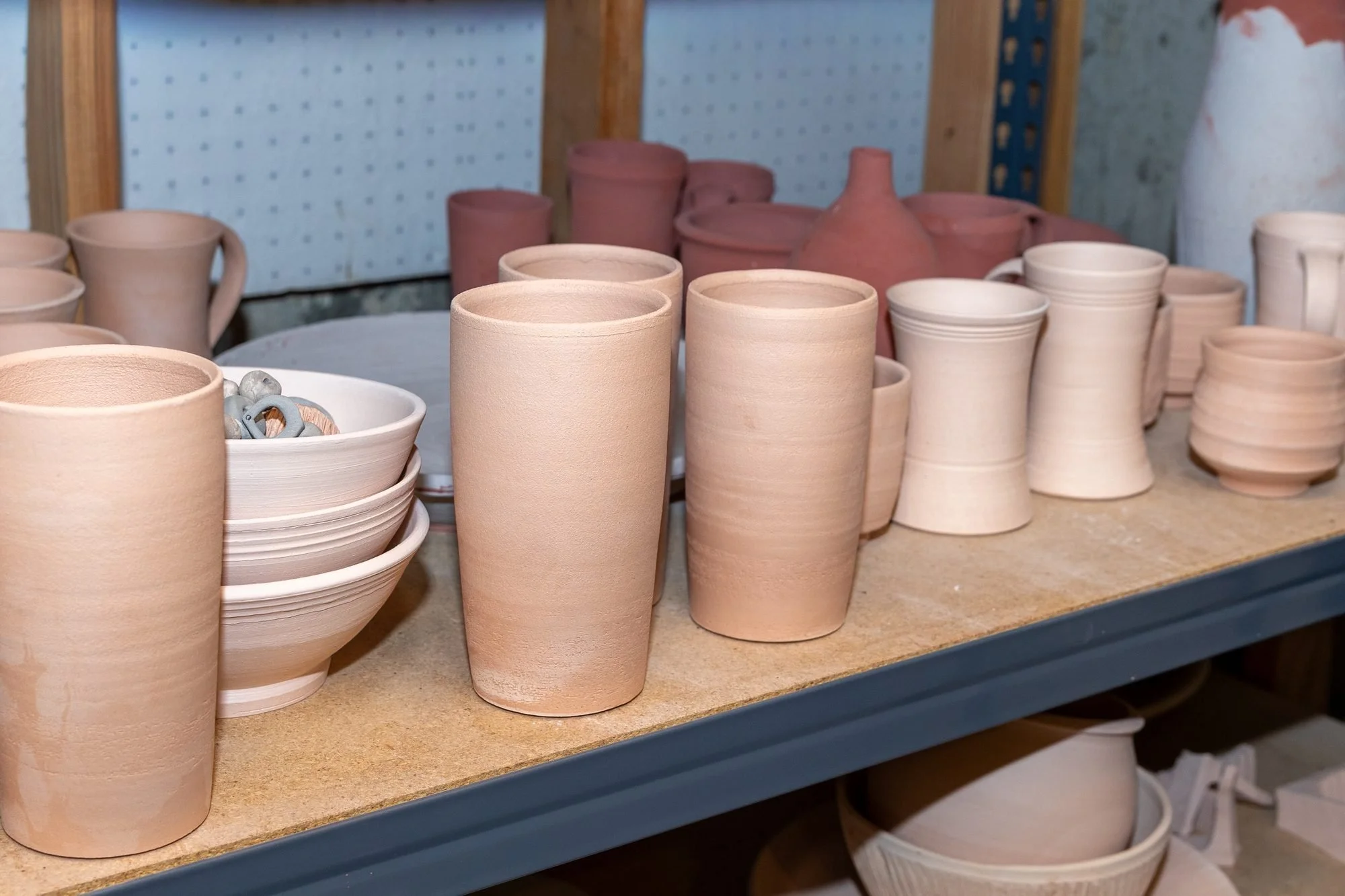
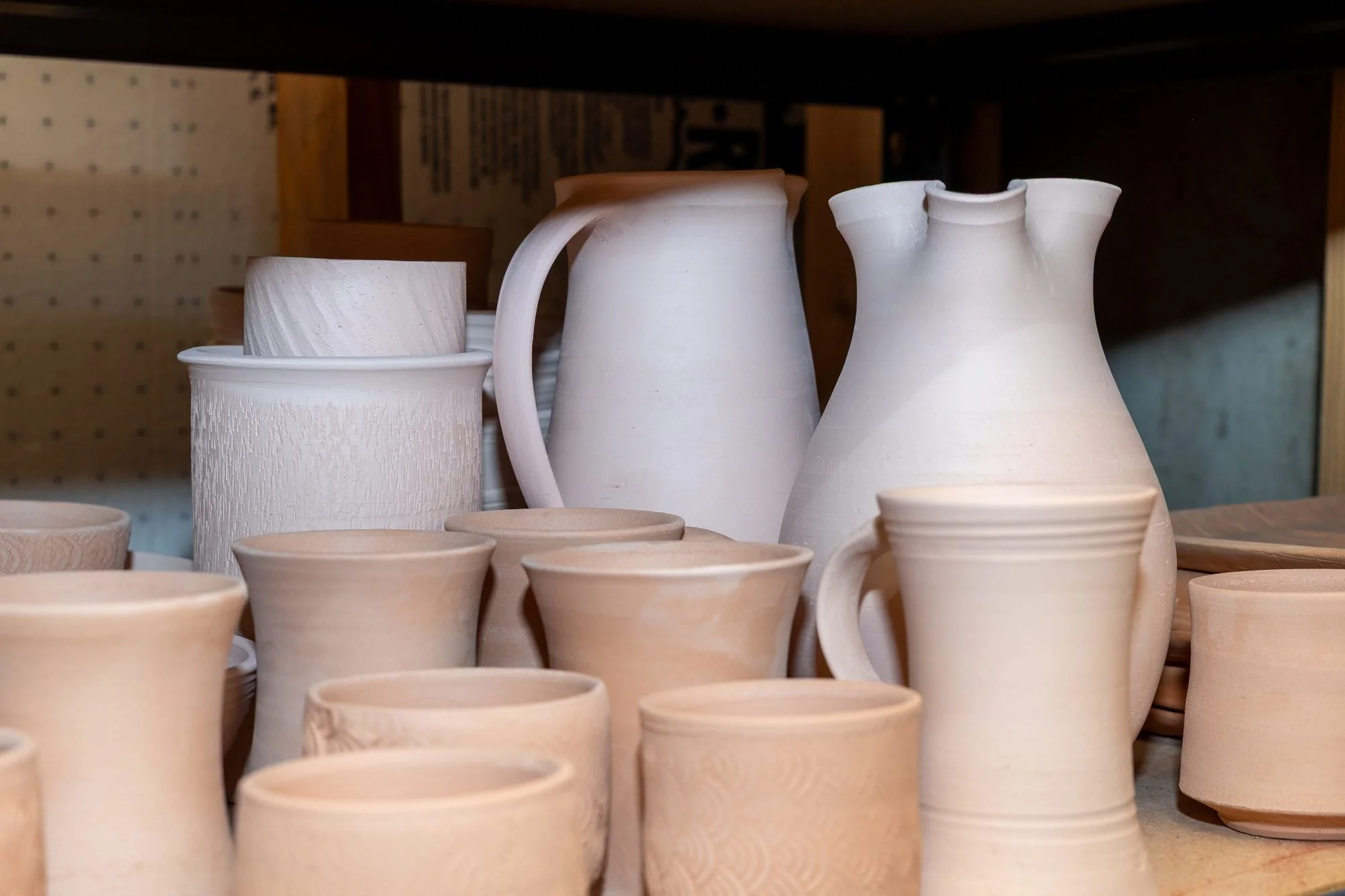
You can tell a bisqued pot by feel. It is dry and slightly rough, it makes a dull sound when you tap it, and if you touch it with a wet finger the mark disappears as the clay drinks it in. The color is pale, whatever it will end up being later.
Glazing: the in-between that is not a firing
Glaze goes on as a liquid, usually by dipping or pouring. The bisqued pot pulls the water out of it almost instantly, and a layer of glaze powder is left stuck to the surface. Within a minute it is dry to the touch.
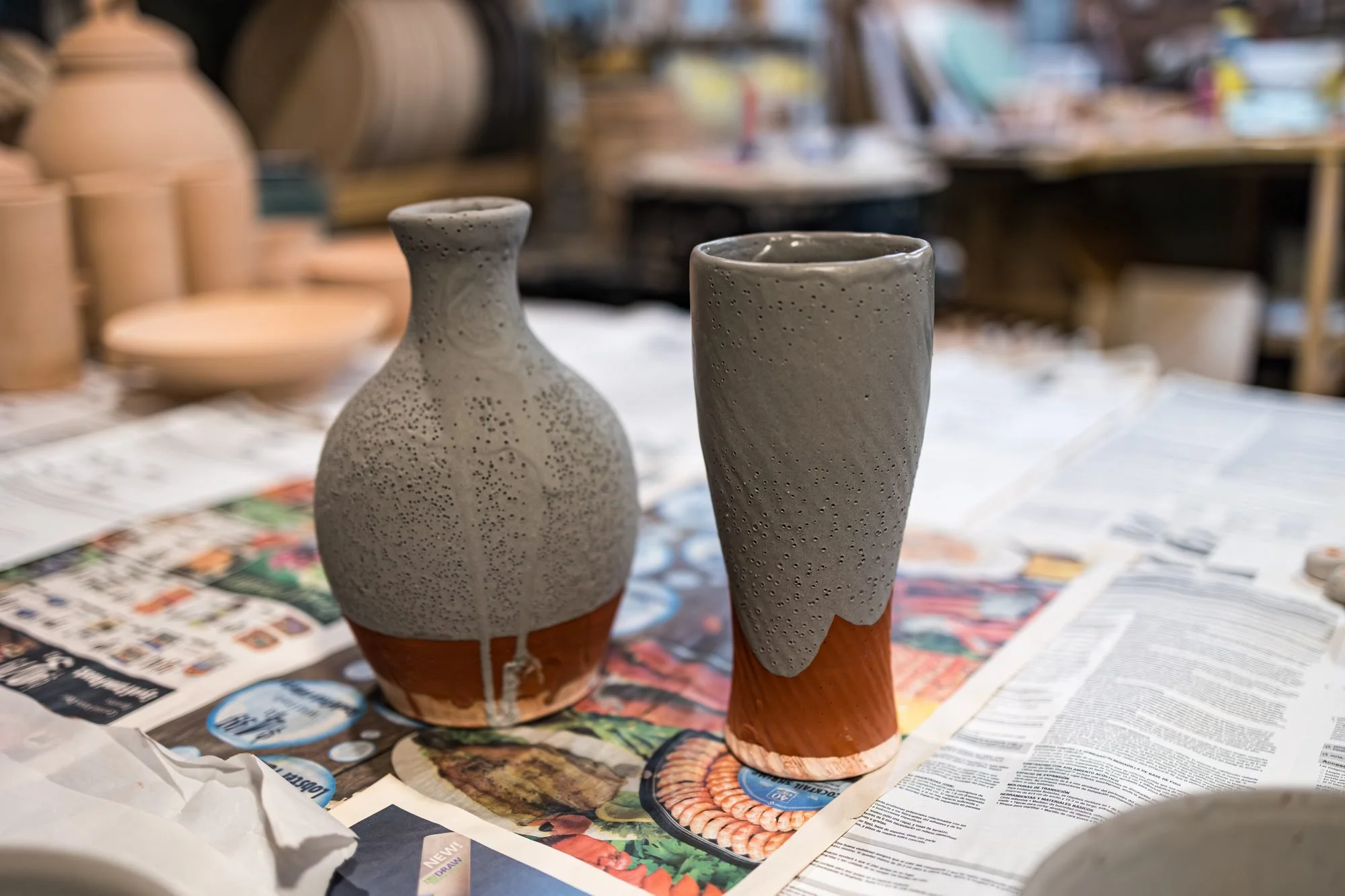
It is also useless. Raw glaze is just dusty minerals sitting on a pot. It smudges if you handle it wrong, chips if you knock it, and it looks nothing like the finished color. The chalky grey or dull red you see on a glazed but unfired pot has almost no relationship to what the kiln will make of it.
Glaze firing: where the pot actually gets made
The second firing is the hot one. I fire to cone 10, which is roughly 2350 degrees Fahrenheit, and two things happen up there at the same time.
The glaze melts. Those dusty minerals fuse into a sheet of glass that bonds to the clay. Color develops from the metals in the glaze and from how much oxygen is in the kiln. Texture that the raw glaze hid comes back through as the glass thins over edges and pools in the low spots.
And the clay finishes. Bisque leaves the body porous. The glaze firing tightens it, the particles fuse closer, and the pot stops soaking up water. This is why a properly fired stoneware mug can go through the dishwasher for years and a bisqued one would not last a week.
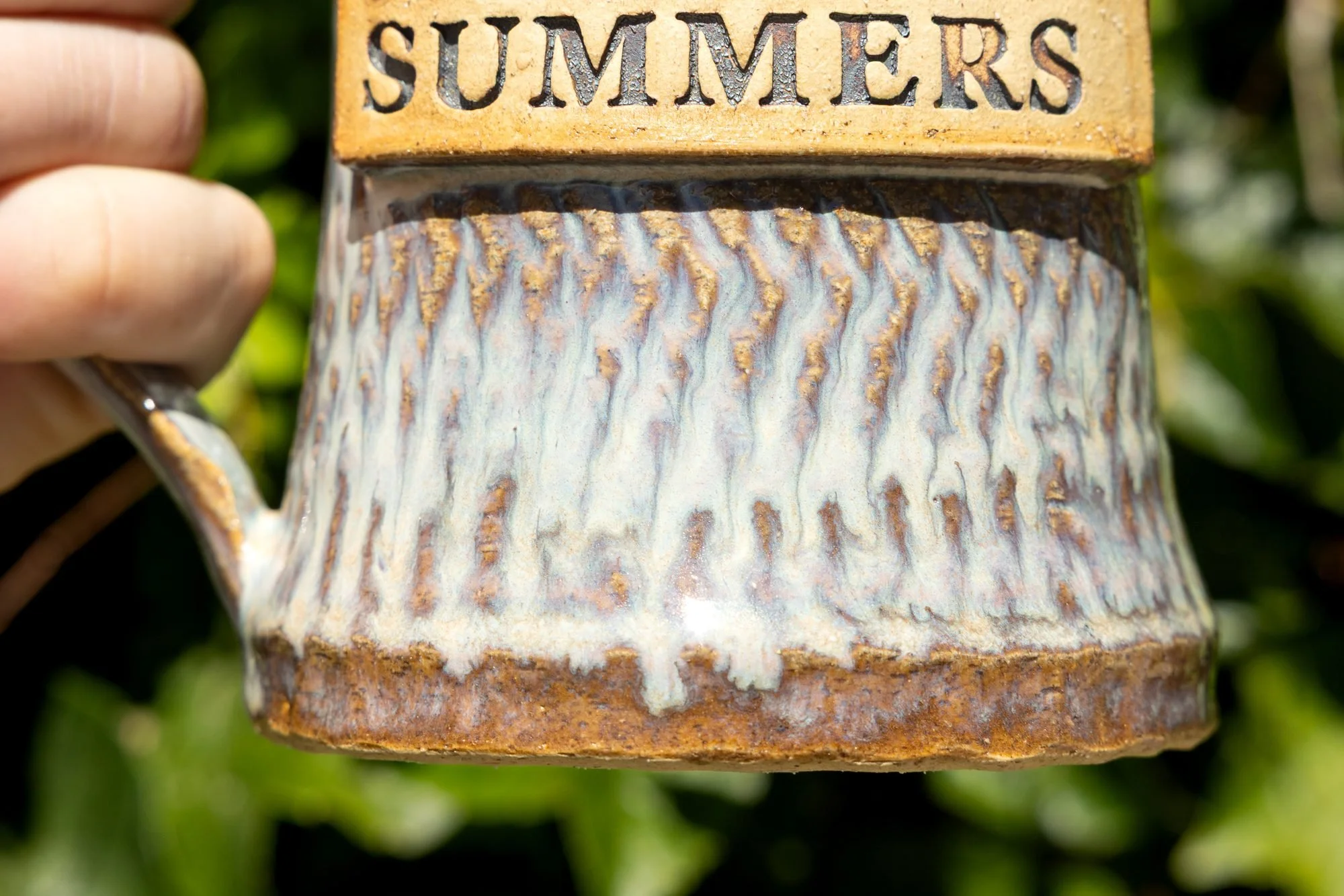
The pot that goes into a glaze firing and the pot that comes out are not really the same object. One is two kinds of dust stuck together. The other is glass fused to stone.
Why not just fire once?
Some potters do. Single firing, or once firing, means glazing bone dry or leather hard pots and taking them straight to top temperature. It saves a firing and it can work beautifully, but it asks a lot of the glaze and the pot at the same moment, and a lot can go wrong. Glaze that shrinks differently from the wet clay crawls or flakes off. Pots that were never bisqued are a nightmare to handle while glazing.
For me the bisque is cheap insurance. A low firing costs far less than the pots it protects. I have watched a cone 10 firing fail for reasons that had nothing to do with the pots, and I would rather not add glaze problems to that list.
How to tell which stage a pot is at
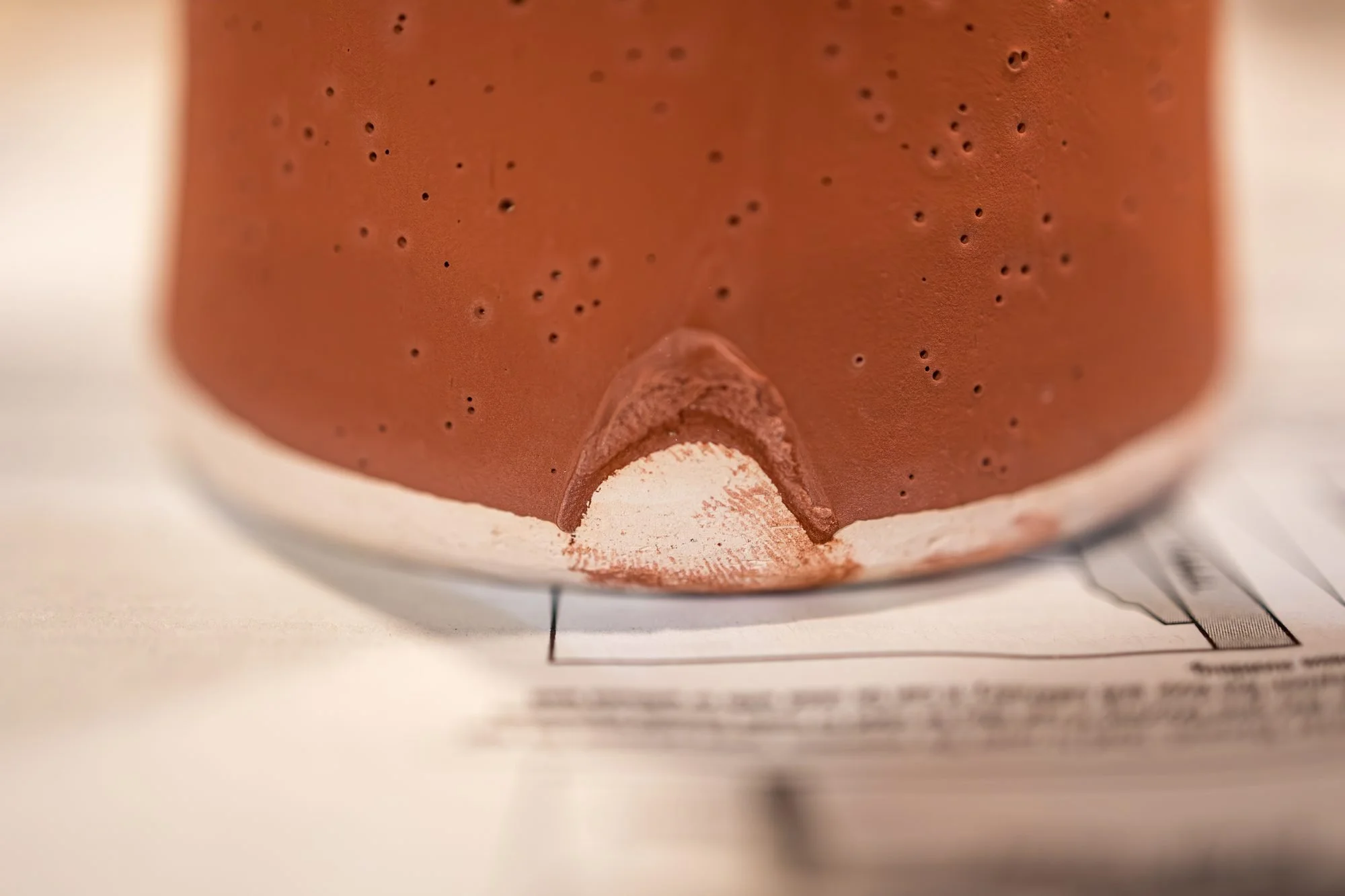
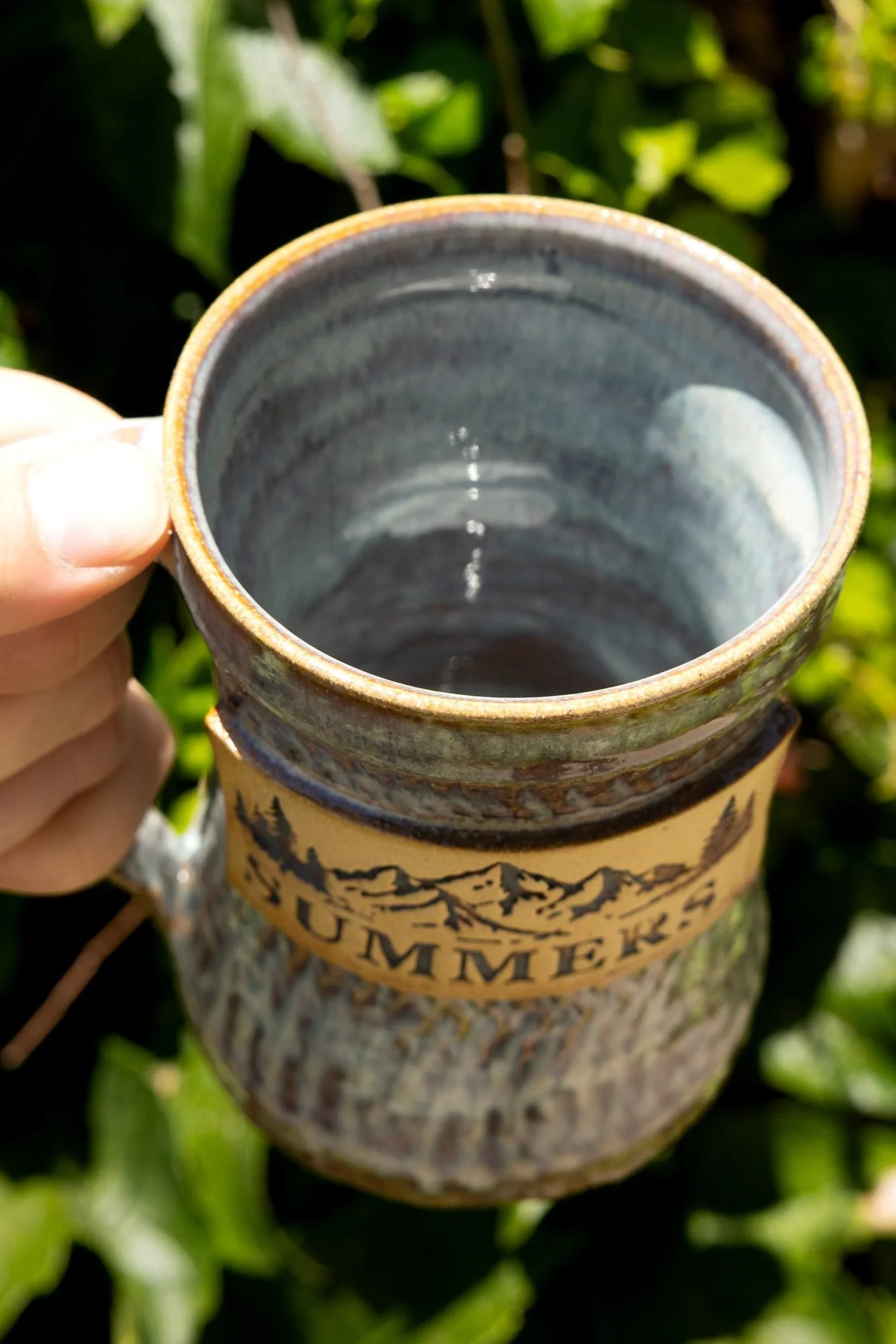
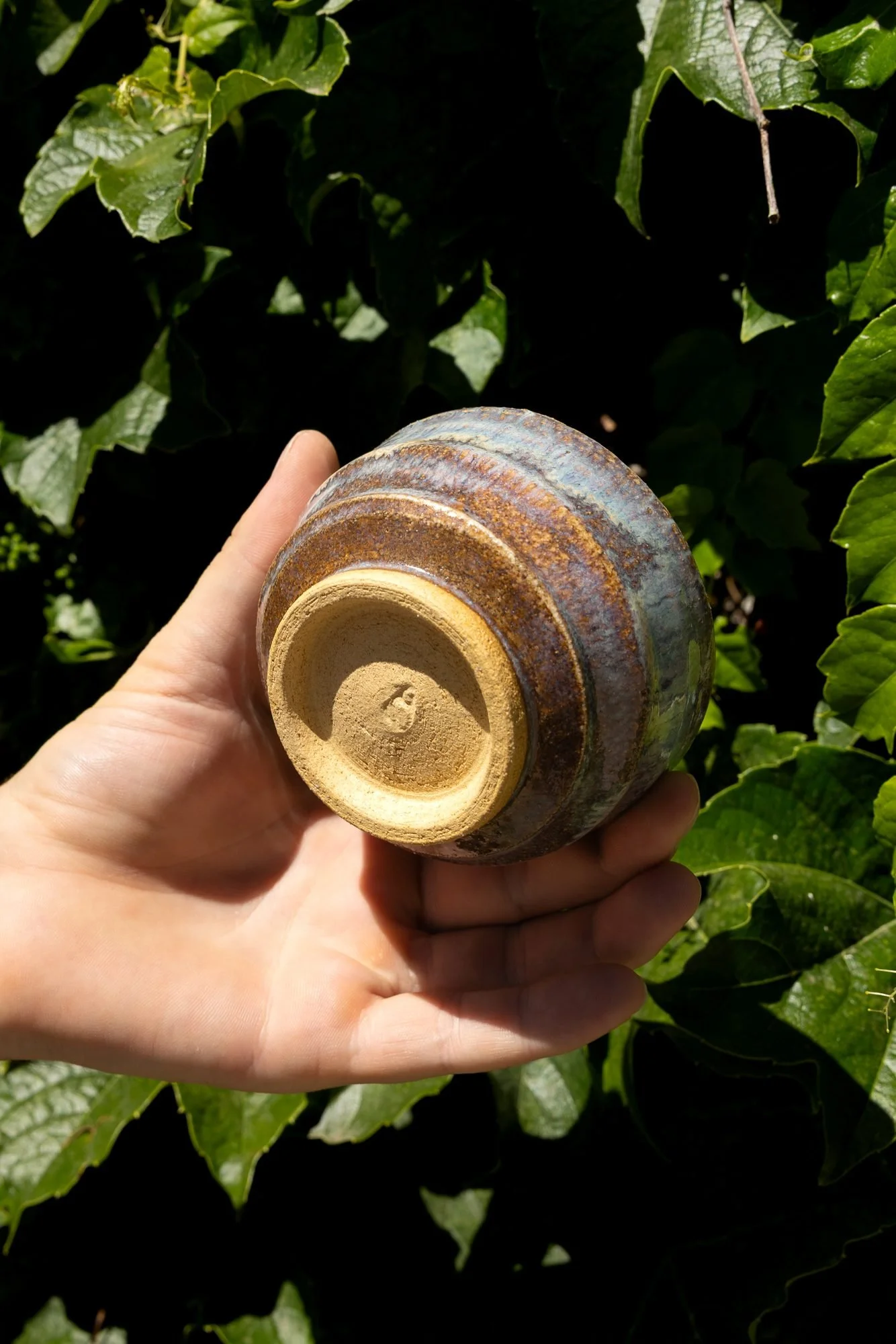
Bisqued and bare: pale, chalky, sounds dull when tapped, drinks water. Glazed and unfired: dusty coating that smudges, colors that look wrong, still dull when tapped. Glaze fired: glassy or satin surface, true color, and a clear ring when you tap the rim. The foot ring on a finished pot is the best place to check, because the bare clay there has been through the full firing and feels nothing like bisque.
Before you glaze, wipe every bisqued pot with a barely damp sponge. Bisque picks up dust from the shelf and from your hands, and glaze will not stick properly to dust. It crawls away from those spots in the firing and leaves bare patches. One pass with a damp sponge, let it dry for a minute, then dip.
Two firings, and only the second one gets any credit. The first one is why there is anything left to take credit for.
