I’m Not in a Hurry
There are faster ways to do this.
I could fire lower. Turn work around quicker. Make lighter pieces that dry faster and cost less to produce. I could focus on surface trends that move easily and photograph well. I could release larger batches more often.
I’m not doing that.
The work I’m building — high fire, cone 10, moving toward salt — takes time. Not just in the kiln, but in the decisions leading up to it. Clay testing. Adjusting proportions. Refining handles. Reclaiming pieces that don’t meet the standard.
Nothing about it is rushed.
When you fire to cone 10, you’re committing to longer cycles. Slower climbs. More fuel. More stress on equipment. The margin for error narrows. You can’t fake maturity at that temperature. The clay either vitrifies properly or it doesn’t.
That pace shapes everything else.
I’m building a body of work that holds up. That means I need to know how it behaves over time. I need to see how rims wear after a year of use. I need to test glazes for fit, not just appearance. I need to understand how a wild clay body responds before it ever becomes a full production batch.
That kind of understanding doesn’t come from speed.
The same goes for the salt kiln. I’m not stacking brick just to say it’s built. I’m thinking through airflow, chimney height, flame path. I’d rather adjust on paper ten times than rebuild once in frustration. Once that kiln is firing, it becomes part of the identity of the studio. That deserves patience.
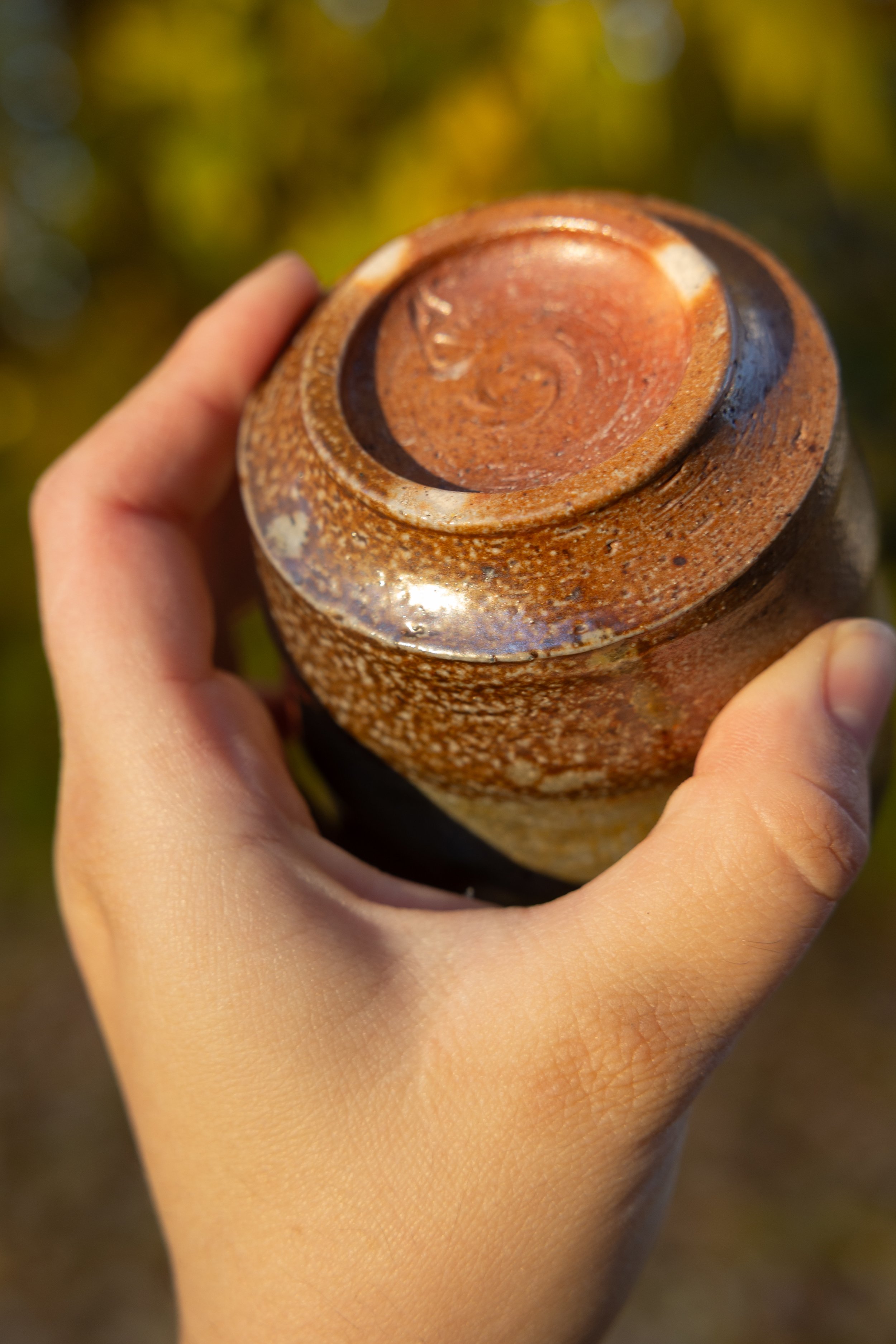
There’s pressure to move faster. To produce more. To chase what’s currently popular. I feel it like anyone else. But every time I rush something — even slightly — the work shows it. A rim slightly heavy. A foot ring not fully resolved. A glaze applied before it was properly tested.
Small shortcuts compound.
I don’t want a body of work that looks impressive in a single photo. I want a shelf of mugs that feel consistent years from now. Bowls that still sit flat. Surfaces that mature instead of craze.
That takes repetition. Editing. Saying no to pieces that are almost good enough.
It also means smaller releases. Fewer pieces at a time. Letting the kiln schedule dictate output instead of a marketing calendar. Some weeks are heavier with testing than selling. Some firings are more about learning than inventory.
That’s fine.
The studio isn’t built on volume. It’s built on standards.
When I’m in here late, wheel spinning, iced coffee sweating on the table, there’s no sense of urgency. Just steady work. Throw, refine, trim, test, fire. Repeat. Over time, that repetition builds something stronger than speed ever could.
I’m not in a hurry because I don’t want to rebuild this later.
I want it solid from the start.
This is long work. I’m staying with it.
You can follow the build and see the pieces along the way at adamcorbridgepottery.com.
Adam Corbridge