How to Tell If a Mug Is Actually Well Made
Most mugs look fine sitting on a shelf.
Straight walls. Decent glaze. A handle attached cleanly enough. From a distance, it’s hard to tell what separates one from another.
You can tell the difference when you use it.
A well-made mug reveals itself in small ways. Not dramatic ones. Subtle things that either feel right immediately or start to bother you over time.
Start with the rim.
Run your finger around the edge. It should feel even. Not sharp. Not thick and blunt. When you drink from it, the clay shouldn’t draw attention to itself. If you notice the rim every time it touches your mouth, something is off. Either the wall wasn’t refined properly or the lip wasn’t compressed evenly.
Then check the weight.
Empty, a mug shouldn’t feel heavy for its size. There’s a difference between sturdy and bulky. Pick it up by the handle. Does it tilt forward? Does it pull down in your grip? A well-balanced mug distributes weight so that when it’s full, it still feels steady.
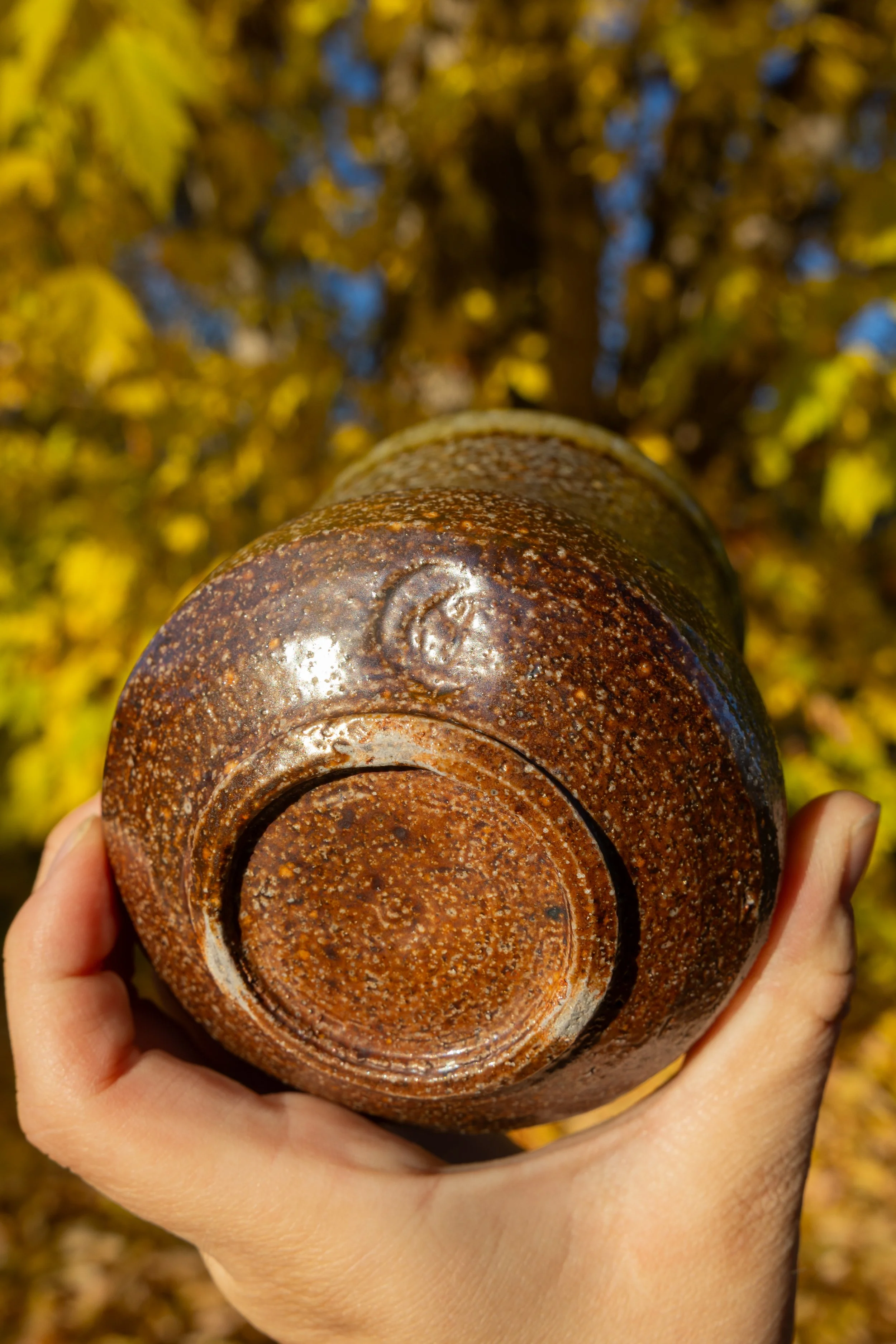
Turn it over.
The foot ring should be intentional. Not just a trimmed circle, but a defined base that gives the form lift. It should sit flat on a table without rocking. That sounds basic, but you’d be surprised how often that detail is missed. In functional pottery, instability isn’t character. It’s a flaw.
Look at the handle next.
The handle should feel integrated, not added. When you slide your fingers through it, there should be enough space without excess. Your knuckles shouldn’t press awkwardly against the body. The top attachment point should align with the center of gravity. If the handle sits too high or too low, you’ll feel it every time you lift the mug.
Now consider the surface.
Glaze gets the attention. Color. Movement. Variation. But surface quality isn’t just about looks. Check for crawling, pinholes, sharp glaze edges at the rim. Look for crazing — fine cracks in the glaze that can develop over time if the glaze fit is off. A well-made mug has glaze that fits the clay body properly, especially at higher temperatures like cone 10 where everything matures fully.
Tap it lightly.
A mature, well-fired mug has a clear ring. Not dull. Not chalky. That tone tells you something about vitrification — how completely the clay body has matured in the kiln. Underfired work often sounds flat and can absorb more moisture over time.
Finally, ask yourself this: does it disappear when you use it?
A good mug shouldn’t demand attention once it’s in your hand. It should support the ritual. Morning coffee. Afternoon tea. Late-night refills. The form should serve the function quietly.
That’s what I aim for in my studio.
When I throw a mug, I’m thinking about compression at the base so it doesn’t crack. I’m thinking about wall thickness so it feels balanced. I’m thinking about how the handle will carry weight once the cup is full. I’m thinking about how cone 10 heat will change proportion slightly and tighten the clay body.
None of those decisions are flashy.
But they add up.
If you’re going to use it every day, it should be built like it matters.
That’s the standard here. Current work is available at adamcorbridgepottery.com.
Adam Corbridge