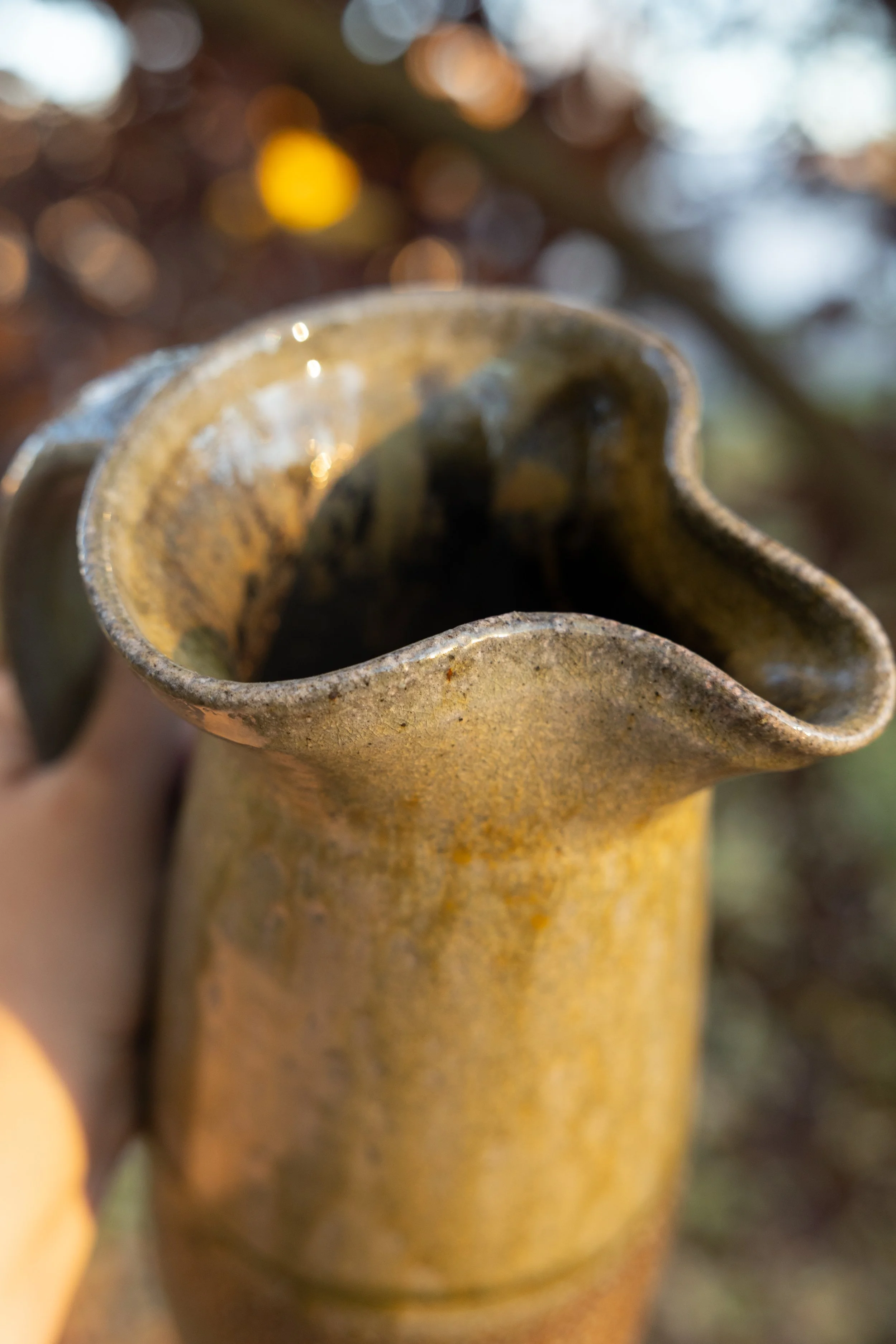
Surface Gets the Credit. The Rim Does the Work.
Glaze is what people notice first.
They pick up a mug and turn it toward the light. They look at the surface. The color. The movement. The variation where the flame hit harder. Especially with high fire work — especially as I move deeper into salt fired pottery — the surface can carry a lot of visual weight.
But that’s not the part you live with.
The rim is.
When I’m throwing a mug, I don’t think about the glaze first. I think about the lip. The thickness. The way it will meet someone’s mouth every morning, half awake, not paying attention.
That edge does the work.
Too thick and it feels heavy. Blunt. Clumsy. You notice the clay before you notice your coffee.
Too thin and it chips. Or worse, it feels sharp — fragile even if it isn’t.
There’s a narrow range where it feels right.
After I pull the walls, I compress the rim between my fingers and a sponge. Not to thin it dramatically, but to refine it. The goal isn’t delicacy. It’s strength with restraint. At cone 10, clay tightens and vitrifies fully. The rim becomes dense. If it’s shaped correctly, it feels smooth without being soft.
That shaping matters more than whatever glaze eventually breaks over the edge.
A lot of modern pottery leans on surface. Bold color. Heavy contrast. Drips placed just right for a photograph. And glaze is important — I test constantly. I care about fit, about how it bonds to the clay body, about whether it shivers or crazes under stress.
But glaze is a layer.
The rim is structure.
In functional work — the kind I make here in my studio — the user doesn’t interact with the pot visually as much as physically. A mug isn’t a painting. It’s something you raise to your face every day. If the rim feels awkward, the whole piece feels wrong, even if you can’t explain why.
I’ve thrown mugs that looked strong on the shelf but felt off when used. The lip was a millimeter too thick. Or slightly uneven from trimming. That small imbalance changes the experience.
When I trim, I check the rim again. I don’t alter it much at that stage, but I feel for consistency. The wall thickness needs to taper slightly toward the top. Not dramatically. Just enough that the form resolves.
Resolution is quiet. You don’t see it from across the room. You feel it in use.
High fire exaggerates everything. At cone 10, proportions shift subtly. Clay settles. Edges soften. If the rim starts heavy, it finishes heavier. If it starts refined, it matures well. That’s one reason I don’t rush that stage of throwing. The heat will reveal whether I was paying attention.
There’s also durability to consider. A well-shaped rim distributes stress evenly. In dishwashers. In sinks. Against other ceramics. A poorly shaped lip takes impact on a thin edge and chips easily.
When people ask what makes quality pottery different, this is part of the answer.
It’s not perfection. Handmade work shouldn’t feel sterile. But it should feel intentional. The rim should feel considered.
Surface gets the credit because it photographs well. It markets easily. It catches light.
The rim does the work because it meets your mouth before your eyes are even open.
That’s the part I care about.
When I’m finished throwing a mug, I run my thumb lightly around the edge one last time. No drama. Just checking. If it feels right, I move on. If it doesn’t, I fix it immediately. Later is too late.
In the end, glaze can enhance a piece. Salt can deepen it. Flame can mark it.
But none of that matters if the rim feels wrong.
Details decide everything.
Adam Corbridge
adamcorbridgepottery.com