The Pots You’ll Never See
If you walk into my studio, you’ll see shelves of finished work.
What you won’t see — at least not right away — is the other shelf.
The one with the almosts.
The mug that’s technically fine but just a little heavy in the hand.
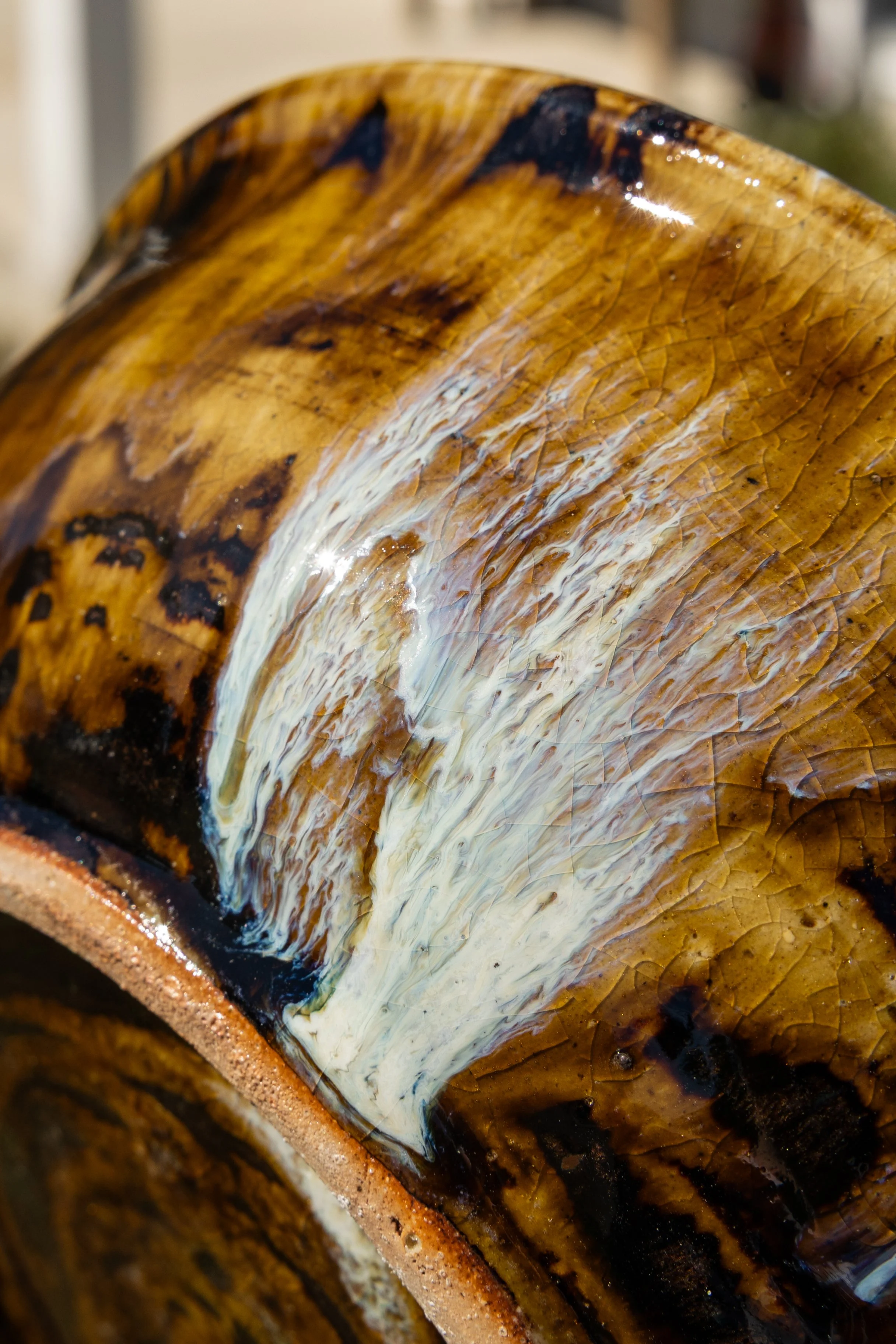
The bowl with a glaze that matured… but didn’t come alive.
The cup with a handle that works, but doesn’t quite belong.
Those are the pots you’ll never see.
When I first started making pottery, I kept nearly everything that survived the kiln. If it didn’t crack or warp, it felt like a win. I didn’t yet have the eye — or maybe the nerve — to decide what was truly finished and what was just functional.
Survival felt like success.
But over time, that shifted.
The first time I held a mug back from sale, it felt strange. It wasn’t broken. It would have held coffee just fine. Someone probably would have liked it.
But it didn’t feel resolved.
The rim was slightly thick. The foot a little stiff. The glaze pooled in a way that distracted instead of deepened.
No one else might have noticed.
I did.
That moment mattered more than any clean firing.
Because that was the moment I realized that making Logan Utah pottery isn’t just about producing objects — it’s about deciding what represents you. Every piece that leaves this studio carries my name with it. In a smaller community, that weight feels real.
The shard bucket started to grow.
Not recklessly. Not dramatically. But intentionally.
Some losses are obvious — cracked rims, warped bowls, glazes that ran too far at cone 10. Those are technical failures.
The harder decisions are the quiet ones.
The mug that’s good, but not strong.
The plate that’s balanced, but not confident.
The surface that’s finished, but not deep.
Those cost more to let go of.
There’s time in them. Electricity. Clay. Kiln wear. Hours at the wheel.
But something happens when you begin removing the almosts.
The work sharpens.
Standards rise without you announcing them. Your hands slow down. You trim a little more carefully. You pull a handle again instead of accepting the first one. You notice weight differently. You feel proportion more clearly.
The pieces that never leave the studio are teaching just as much as the ones that do.
They’re narrowing the gap between where I am and the kind of potter I’m trying to become.
It would be easier to sell everything that survives.
But easier isn’t the goal.
If someone picks up one of my pots, I want it to feel intentional — not accidental. I want it to feel like it earned its place.
The pots you’ll never see are part of that process.
They’re not failures.
They’re the quiet discipline behind the work that remains.
— Adam Corbridge
Trying to make fewer pots, but better ones.
See what survives at adamcorbridgepottery.com