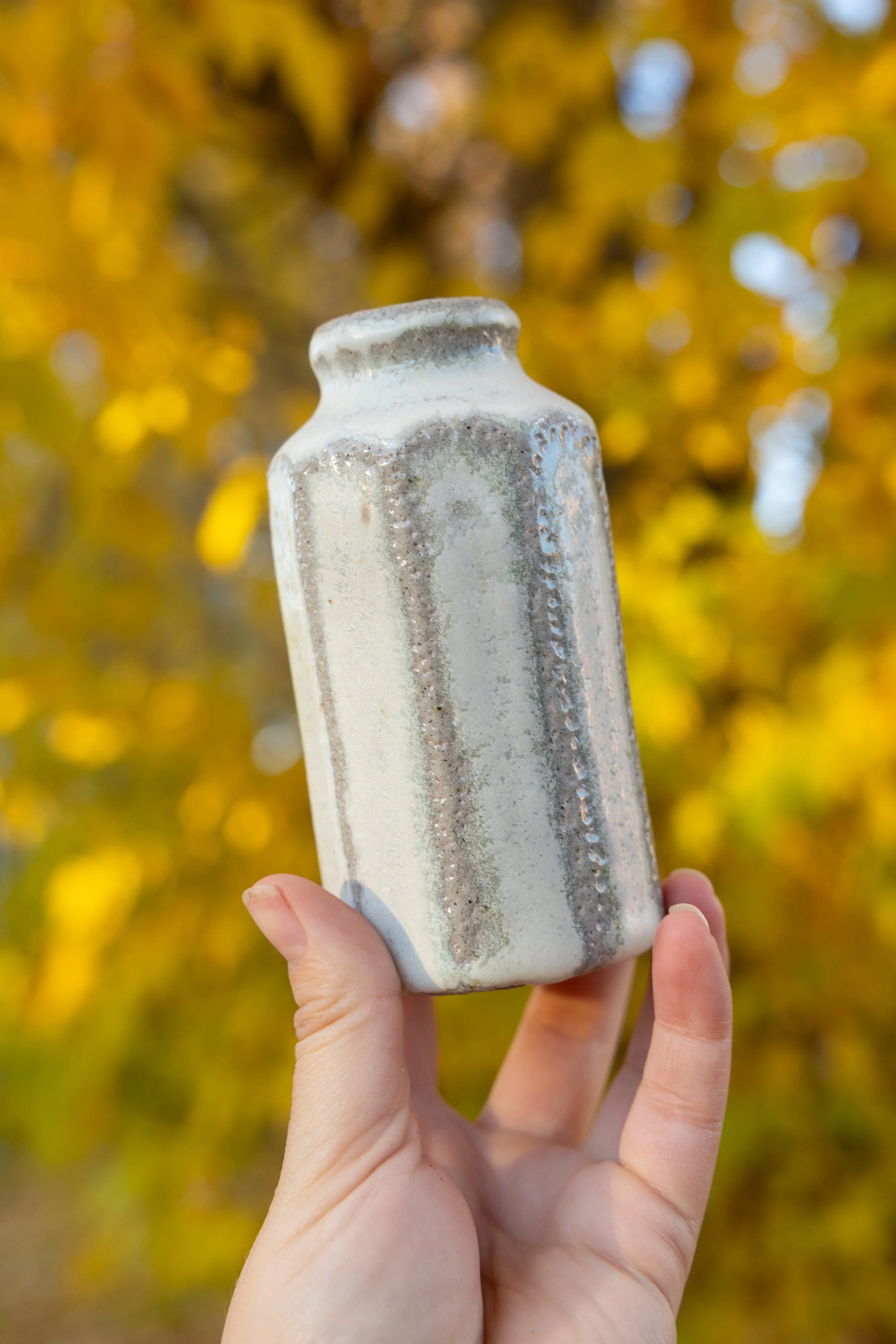
What Matters Most Isn’t the Surface
It’s easy to talk about surface.
Salt firing. Flashing. Iron break. Depth in a cone 10 glaze. The way ash settles or how light moves across a warm brown.
Surface is what photographs well. It’s what people notice first when they scroll. It’s what gets described in captions and show listings.
But what matters most isn’t the surface.
When someone picks up one of my pots, they don’t experience the glaze first.
They feel the weight.
They feel the balance.
They feel whether it belongs in their hand.
I’ve opened kilns where the glaze was beautiful — deep, warm, layered — but the form underneath wasn’t strong enough to carry it. The rim slightly too thick. The handle just a little tight. The foot not trimmed quite cleanly enough.
Those are hard moments.
Because a strong surface can hide small weaknesses at a glance. It can impress quickly. But once you hold the piece, the truth shows up.
That realization changed how I work.
There was a time when I focused heavily on glaze results — adjusting thickness, layering slips, chasing depth in high fire ceramics. I still care about that deeply. I still fire hot because I love what heat does to clay.
But I’ve learned that if the form isn’t resolved, the surface won’t save it.
When I throw a mug now, I’m thinking less about how it will look and more about how it will feel at the sink. How it will sit in a hand that’s distracted. Whether the rim disappears when someone takes a sip.
The goal isn’t to make a pot that demands admiration.
It’s to make one that earns trust.
A good pot doesn’t call attention to itself every time you use it. It settles into routine. It feels steady on the counter. It doesn’t wobble. It doesn’t pinch your fingers. It doesn’t remind you of its maker every five seconds.
It just works.
That’s harder than it sounds.
Because restraint is quieter than effect. It takes more discipline to trim a foot perfectly than to layer another glaze. It takes more intention to pull a handle again because it feels slightly off than to convince yourself it’s good enough.
The surface is still important. I care deeply about the way salt fired pottery matures in heat. I care about depth and warmth and subtle variation.
But those things should support the experience — not overpower it.
If someone picks up one of my pots and doesn’t think about the glaze at first, that’s not a failure.
That’s success.
Because what matters most isn’t what they see.
It’s what they feel.
— Adam Corbridge
Still chasing the feeling more than the finish.
You can hold the rest at adamcorbridgepottery.com