A Firing Schedule That Solves Problems
Most firing problems do not start with the glaze. They start with the schedule. This is the cone 10 electric schedule I use, segment by segment, and why.
A good cone 10 schedule separates events that cause trouble when they overlap: moisture leaves early, burnout finishes before the glaze softens, structural changes happen steadily, and the glaze melts under control. A short top hold and a natural cool finish it.
- Slow start to 250°F, then 200°F per hour through burnout to 1100°F
- Steady through quartz inversion, faster mid range, then slow the last climb to cone 10
- Hold 10 to 20 minutes at the top, then let it cool naturally with the lid closed
You can have a well formulated glaze and a properly vitrifying clay body and still get pinholes, dull surfaces or small stress cracks, simply because the heat moved wrong. Here is the schedule I use for functional ware, and more importantly, why.
Segment 1: slow start
Ramp: 100°F per hour to 250°F. This is about moisture. Even fully dry ware can hold leftover water in thicker areas like handles, foot rings and attachments. A slow first ramp lowers the risk of steam expansion and micro cracking early in the firing. Rushing this stage does not save meaningful time. It just adds risk.
Segment 2: burnout window
Ramp: 200°F per hour to 1100°F. Roughly between 1000 and 1600°F, organics burn out and chemically bound water leaves the clay. Carbonates and sulfur compounds break down and release gases. If you climb too fast here, you stack clay off gassing on top of glaze softening later, which is one of the root causes of pinholing. I do not race through this range. Even in an electric kiln, airflow and venting matter. A tightly closed kiln climbing hard gives gases fewer chances to escape cleanly.

Segment 3: quartz inversion
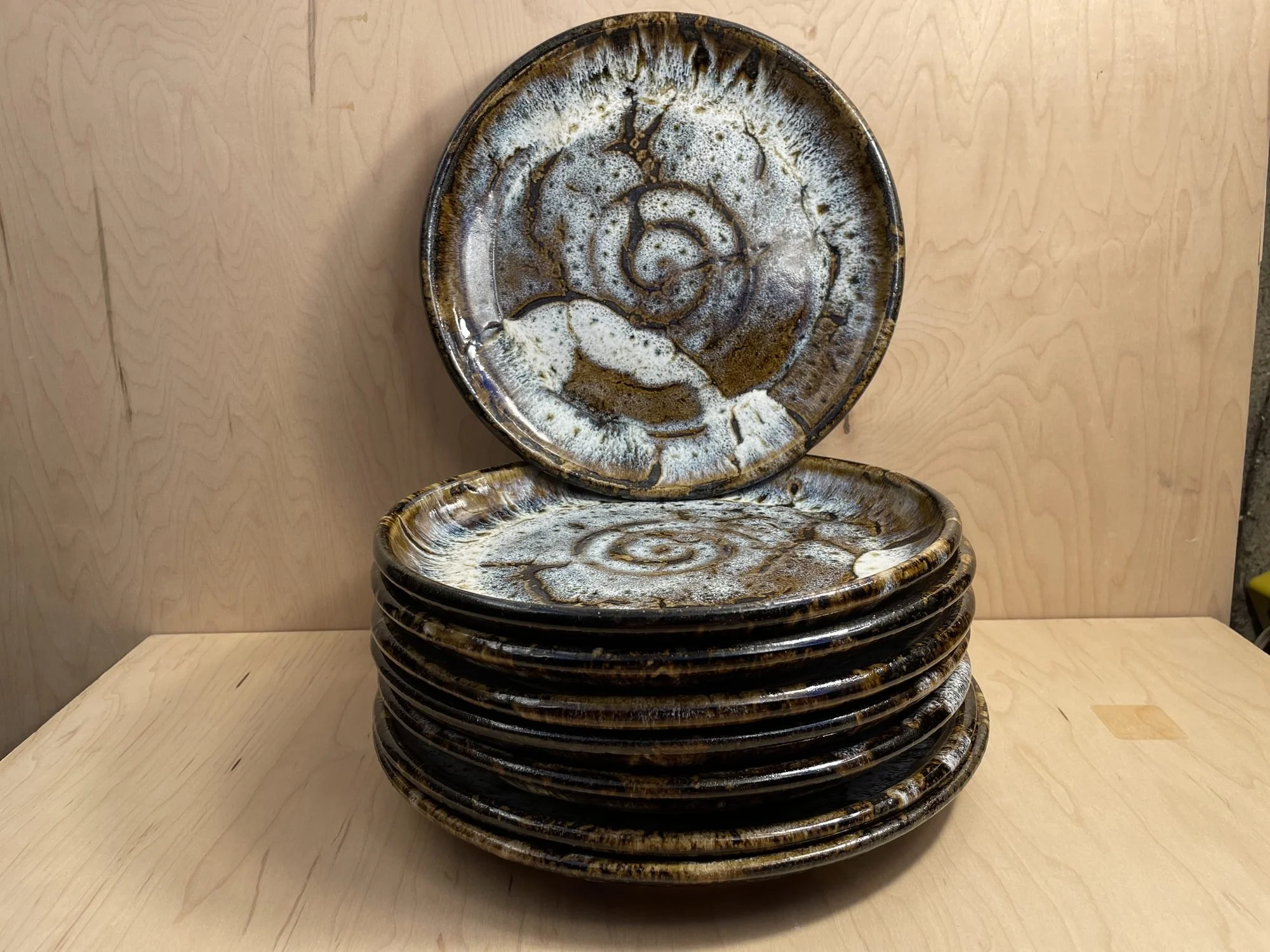
Around 1063°F, quartz inversion happens. The crystal structure of silica shifts and expands. This is not the place for dramatic ramp changes. Steady heat through this transition reduces stress, especially in wide forms like plates. Sudden acceleration or uneven heat can amplify small stresses that show up later.
Segment 4: mid range climb
Ramp: 250 to 300°F per hour to 2200°F. Burnout is largely complete by now, and the kiln is building toward glaze maturity. Too slow here wastes time and element life. Too fast can outpace glaze development and reduce surface clarity. I aim for steady and predictable. Consistency matters more than speed.
Segment 5: final approach
Ramp: 150 to 200°F per hour to cone 10, about 2345°F. The final climb slows on purpose. It lets the glaze approach full melt without overshooting, because electric kilns can coast past the target if the last ramp is too aggressive. Slowing down here improves surface maturity and lowers the risk of blisters or uneven gloss.
Segment 6: top hold
Hold: 10 to 20 minutes. I use a short hold at peak temperature, not to overfire, but to even out the kiln. Electric kilns can vary slightly from top to bottom. A controlled hold lets the cones bend fully and gives glazes time to heal minor surface defects, which often reduces pinholing and improves smoothness. Long holds are not automatically better. Too long can exaggerate movement or increase stress.
Cooling matters too
I do not crash cool. Rapid cooling can lock in stress or cut glaze development short. I let the kiln cool naturally, lid closed, until it drops below 1400°F before considering any adjustment. Controlled cooling helps glaze surfaces settle.
Why it solves problems
- Moisture removal happens early
- Burnout happens before the glaze softens
- Structural transitions happen steadily
- The glaze melts with control
Most firing problems happen when those stages overlap too aggressively. "Just fire it" works until it does not. At cone 10, especially in an electric kiln pushing its limits, discipline matters. Heat work is cumulative, and the schedule is the structure behind the surface.
Keep a firing log next to the kiln with the schedule, the date, what was loaded and where the cones ended up. When something goes wrong, the log is usually where the answer is.
The schedule matters as much as the glaze. If you have a firing problem you cannot explain, look at the heat before you change the recipe.
