Looking up: fall leaves and pots in Cache Valley light
A few weeks a year the valley turns the same colors as the kiln. We took the pots outside to check.
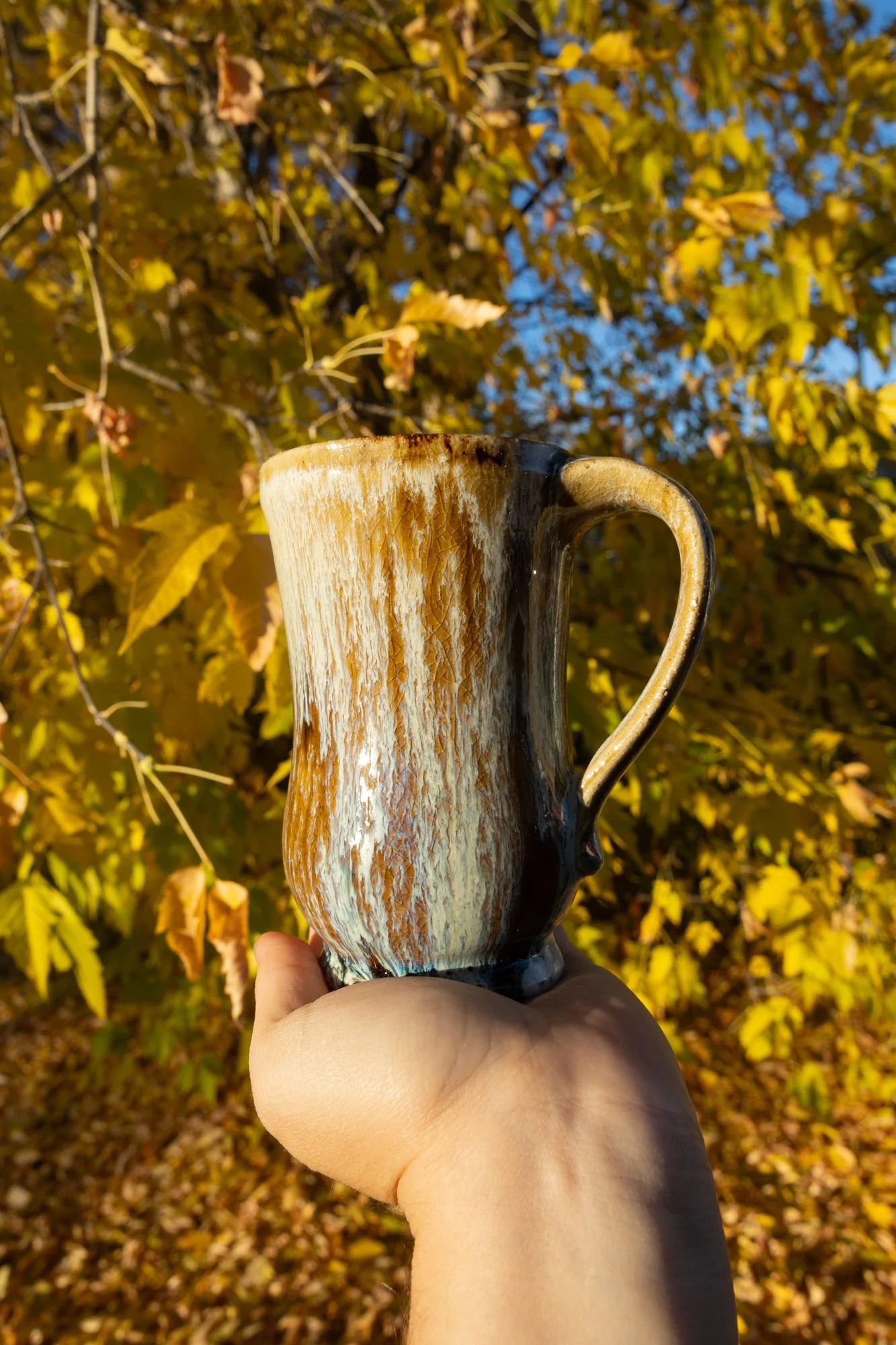
These are pots from my studio in Logan, photographed outside in Cache Valley in the fall, mostly held up against the leaves so you can see them the way I do when I open the kiln. There is not much to read here. It is a post to look at.
- The glazes pick up the same ambers, greys and rusts that the valley turns in autumn
- The pots were shot in natural light, no studio backdrop, so the surfaces read the way they do in a kitchen window
- Everything here is functional, and most of it is the kind of thing that ends up in the gallery or the shop
A good glaze does not give you a color so much as a weather. It moves in the kiln, pools where it pools, and the pot records it: darker where it ran thick, lighter at the rim, toasted where the clay was left bare. I have written about why those surfaces age well. What I had not done was carry them outside in October and hold them up.
So this fall we did. No tripod, no backdrop, just the pots, a hand, and whatever the trees were doing.
On the ground
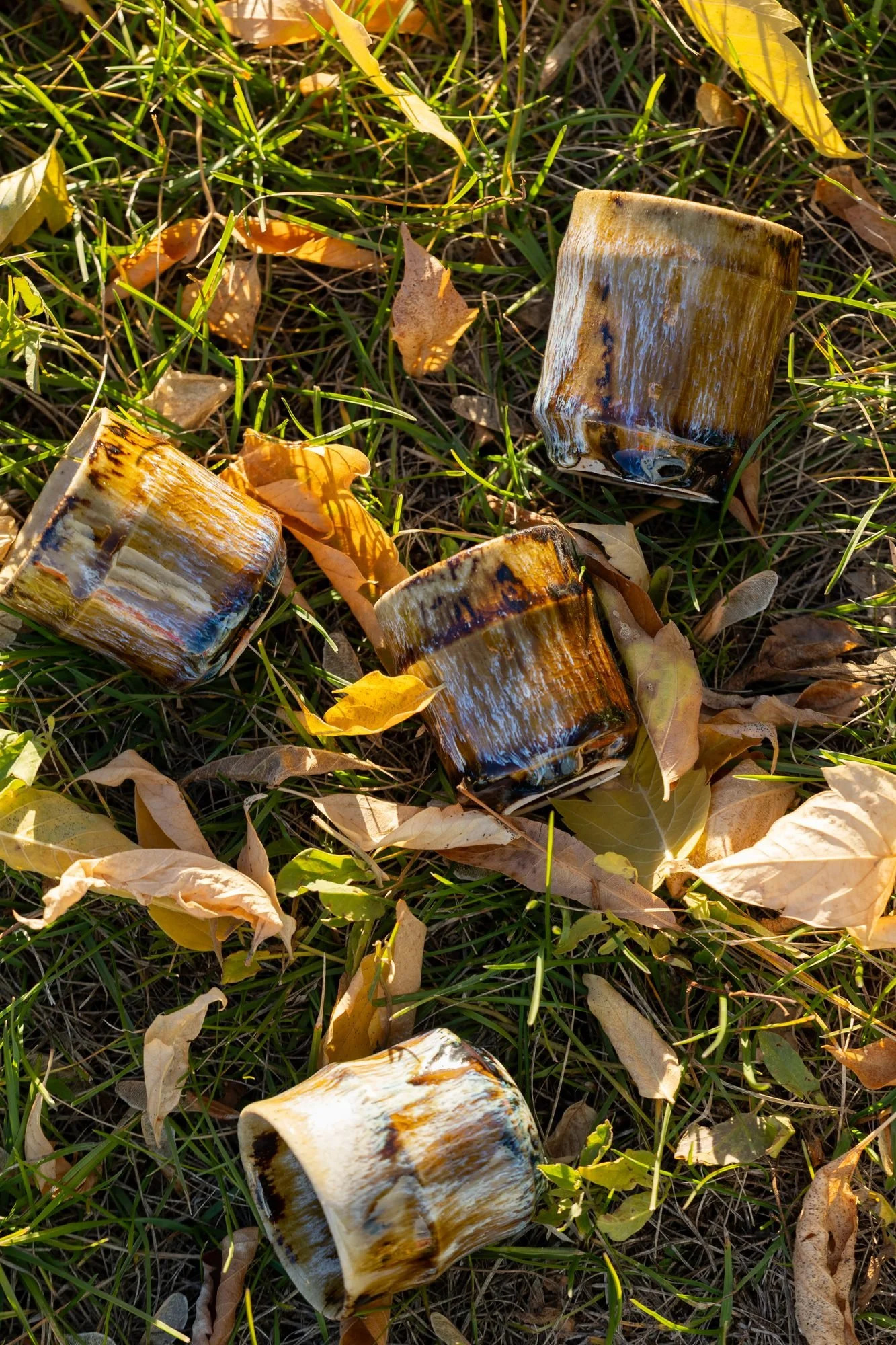
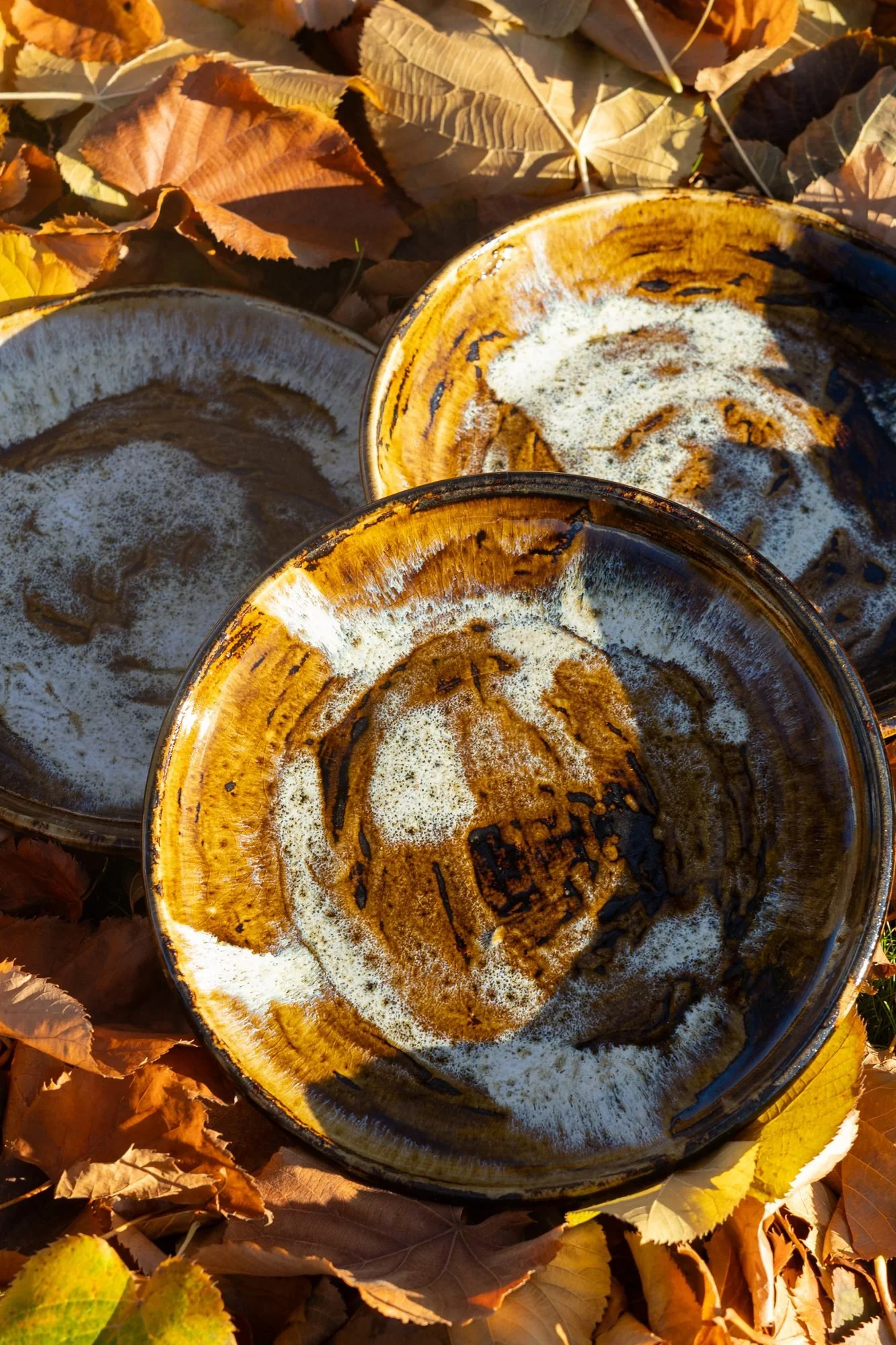
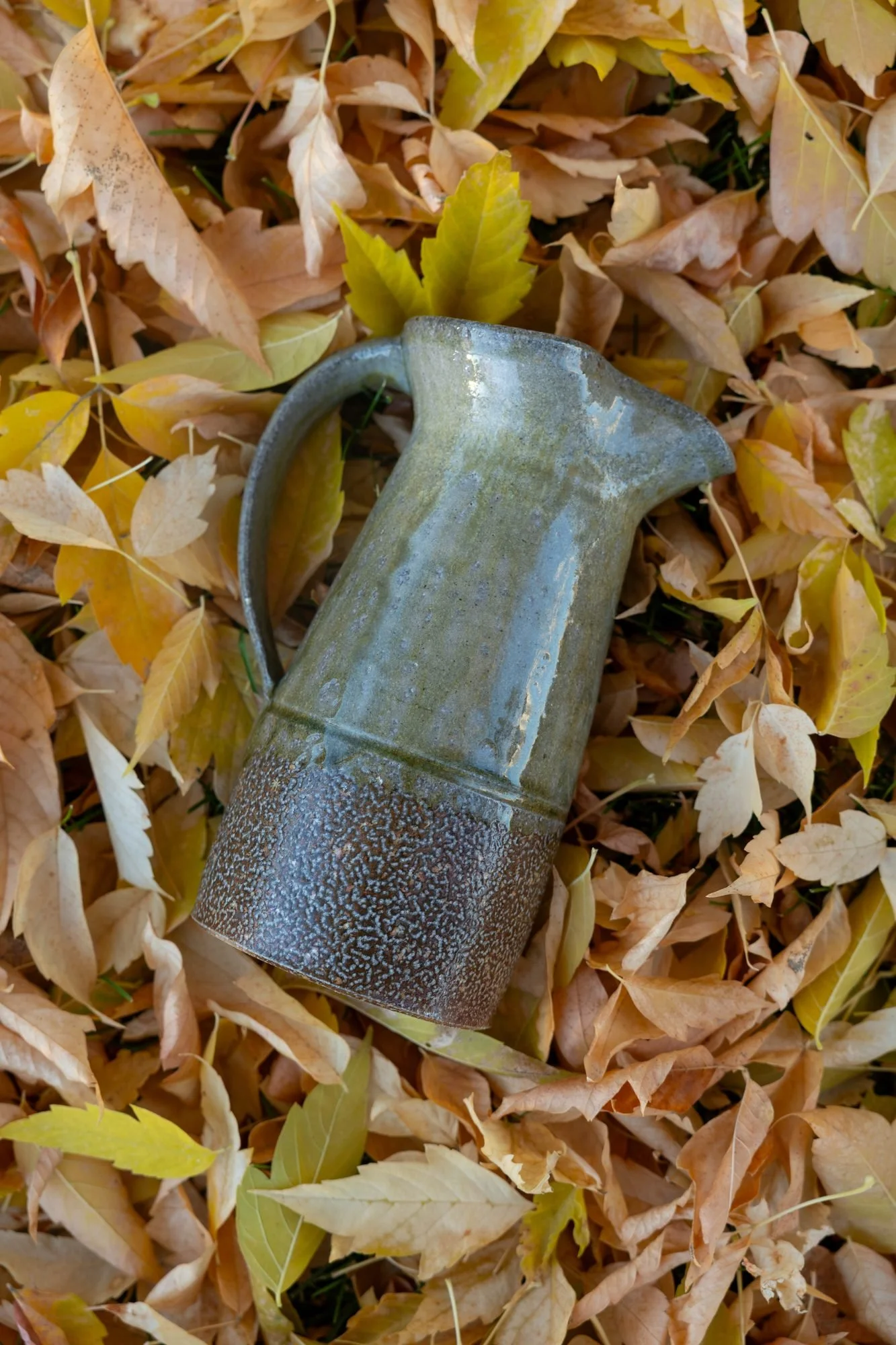
Set down in the leaves, the pots almost disappear. That is not a complaint. A brown pot in brown leaves is the point of using the materials I use. It looks like it belongs on the ground here, and I take that as a compliment.
Up close
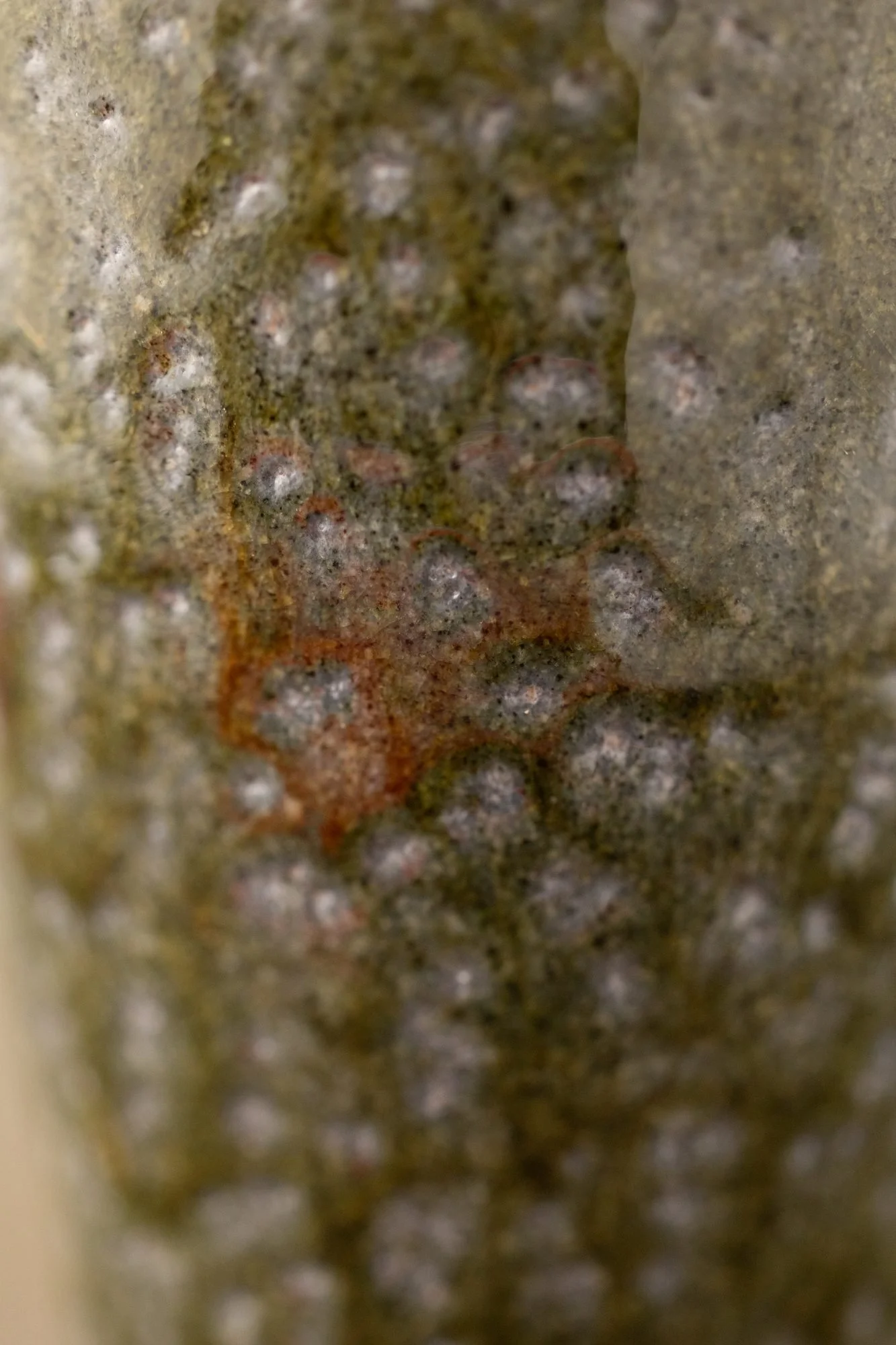
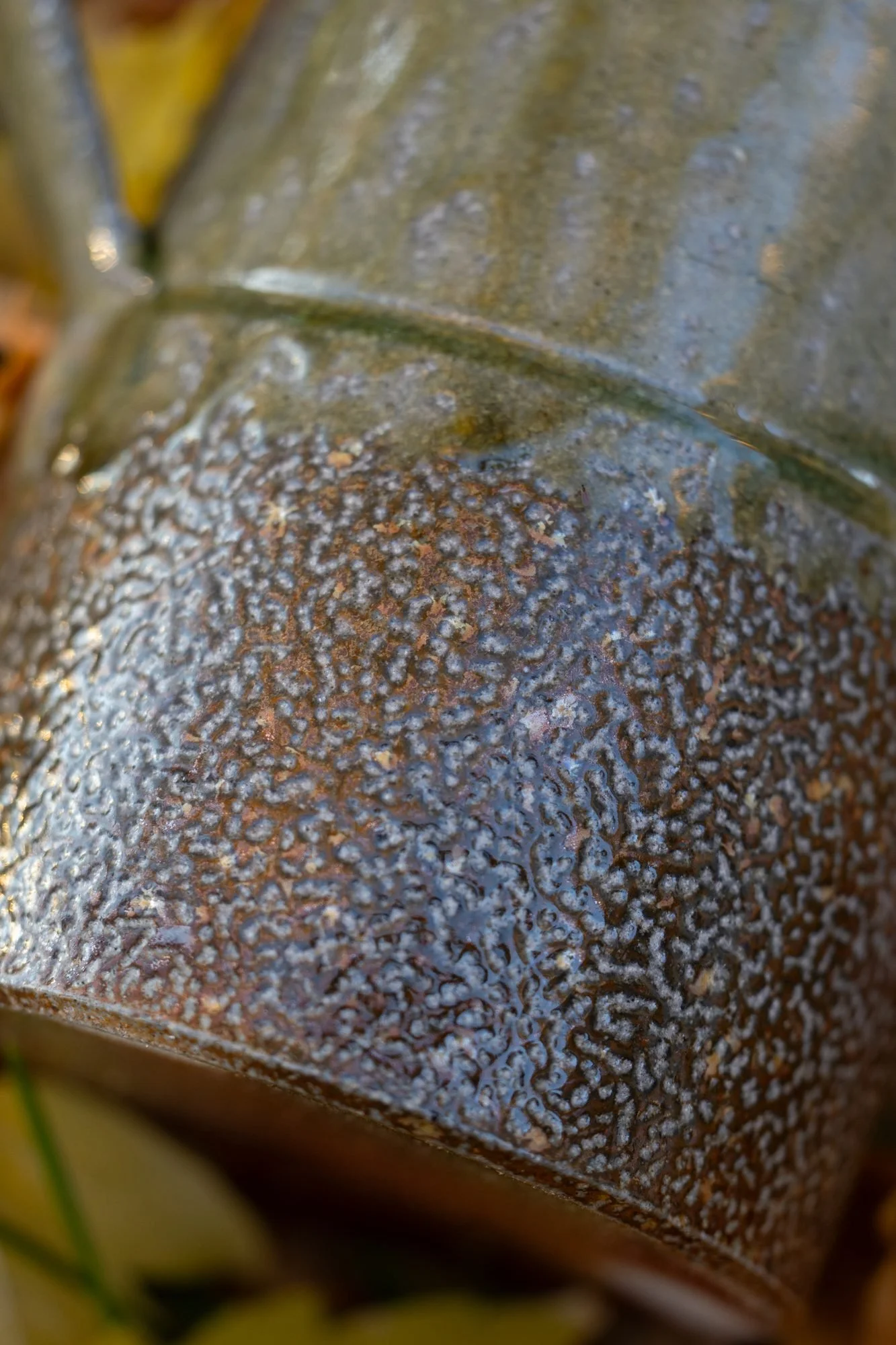
I do not think about leaves when I am glazing. But there is a reason the two pictures above sit comfortably next to each other. A glazed surface and a fall hillside are both built out of thousands of small marks that nobody placed individually. Iron, heat, and time do the arranging.
Looking up
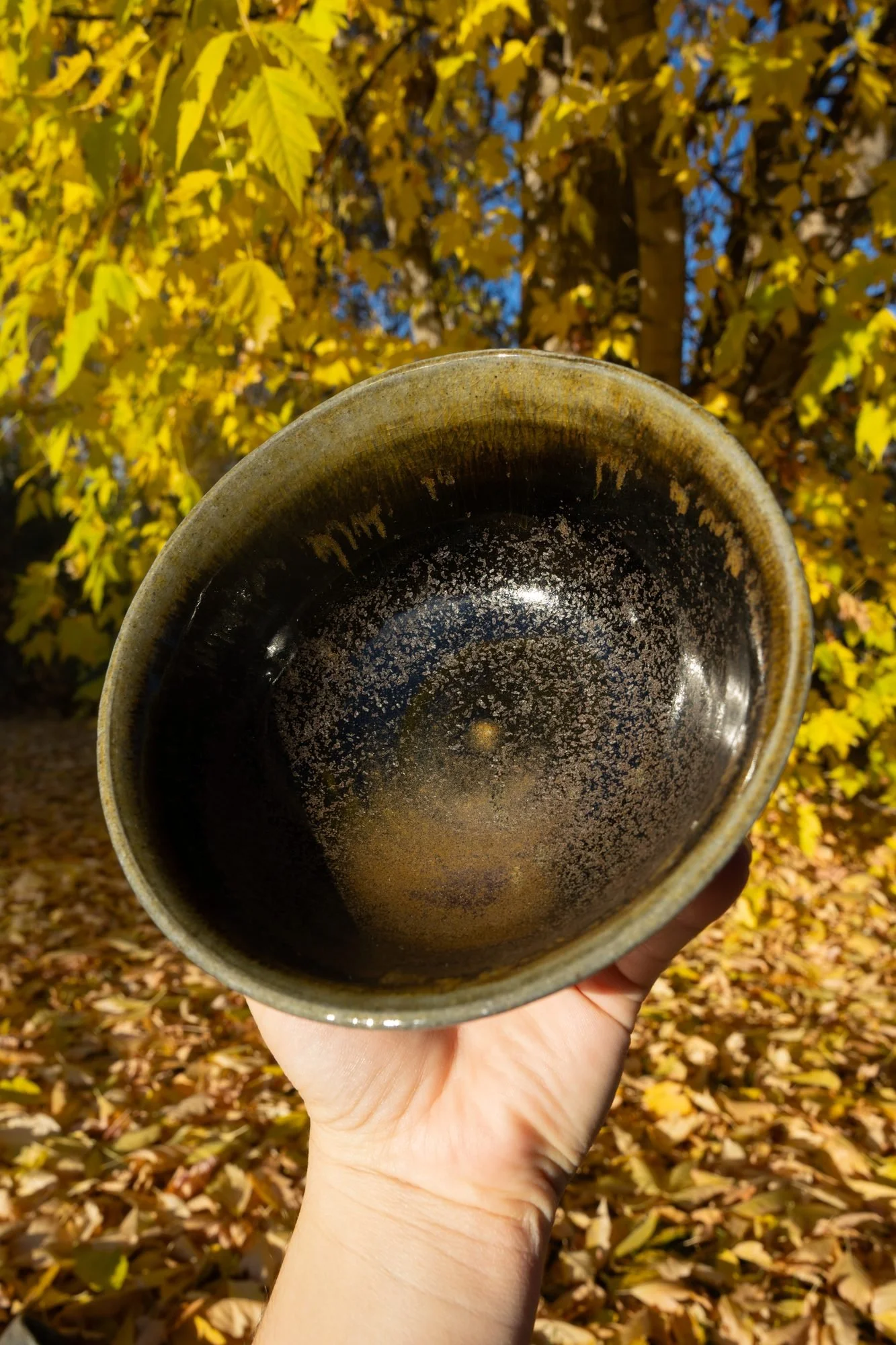
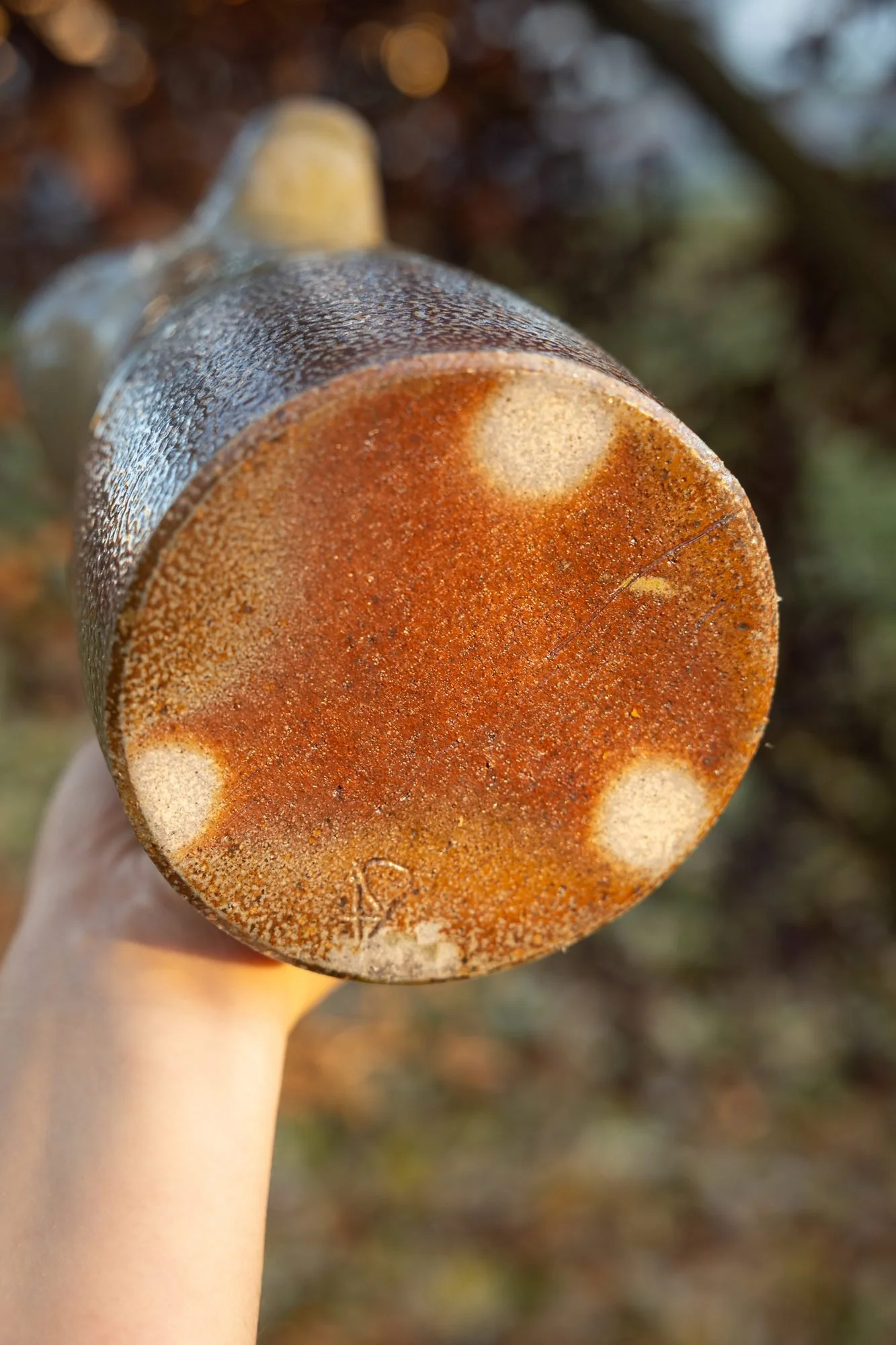
Holding a pot up against the light is what I do at the kiln door anyway. You lift it, turn it, find the side the flame favored. Out here the background is moving and the light is going gold, and the same gesture turns into something you want to keep.
The foot rings and the bare bottoms are my favorite frames from the day. They are the parts of a pot that carry the plainest record of the firing, and they were never meant to be seen. In this light they look like planets.
I have written before about how Logan shapes the way I make pots. Most of that is practical: the clay, the weather, the months a pot can take to dry here. This is the less practical version. For a couple of weeks the valley looks like the inside of my kiln, and I would rather show that than explain it.
If you want to photograph your own pots, skip the white backdrop and go outside late in the afternoon. Hold the pot up so the light comes through the leaves behind it, turn it until the surface catches, and shoot from slightly below. Salt and ash surfaces especially need directional light to show their texture. Flat light makes them look like mud.
The leaves will be gone in a week. The pots will be on somebody's table for a few decades. It seemed worth getting them in the same frame once.
