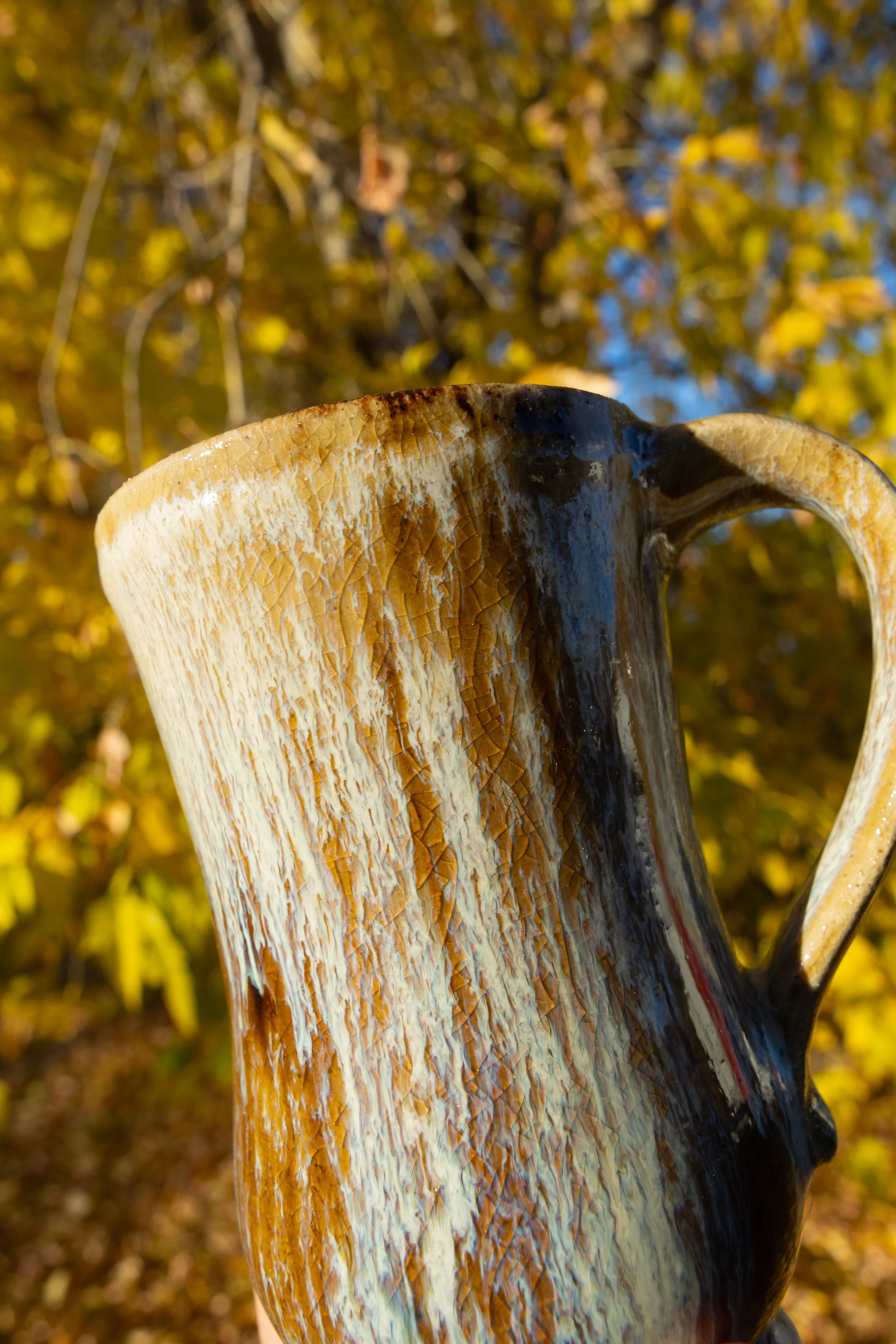
Is Handmade Pottery Durable?
Yes — if it’s made and fired correctly.
There’s a common assumption that handmade pottery is delicate. That because it’s not factory-produced, it must be fragile. Sometimes that’s true. But it isn’t inherent to handmade work. It comes down to how it’s built.
Durability starts with the clay body.
At higher temperatures — especially cone 10 — clay vitrifies. That means it becomes dense and sufficiently non-porous for daily use. The particles fuse tightly. The structure strengthens. A properly matured high-fire pot is not soft or chalky. It’s solid.
If a piece is underfired, it can remain porous. Porous clay absorbs moisture. Over time, that can weaken the structure. That’s where some durability concerns come from. Not from the fact that it’s handmade — but from incomplete firing.
Glaze fit matters too.
The glaze and clay body expand and contract at slightly different rates as they heat and cool. If they’re poorly matched, the glaze can craze (fine crack lines in the surface). Crazing doesn’t mean something will fall apart immediately, but over years of heavy use, it can allow moisture to work its way into the surface.
That’s why glaze testing matters.
Then there’s structure.
A mug that’s thrown too thin at the rim can chip easily. A handle attached without compression can weaken over time. A base left too thick can create stress points during firing. These are craftsmanship decisions — not manufacturing limitations.
When those decisions are made carefully, handmade pottery is extremely durable.
In my studio, functional ware is fired to full cone 10 maturity. That’s intentional. I want the clay fully vitrified. I want the surface settled. I want the structure resolved before it ever leaves the kiln.
I also pay attention to weight distribution and compression at the wheel. A well-compressed base resists cracking. A properly shaped foot ring reduces stress. A balanced handle distributes load evenly when the mug is full.
All of that contributes to longevity.
That doesn’t mean pottery is indestructible. Drop anything ceramic onto concrete and it will break. But daily use — dishwashers, hot liquids, regular handling — shouldn’t be a problem for properly fired high-fire work.
In fact, many handmade pots outlast mass-produced ceramics because they’re built with thicker, more thoughtful walls and fired to full maturity instead of optimized for speed.
Durability isn’t about being heavy. It’s about being resolved.
I don’t make disposable work. If it leaves this studio, it’s built for daily use and built to last.
You can see current pieces at adamcorbridgepottery.com.
Adam Corbridge
adamcorbridgepottery.com