Is Salt Fired Pottery Food Safe?
It’s a fair question.
Salt firing sounds industrial. You’re literally throwing salt into a kiln at high temperature. There’s flame. Vapor. Chemical reaction. If you’re buying something to drink from every morning, you want to know what that process actually means.
So let’s start general.
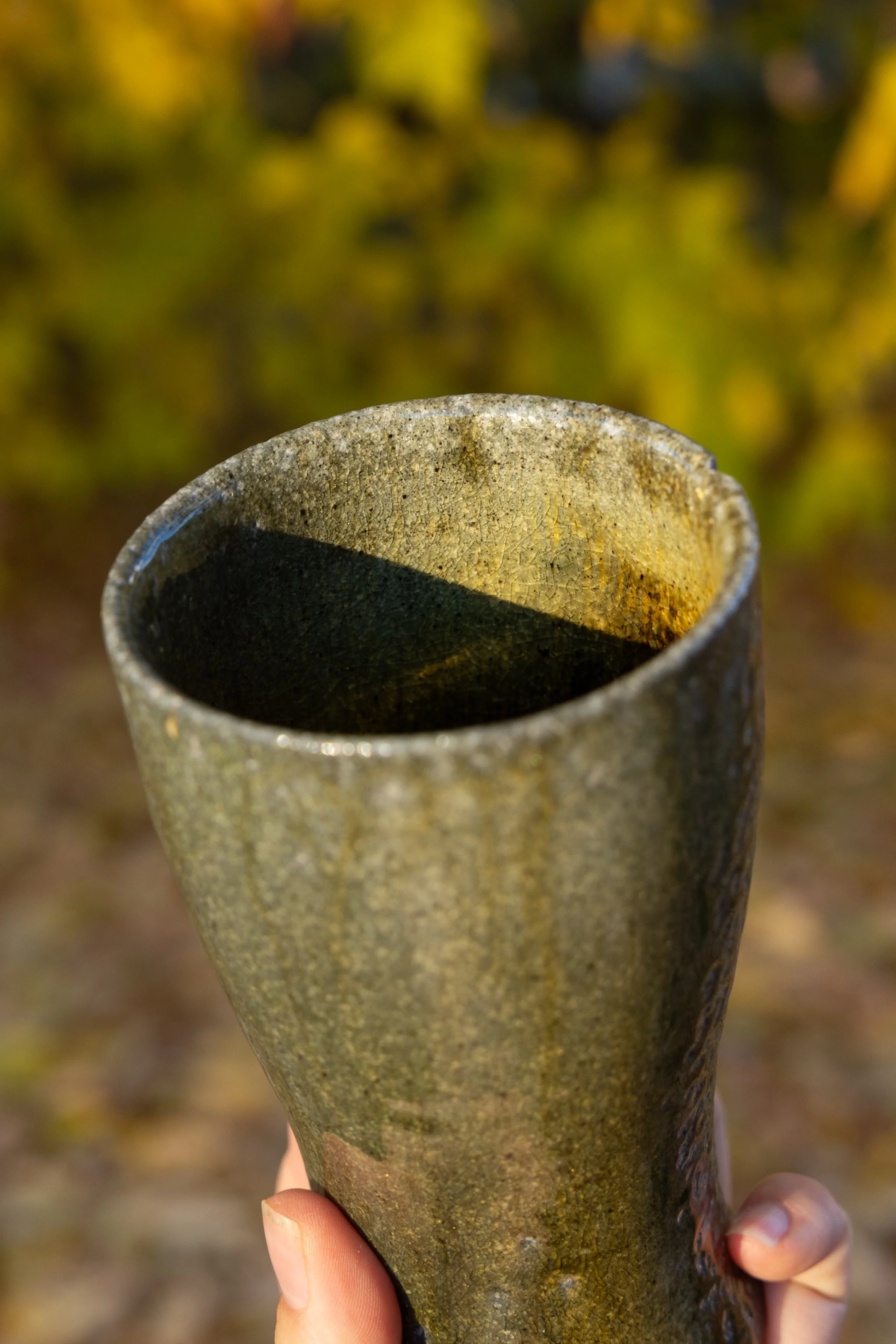
Salt firing works by introducing sodium chloride into a hot kiln — typically at cone 9 or cone 10. At those temperatures, the salt vaporizes. The sodium separates and reacts with silica in the clay body. That reaction forms a glaze on the surface of the pot.
It isn’t sprayed on. It isn’t painted. It’s formed in the atmosphere of the kiln.
When that process is done correctly — at full temperature, with a properly formulated clay body — the resulting surface is stable and food safe.
The important variables are temperature and maturity.
At high fire, especially cone 10, the clay body vitrifies. That means it becomes dense and sufficiently non-porous for functional use. The glaze — whether from applied materials or salt vapor — melts, bonds to the clay, and becomes part of the surface. Once cooled, it’s inert. It doesn’t leach. It doesn’t flake. It doesn’t dissolve with use.
Problems only happen when something is underfired, improperly formulated, or made strictly for decorative purposes.
Now, specifically to my work.
If I make a mug, bowl, or vase intended for use, it’s fired to full cone 10. That’s non-negotiable. I don’t fire lower for speed. I don’t stop short of maturity. The clay body I use is tested for proper vitrification at that temperature. The glazes are tested for fit — meaning they expand and contract in harmony with the clay to avoid long-term crazing.
When I move fully into salt firing, the same standard applies.
The salt surface isn’t random. It’s controlled by temperature, atmosphere, and timing. I’m not chasing dramatic texture at the expense of function. The goal is depth — not instability.
Every functional piece that leaves my studio is meant to be used daily. Coffee. Soup. Dishwasher cycles. Regular handling. If a surface looks questionable, feels rough in a way that could trap residue, or doesn’t meet maturity standards, it doesn’t get sold as functional ware.
I don’t separate “beautiful” from “usable.”
They have to be the same thing.
So yes — salt fired pottery is food safe when it’s fired correctly and built for function. And the salt-fired work that comes out of my studio follows that standard.
If I wouldn’t use it in my own kitchen, I don’t sell it.
You can see current available work — and follow the progression toward full salt firings — at adamcorbridgepottery.com.
Adam Corbridge
adamcorbridgepottery.com