It Survived Cone 10
I didn’t expect it to.
Most of the wild clay I’ve dug and tested here has failed somewhere along the way. Cracked rims. Warped bases. Excessive shrinkage. Promising at bisque, disappointing at maturity. Cone 10 is not forgiving.
This one made it through.
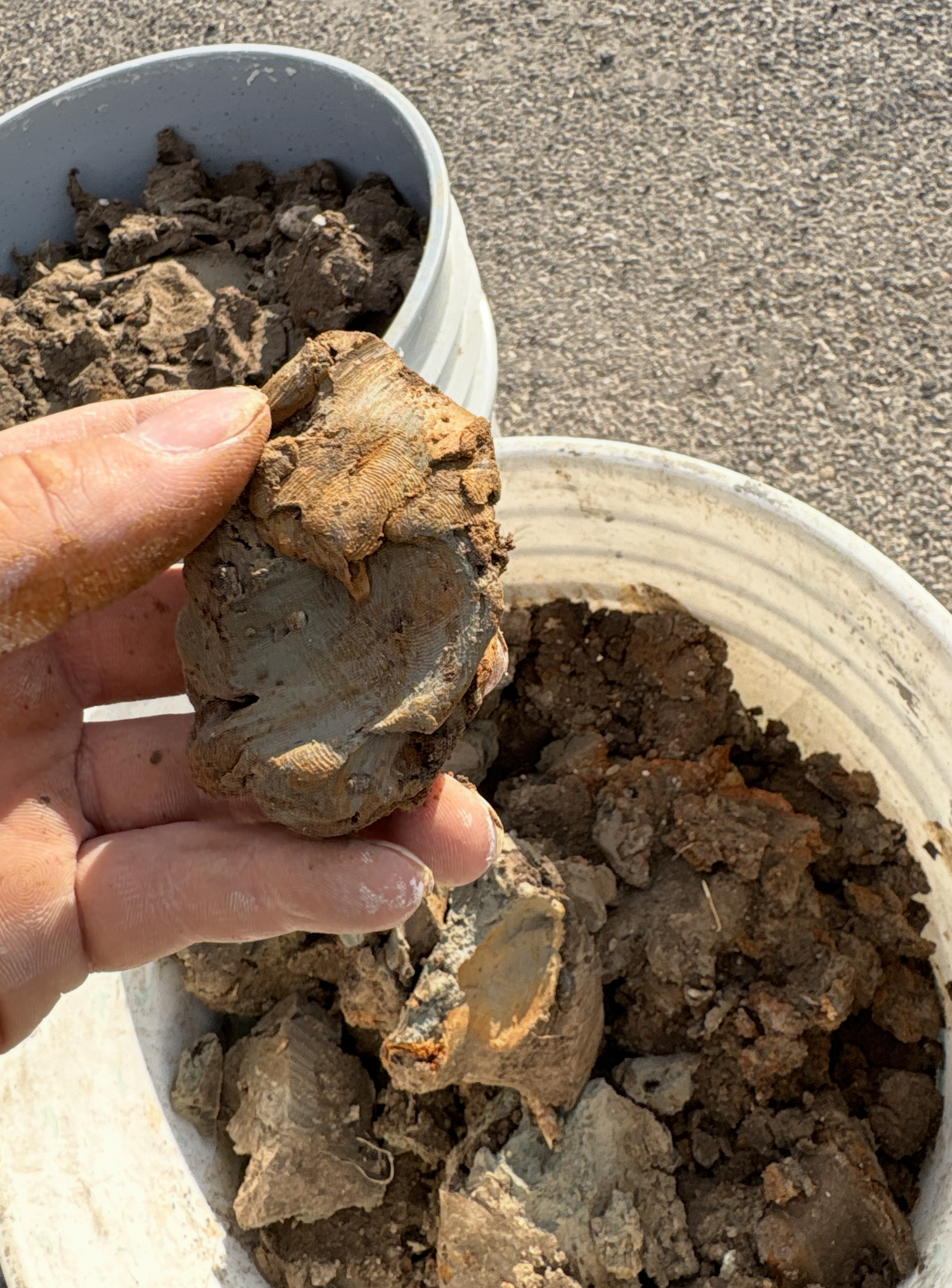
Same process as the others. Dug, dried, slaked down in buckets. Screened twice to remove gravel and organic material. Dried on plaster. Wedged until it felt workable. It wasn’t especially smooth. A little short. Slightly sandy under pressure.
I threw a few small cylinders first. No handles. No thin rims. Just forms meant to test structure. I let them dry slowly. Compressed the bases carefully. Trimmed clean foot rings. Nothing dramatic — just honest shapes that would show movement if it happened.
They went into the kiln with the usual mix of work. No special treatment.
Cone 10 is where things reveal themselves. The clay tightens. Iron saturates. Fluxes activate. If there’s a weakness in the body, that’s when it shows up. Bloating, dunting, stress cracks — I’ve seen all of it.
When I opened the kiln, I went straight to those test pieces.
They were intact.
No visible cracking at the base. No warping beyond what I’d expect from a natural clay. The color deepened into a warm, iron-rich brown. Slight speckling where mineral content concentrated. The surface wasn’t flashy, but it felt mature. Dense.
The real test wasn’t visual.
I checked the ring. A clear tone when tapped. I checked the foot for vitrification — no chalky feel. I ran water tests to get a sense of absorption. Early signs are promising. Not laboratory precise yet, but far from underfired.
It survived cone 10.
That doesn’t mean it’s ready for full production. It doesn’t mean I’ll start throwing thin mugs with pulled handles tomorrow. But it means something shifted.
Most wild clay conversations stop at romance — the idea of digging something local and turning it into a pot. But at high fire, especially at cone 10, survival is the first gate. If it can’t handle that heat, it doesn’t matter how meaningful the origin story is.
This one didn’t blink.
The shrinkage is still on the higher side. I’ll need to calculate exact percentages from wet to fired. I’ll need to test it with handles attached — that’s where stress usually shows. I’ll need to see how it behaves in a future salt firing. Sodium vapor changes everything. It can tighten a surface beautifully or exaggerate flaws instantly.
But this is the first time a Utah wild clay body I’ve processed has come through a full cone 10 firing looking structurally sound.
That’s not romantic.
It’s earned.
There’s a difference.
Finding clay is easy. Processing it is work. Firing it to maturity is proof.
This doesn’t replace the commercial bodies I rely on. Not yet. Maybe not ever fully. But it opens a door. It means the ground here isn’t just theoretical. It can participate.
I’m not interested in novelty batches labeled “local clay” for the sake of marketing. If this material continues to prove itself — if it holds up to daily use, survives dishwashers, maintains structural integrity — then it earns its place in the studio.
Until then, it stays in testing.
It’s still early. But this is the first time a local clay didn’t blink at cone 10.
If it keeps proving itself, you’ll see it in future releases at adamcorbridgepottery.com.
Adam Corbridge