The Moment I Knew I Needed My Own Salt Kiln
There’s a difference between being invited to a salt firing and building your life around one.
For a while, being invited was enough.
I was grateful just to be near it — stacking shelves, wadding pots, introducing salt into the ports and watching the flame shift. Those early firings carried a kind of electricity that my electric kiln never did. The atmosphere moved. The chamber felt alive. The results were shaped by more than just glaze chemistry.
But the kiln wasn’t mine.
Not the firing schedule.
Not the stacking decisions.
Not the long-term direction.
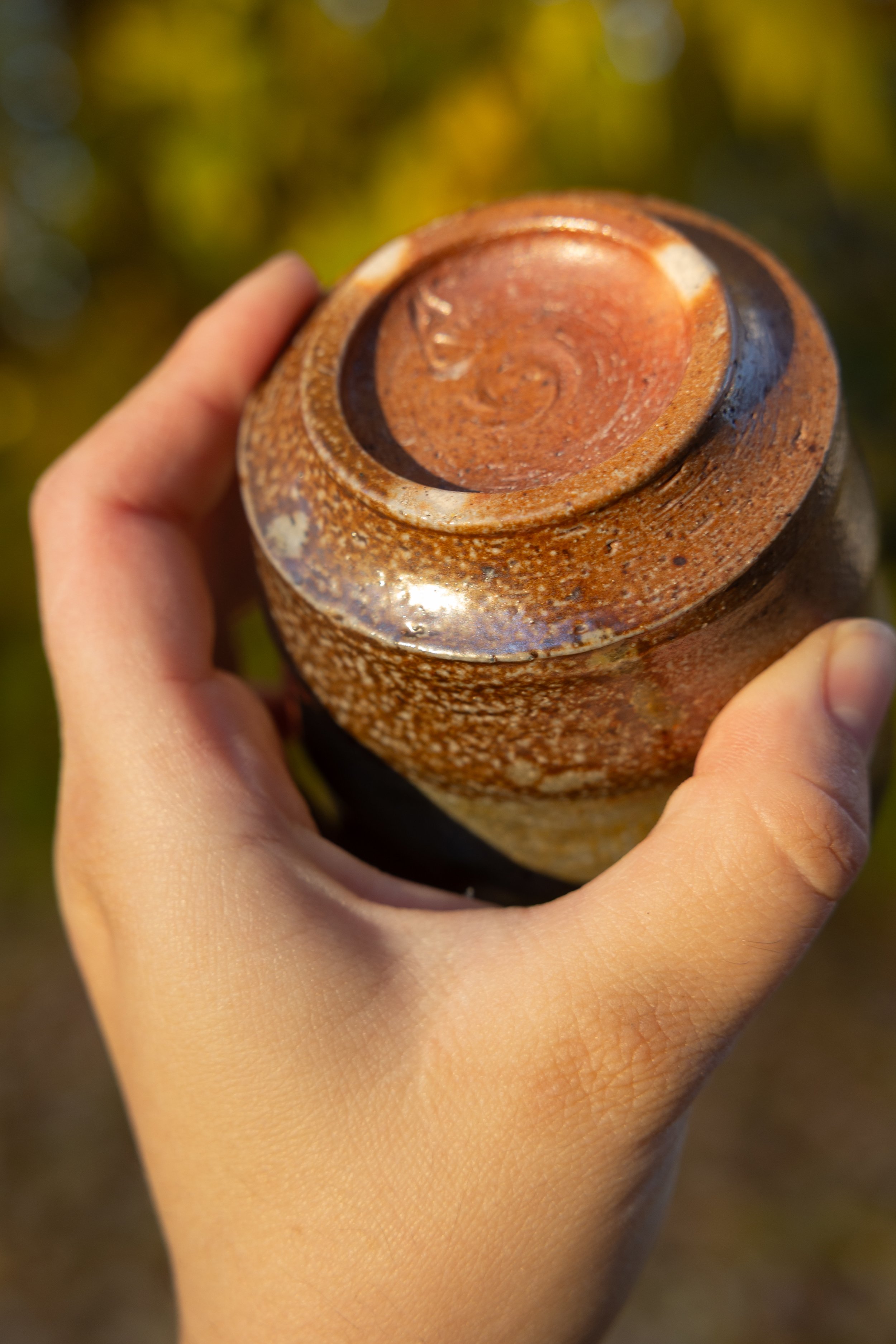
I remember one specific unloading. I picked up a mug that had caught the salt just right. Nothing flashy. Just warm flashing on one side and a soft peel texture that made the surface feel weathered instead of coated.
It felt grounded.
And I had a thought that I tried to ignore at first.
If I wanted this to shape my work consistently — not occasionally — I couldn’t depend on access.
Salt firing isn’t casual. It isn’t something you dip into once or twice a year and expect to build an identity around. It requires repetition. Adjustment. Failure. Refinement. You learn it by doing it again and again.
When you fire in someone else’s kiln, you’re part of the process — but you’re not steering it. You work around class schedules, shared loads, collective decisions. That generosity is how most of us get introduced to atmospheric firing.
But it’s not how you build a foundation.
The realization wasn’t dramatic.
There wasn’t a big speech or a cinematic kiln opening moment.
It was quieter.
It was the recognition that salt firing wasn’t just something I admired.
It was something I wanted to commit to.
Building a Utah salt kiln isn’t a small decision. It’s infrastructure. Brick. Burners. Space. Cost. Maintenance. It’s choosing a direction that shapes your studio physically and financially.
It means saying, “This is the lane.”
And that’s what shifted.
Once I admitted to myself that I didn’t want salt firing to be an occasional experience — that I wanted it to be central — everything else started aligning. Cone 10 firings weren’t just high-fire experiments anymore; they were preparation. Surface restraint became intentional. Wild clay testing became part of a larger vision.
The kiln stopped being an idea.
It became a responsibility.
That was the moment.
Not loud. Not dramatic.
Just clear.
If I’m going to make salt fired pottery seriously, then I need to build the environment where that work can live long term.
Trying to build the kind of kiln that builds me back.
— Adam Corbridge
Follow the process at adamcorbridgepottery.com