Throwing a custom mug order for the Summers family, part 1
A set of matching mugs starts at the scale, not the wheel. Here is the throwing day, frame by frame.
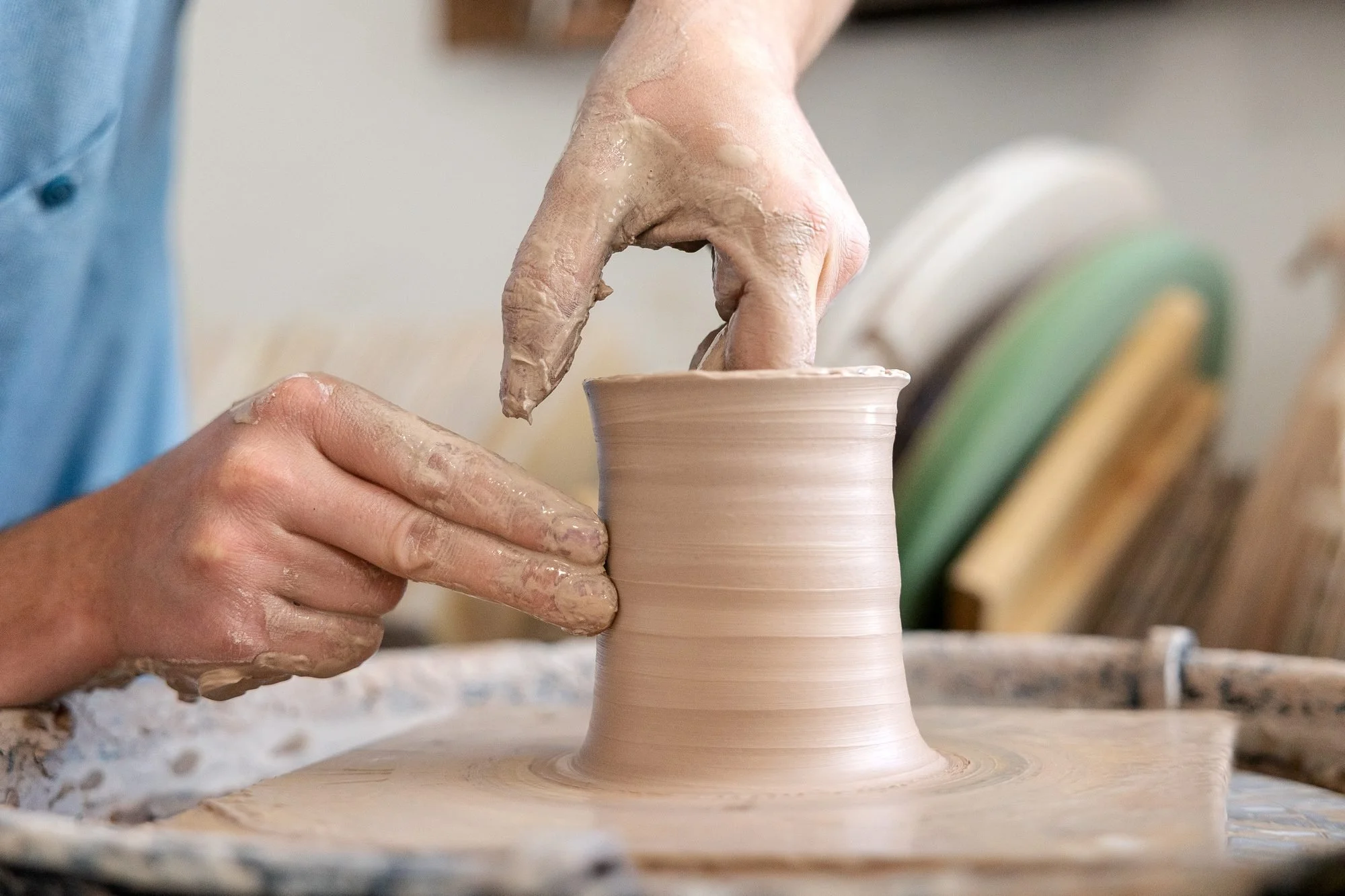
A custom mug order is a set, and a set is only as good as its least consistent piece. On throwing day that means weighing every ball of clay, centering the same way every time, pulling the wall in the same number of moves, and stopping at the same height. The wheel does not make the mugs match. The routine does.
- Weigh the clay. Two mugs from different weights will never shrink to the same size
- Decide the shape once, then repeat it without editing
- Throw the whole set in one session so the clay dries together
Most of what leaves my studio here in Logan is one of a kind. A custom order is the opposite problem. The Summers family asked for a set of mugs that would sit on a shelf together and read as one family of pots, with their name and a mountain stamped into each. This is the first of a few posts following that order from a bag of clay to a finished box, and it covers the day the mugs were thrown.
This one is mostly photos. The words are there to explain why each step matters when you are making several of something instead of one.
Before the wheel turns
The set starts with a scale. Every ball of clay for this order weighs the same before it goes on the bat. It sounds fussy. It is the single biggest thing that decides whether the finished mugs match, because clay shrinks as it dries and fires, and two mugs thrown from different amounts of clay shrink to different sizes no matter how carefully you throw them.
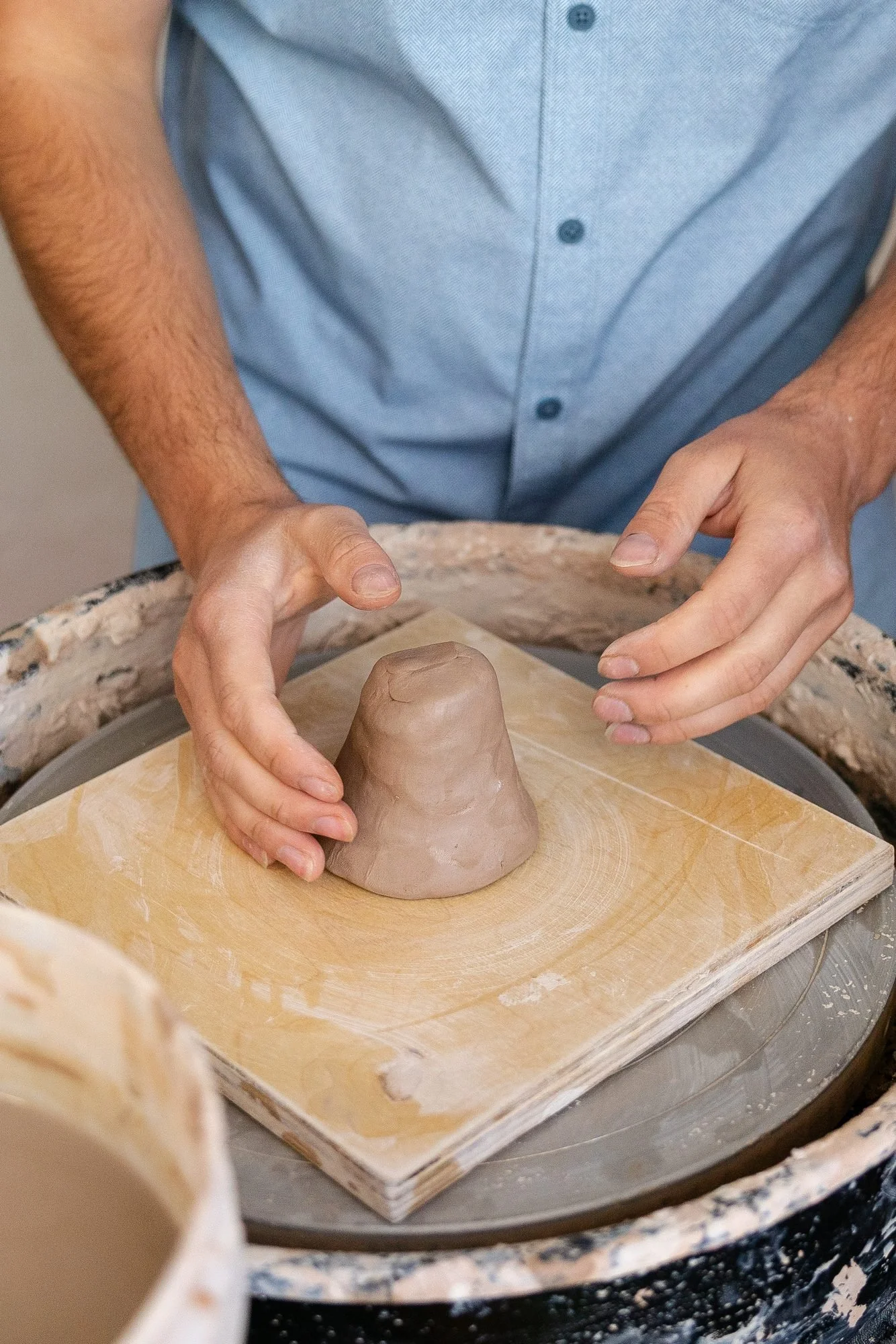
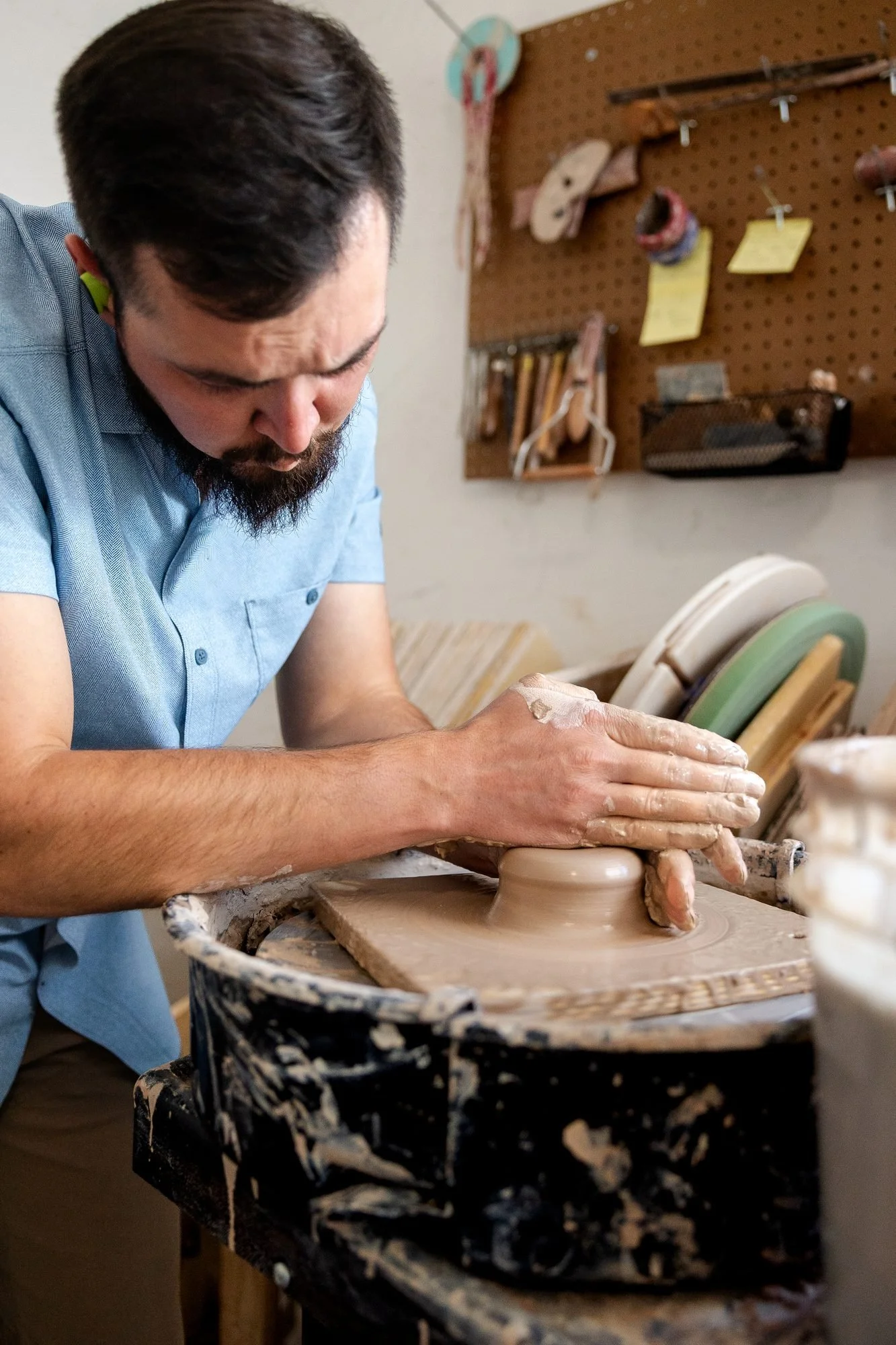
Centering is the same every time, and that is the point. If I center one mug with a lot of pressure and the next one gently, the clay in the walls is compressed differently, and the two pots dry and fire differently. I try to make the first mug of the day and the last mug of the day with the same hands.
Opening and pulling
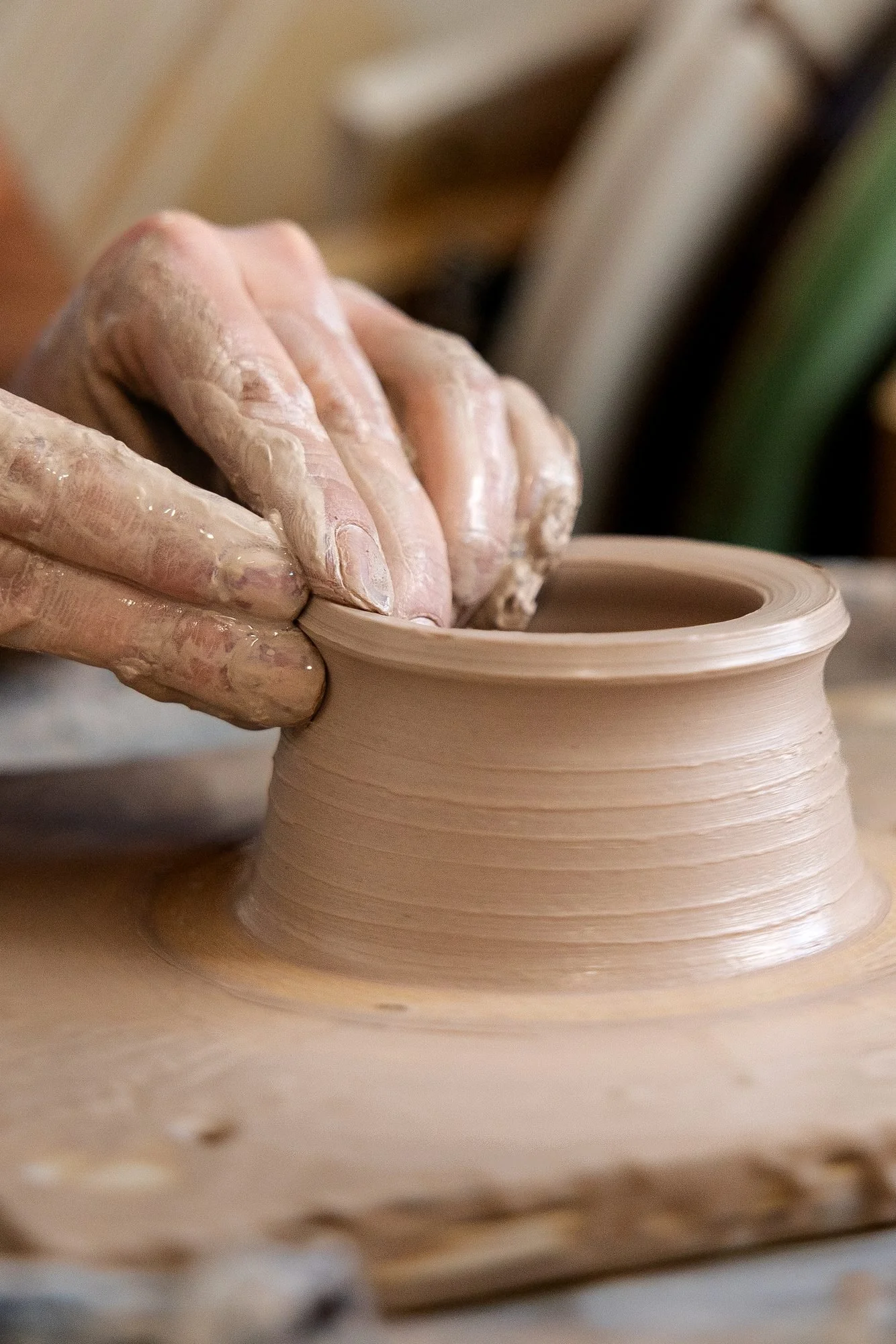
Opening is a thumb down the middle and a pull outward to set the floor. On a set, the floor thickness has to match too, since a heavy-bottomed mug and a light-bottomed mug feel like two different objects even when they look the same on a shelf. I have written before about what makes a good mug, and weight in the hand is near the top of that list.
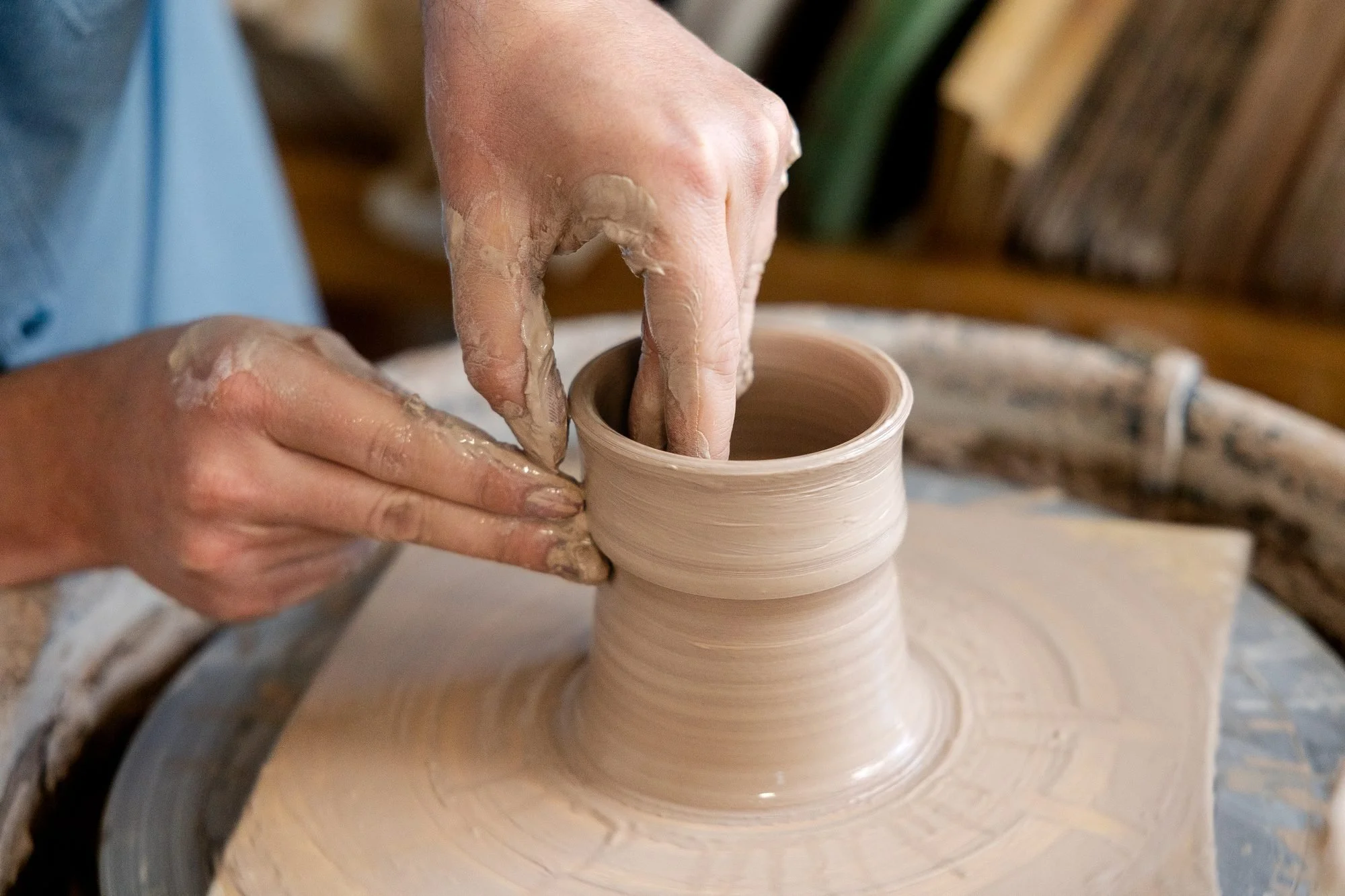
Then the wall comes up. I decided before the first mug how many pulls each one gets and how tall it stops. That decision does not get revisited on mug six because mug six is going well and I feel like pushing it. A set is not the place for improving as you go. Improving as you go is how you end up with a set that gets better and better and matches worse and worse.
The texture, and a note on timing
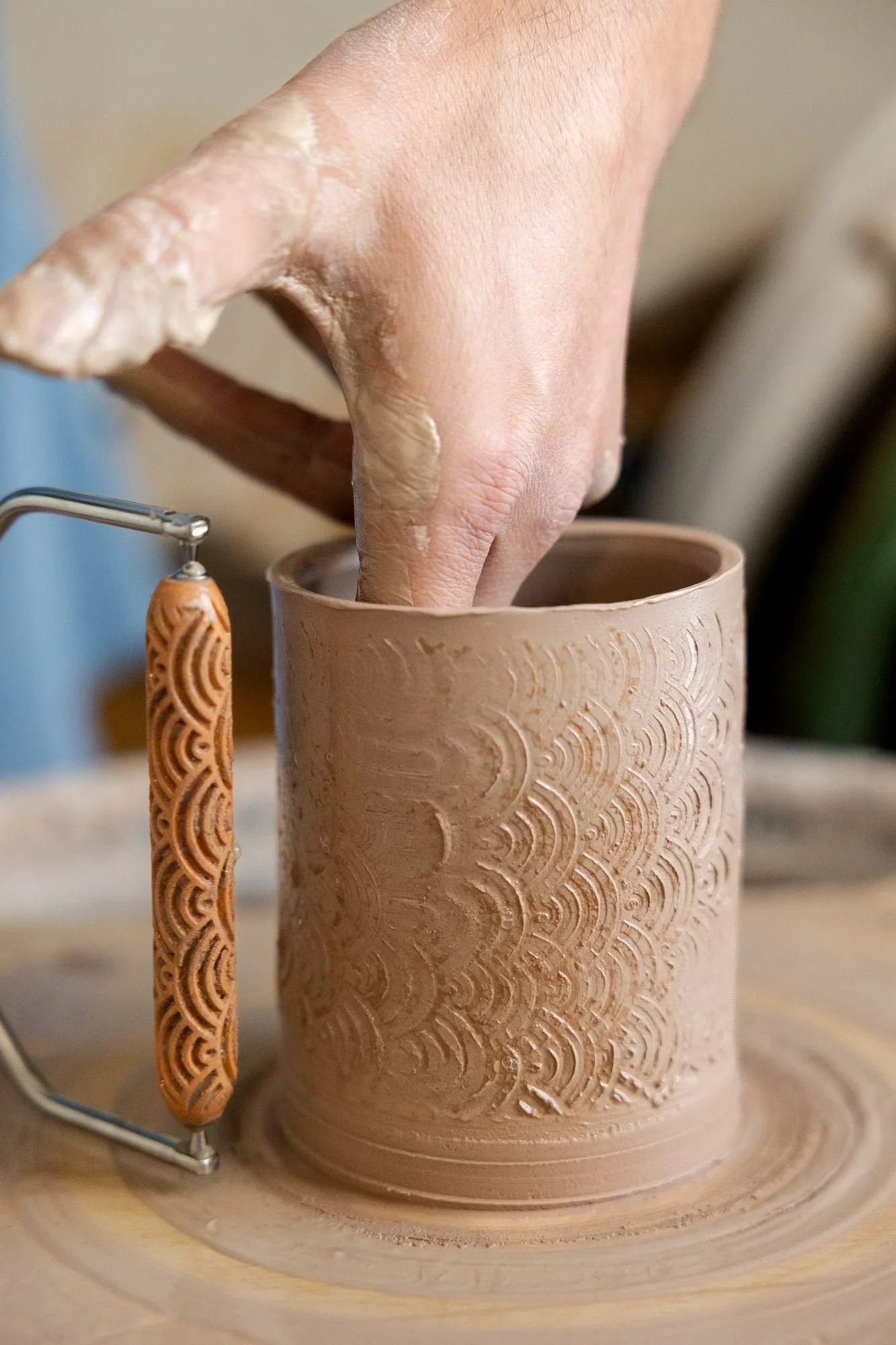
The Summers mugs carry a texture on the wall, rolled in while the clay is still soft enough to take it cleanly. This has to happen right after the last pull, before the surface starts to dry, and it has to happen with a hand inside the pot pushing back, or the roller flattens one side and you have an oval mug. More on the tools that made those marks in part two.
Trimming, once they firm up
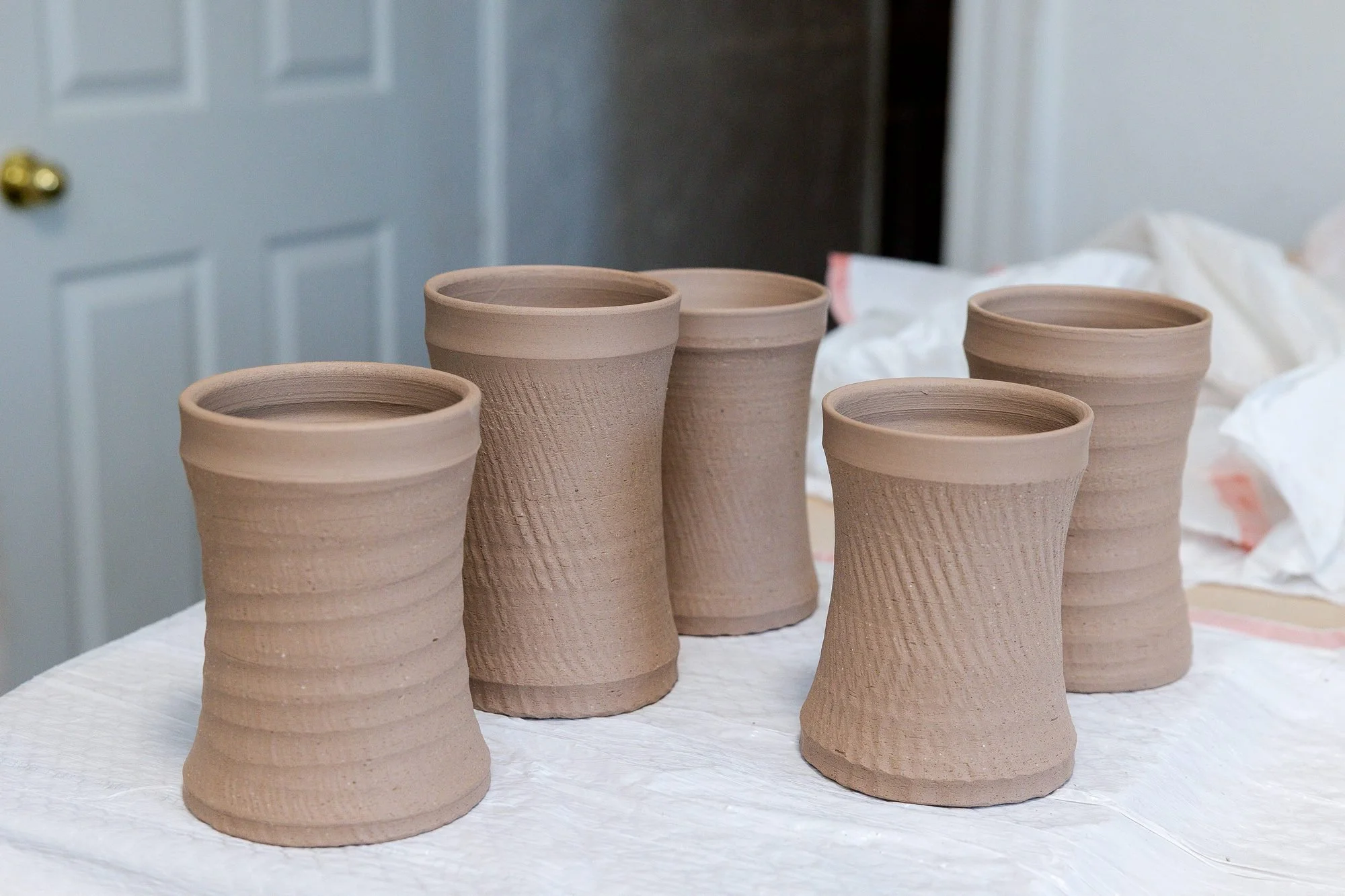
Once the mugs firm up to leather hard they go back on the wheel upside down and I trim the foot. On a set, the foot is one more place things can drift: a foot ring a few millimeters wider on one mug is invisible on the shelf and obvious the second you pick two of them up. It is one of the things I look at when judging whether a mug is actually well made. So the trimming gets the same treatment as the throwing. Decide once, repeat.
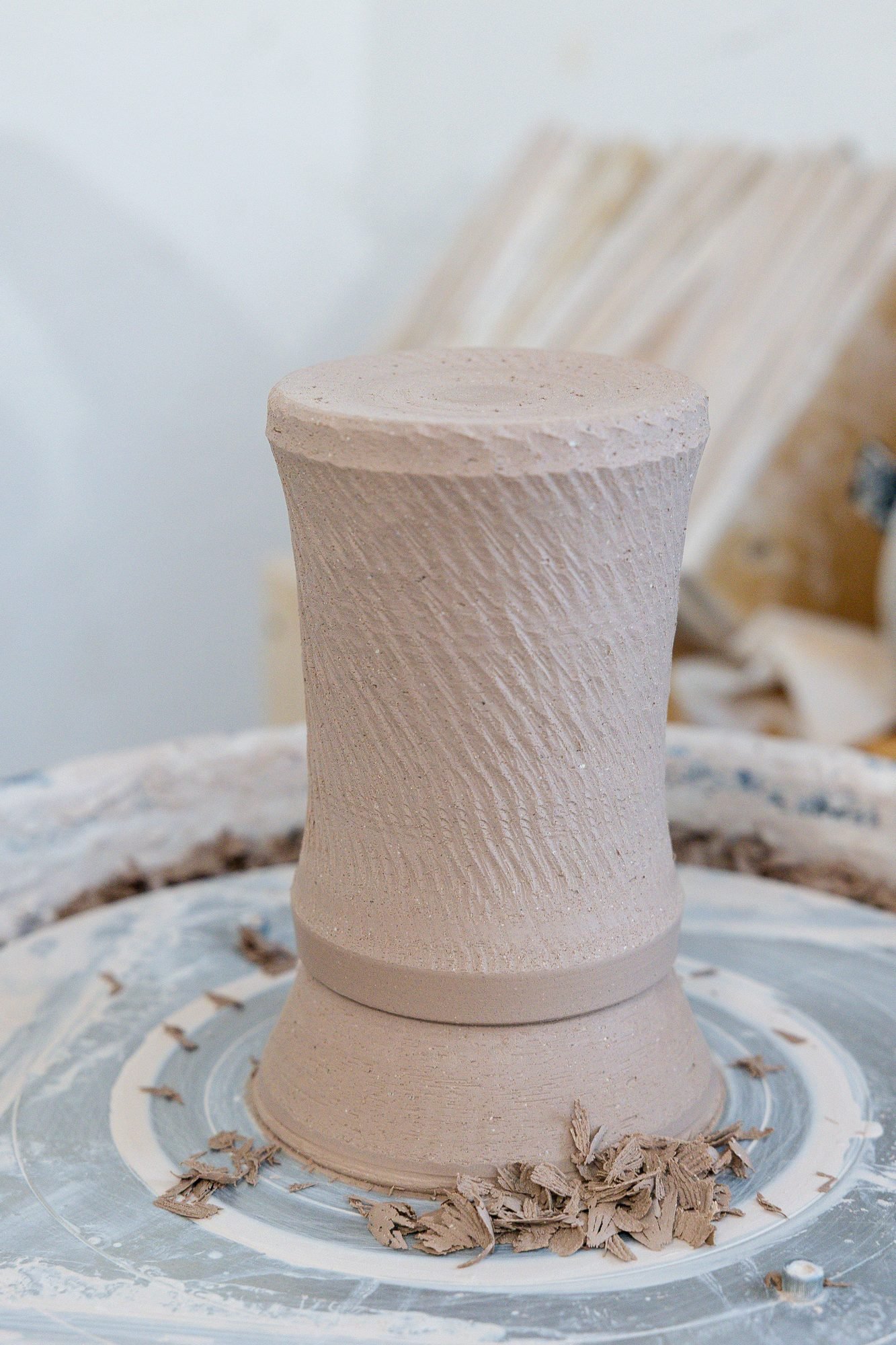
When you throw a set, throw one extra. Not two, not five. One. Something will crack, or a handle will not take, or the glaze will do something strange to exactly one mug in the kiln. Having a spare means the set still ships complete, and if nothing goes wrong, you have a mug for yourself that matches nothing else in your cupboard.
What comes next
Part two is handles: pulling them all in one sitting, attaching them at the right moment, and the stamp. That is the day the mugs stop being cylinders and start being mugs. After that comes glazing and the kiln, which is where I find out how well the routine held.
Throwing one mug is a conversation. Throwing a set is keeping the same conversation going for an afternoon without changing the subject.
