Crawling and Shivering: Why Glazes Fail
Crawling and shivering get waved off as just part of ceramics. They are not. Both are signals that the glaze and the clay are not working together.
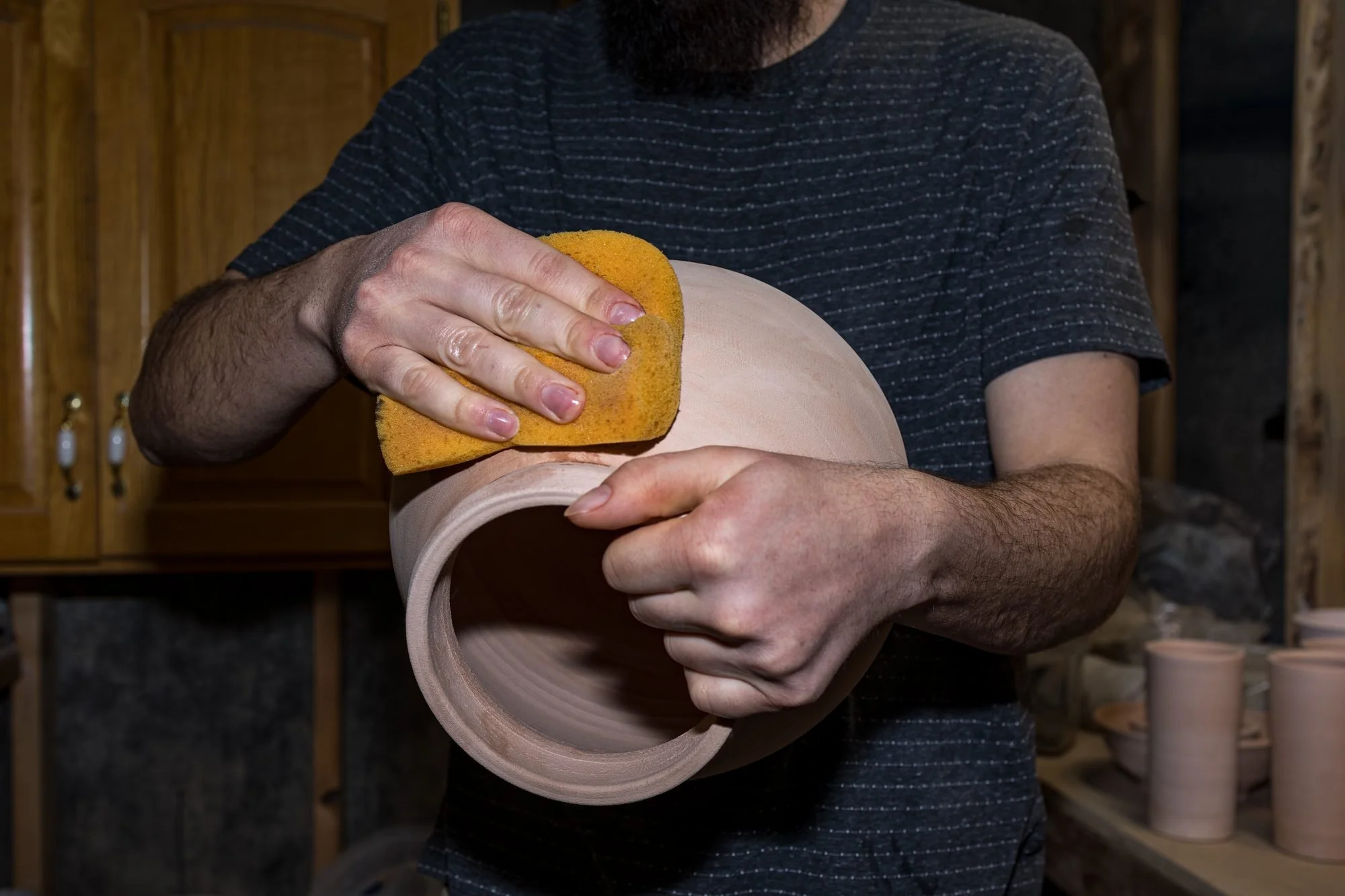
Crawling is when glaze pulls away from the clay during firing and leaves bare patches. Shivering is when glaze is squeezed so hard by the cooling clay that it flakes off at edges. Crawling is usually about application and drying. Shivering is chemistry.
- Clean bisque, even application and measured thickness prevent most crawling
- Shivering comes from glaze expansion that is too low for the clay body
- Test glaze fit before production, because cone 10 makes small mismatches obvious
Two problems, one root
Most glaze defects get dismissed as part of the craft. Crawling and shivering are not random. They are different problems, but both come down to fit and surface behavior.
Crawling: glaze pulling away
Crawling happens when glaze pulls away from the clay body during firing and leaves bare patches. You see exposed clay where the glaze receded into islands. It usually happens for one of three reasons.
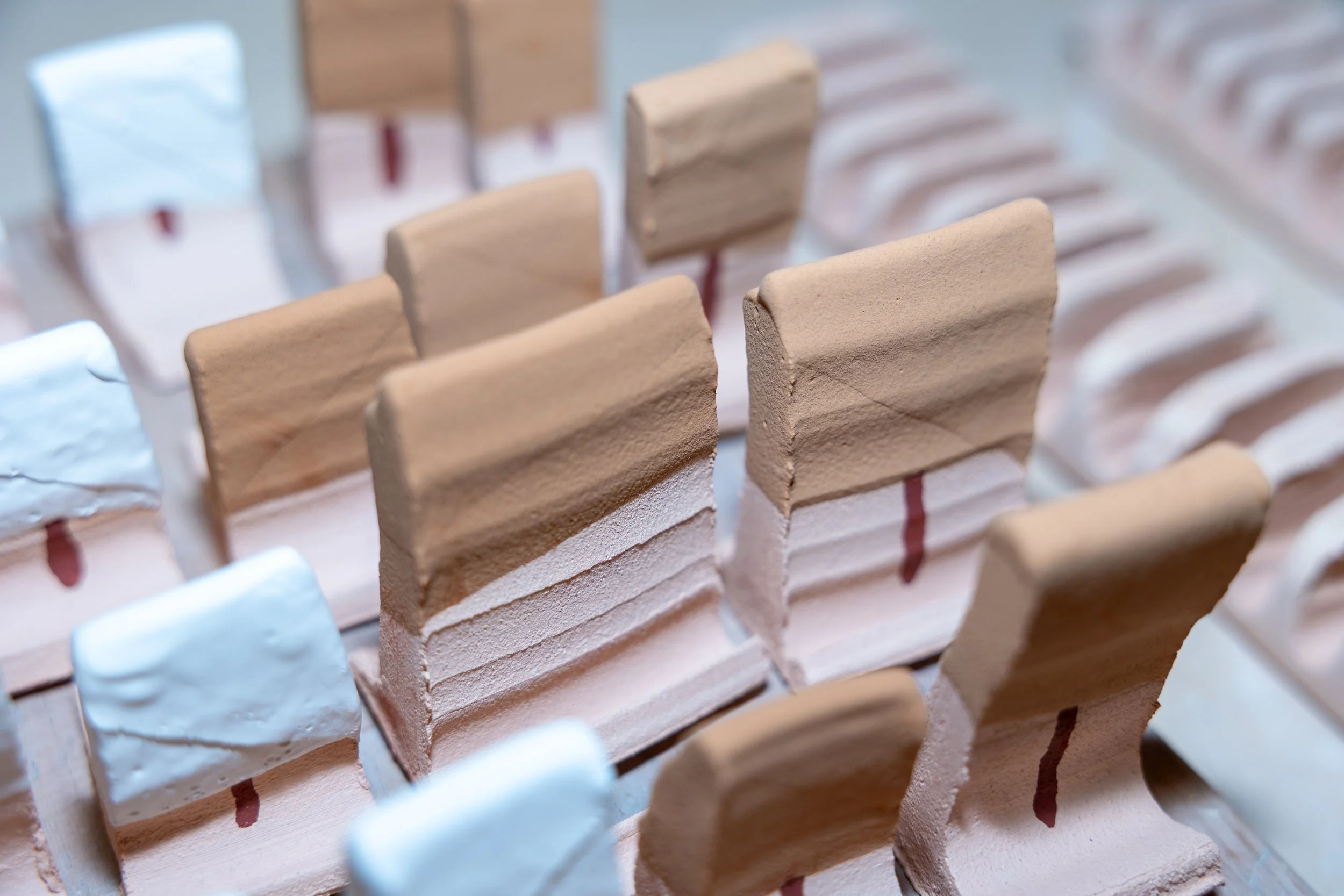
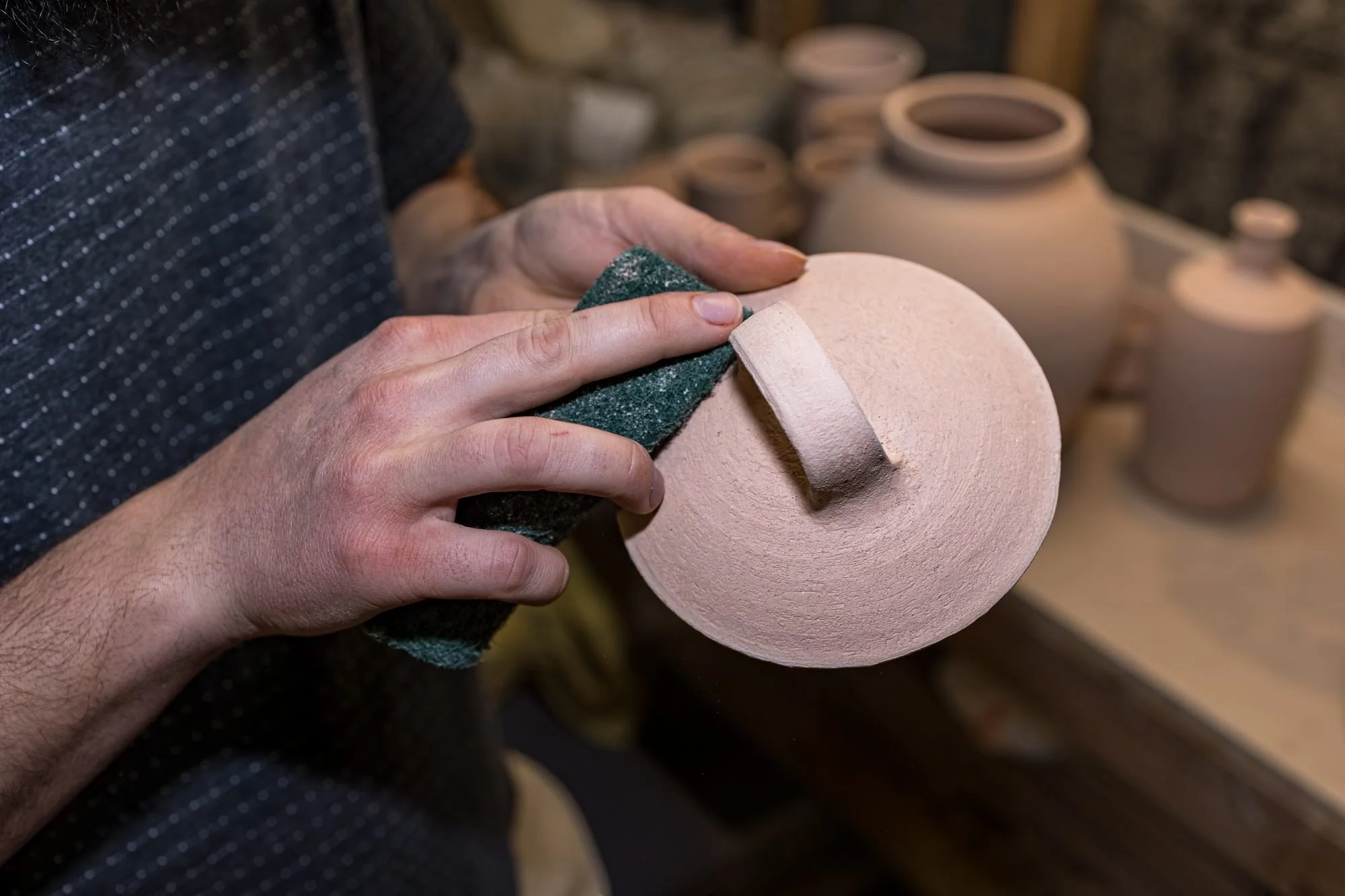
Poor adhesion before firing. If the bisque surface is dusty, oily or overly smooth, the glaze slurry may not bond well as it dries. As the glaze shrinks while drying, it can pull tight and lift slightly. When the kiln heats up and the glaze starts to melt, those weak areas separate completely.
Shrinkage mismatch. Glazes shrink as they dry. A glaze with high clay content can shrink a lot before it ever reaches the kiln. If it shrinks more than the surface beneath can tolerate, tension builds and can cause tiny lifting before the piece reaches maturity.
Thickness. Thicker layers crawl more easily. More material means more shrinkage and more internal stress. If you are not measuring specific gravity and dip time, crawling can look mysterious when it is really just too much glaze.
Shivering: glaze under too much pressure
Shivering is more serious. Instead of pulling away during firing, the glaze fits too tightly after cooling. The clay body contracts more than the glaze as it cools from peak temperature, and that compression forces the glaze to pop off at edges, usually along rims or foot rings. You see small flakes of glaze breaking away. That is not aesthetic variation. That is structural failure.
It comes down to thermal expansion. Every clay body and glaze has a coefficient of expansion. If the glaze expansion is too low compared with the clay, the glaze ends up in compression. A little compression is stable, but too much creates stress that releases at the edges.
How to prevent each
For crawling:
- Clean bisque surfaces
- Avoid over thick application
- Let glaze dry evenly before firing
- Adjust clay content in the glaze if needed
For shivering:
- Adjust glaze expansion, often by increasing silica or changing the flux balance
- Round sharp edges slightly, since sharp rims concentrate stress
- Test glaze fit before running production
High fire makes fit more critical. At cone 10 the clay vitrifies fully, the glaze melts completely, and everything tightens. Small mismatches become obvious. I do not treat crawling as character, and I do not treat shivering as acceptable risk. If a glaze does not fit the clay body properly, it does not move forward.
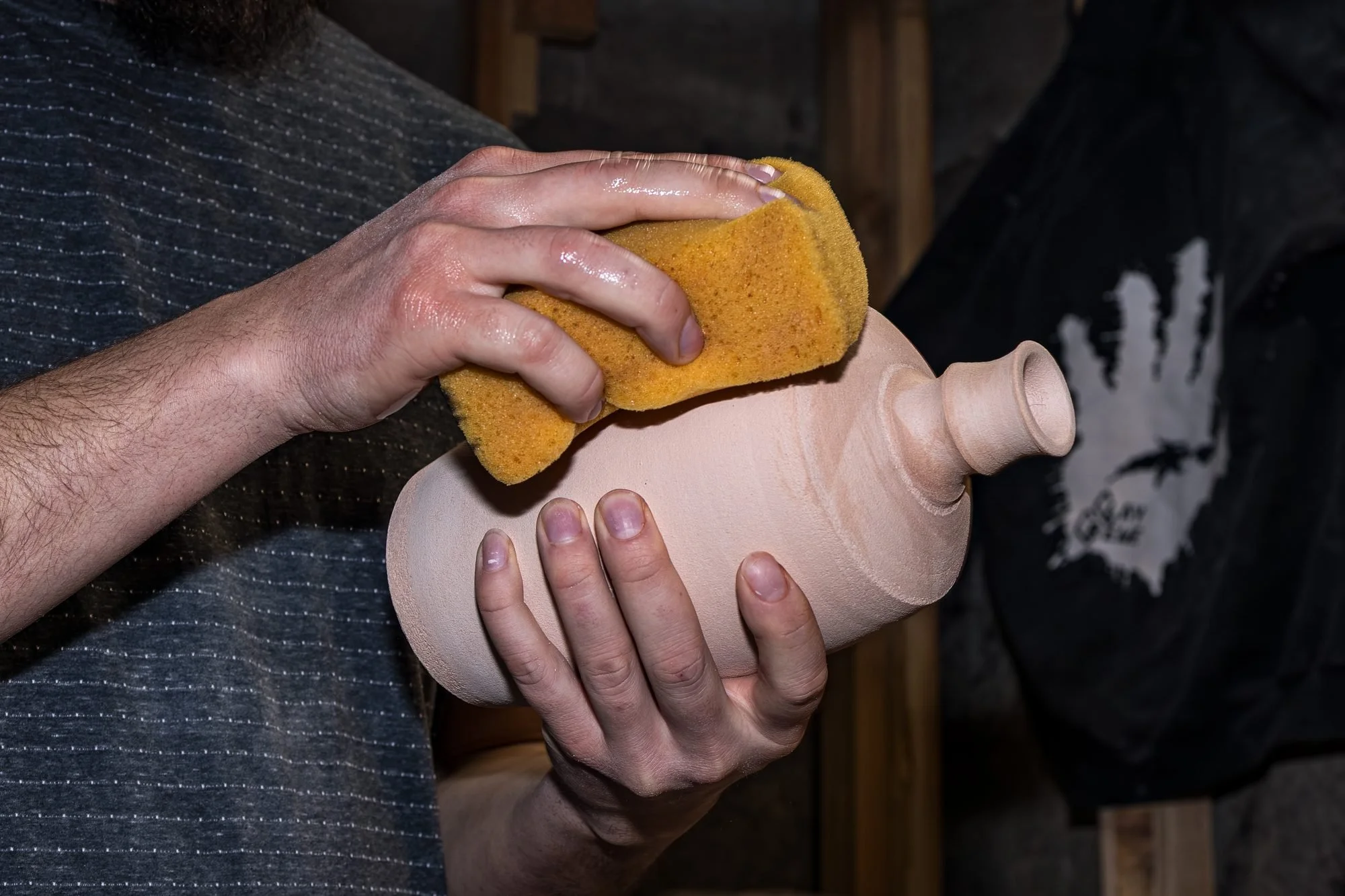
Wipe every bisque piece with a damp sponge and let it dry before glazing, and handle it by the foot from then on. Oil from your fingers is invisible until the glaze crawls away from it.
Further reading: Digitalfire's reference pages on glaze crawling, glaze shivering.
Glaze chemistry is not decoration. It is structure, and that is the standard behind every piece I sell.
Part of my guide to common glaze problems and how to fix them. Also in the series: Why your glaze is pinholing · How to test for crazing and shivering.
