Why do pots crack after firing? The causes I see most
Five kinds of crack, where each one starts, and which ones were decided long before the kiln was lit.
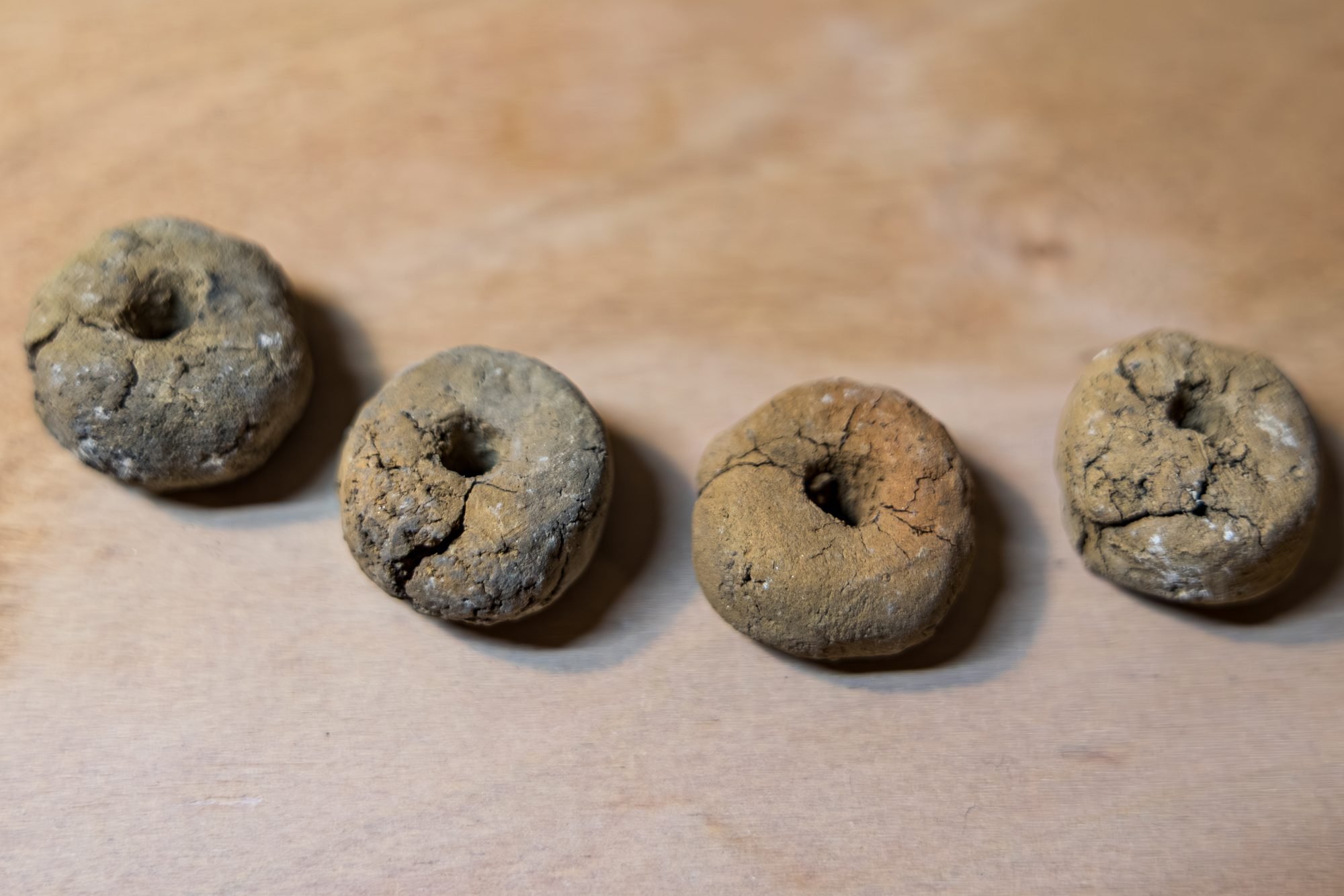
Most pots that crack after firing were already going to crack before they went in. Uneven drying, a base that was never compressed, a handle attached wetter than the mug it joined: the kiln only finishes what the making started. The real exception is a dunt, a cooling crack that genuinely happens inside the kiln.
- An S shaped crack in the base means the floor was left loose, or dried slower than the walls
- A crack at a handle or a rim comes from two pieces of clay shrinking at different rates
- A clean, sharp crack with glaze that runs right up to the edge usually opened on the way down, not the way up
When I open a kiln here in Logan and find a crack, the first thing I do is not curse. The second thing is to look at the shape of it. A crack is a record. It tells you where the stress was, and stress in clay almost always comes from one part of a pot shrinking while another part could not.
That is the whole subject, really. Clay shrinks as it dries and shrinks again as it fires. Anything that makes one region shrink at a different time or a different amount than its neighbor puts a tear in the material. The kiln makes that tear visible. It rarely invents it.
Read the crack before you blame the kiln
Where is it, and what does the edge look like? Those two questions sort out most of the cases. A crack that runs through the base in a lazy curve is one thing. A hairline at the top of a handle is another. A crack whose edges are coated in glaze was open before the glaze melted, so it existed at least by the bisque. A crack whose edges are raw, sharp clay with glaze stopping at the lip happened after the glaze had already set, which means on the way down in temperature.
Tap the pot too. A sound pot rings. A cracked one gives a dull note, even when the crack is too fine to see. I check anything I am unsure about this way before it goes to the shelf, because a pot that fails in someone's kitchen is a worse outcome than one that fails on my bench. I wrote about that kind of cost in what failure has actually cost me.
The S crack in the base
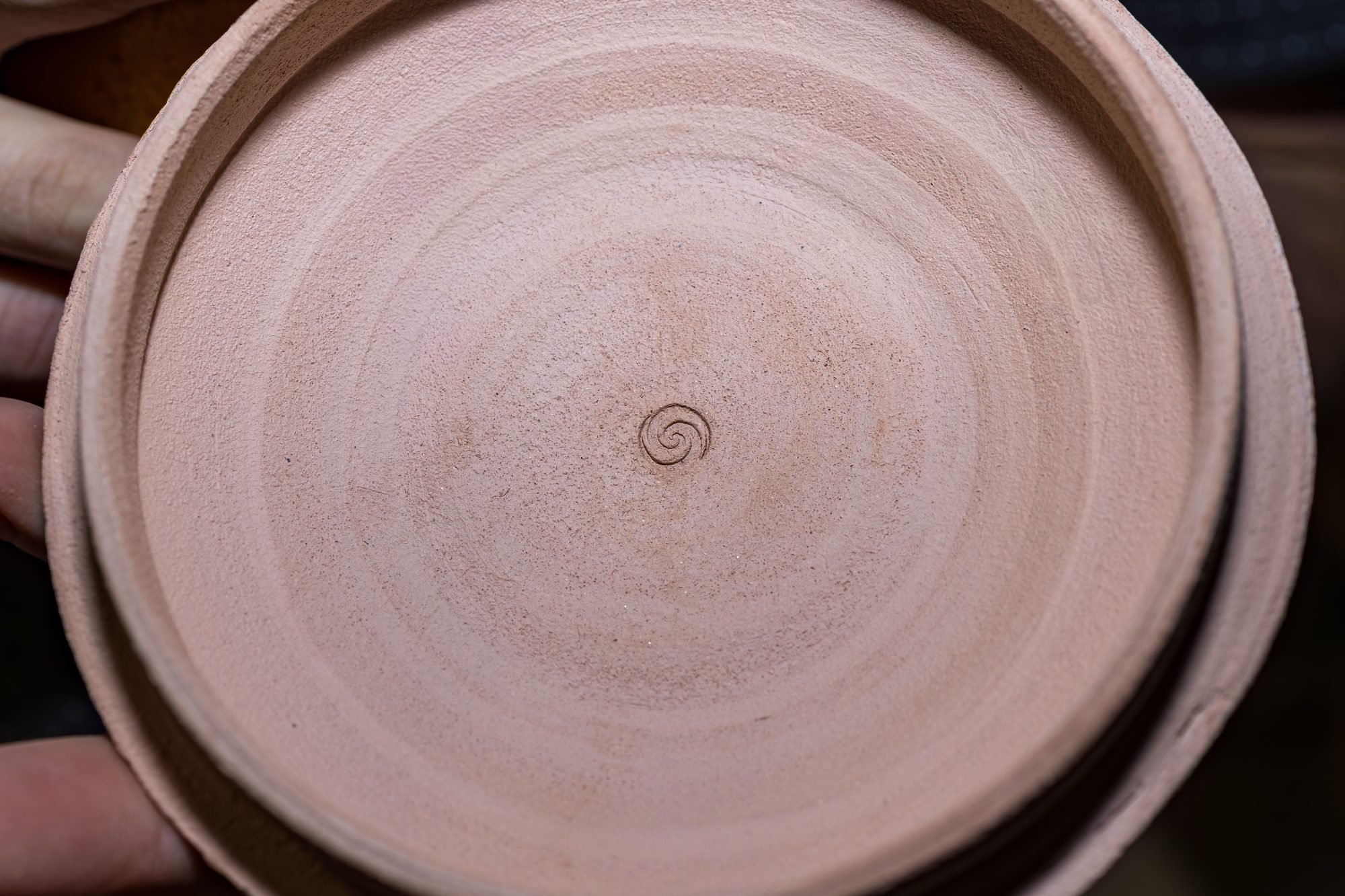
This is the one beginners meet first. It shows up on the inside floor of a bowl or mug as a curve, sometimes a full S, sometimes just a hook. The cause is on the wheel: the clay in the floor was opened but never pushed back down and tightened. Loose clay holds more water and shrinks more, so as the pot dries the floor pulls away from itself.
Drying makes it worse. A pot sitting flat on a board dries from the rim downward, and the base, sealed against the wood, stays wet longest. The walls have finished shrinking while the floor is still trying to. Something has to give, and it gives in the middle.
Rim cracks and thin edges
Rims are the thinnest part of most pots, so they dry first and shrink first. If the rest of the pot is still soft, the rim is trying to get smaller around a body that will not let it. You get a short vertical crack down from the lip, often in more than one place around the circumference.
Uneven walls do the same thing sideways. A pot with one thick side and one thin side will shrink lopsided, and the crack finds the weakest spot, which is usually the rim. A draft across the drying shelf, or a pot left near a heater with one side facing it, gets you the same result for the same reason.
Handles and any other join
A handle is a separate piece of clay with its own moisture content, stuck onto a mug with a different one. If the handle is wetter than the mug, it shrinks more after attaching and pulls away at the top or bottom of the join. If it is drier, the mug shrinks around it and the crack opens on the body beside the handle instead.
The fix is boring: pull handles and let them stiffen to about the same feel as the mug walls, score and slip the join properly, and then dry the finished mug slowly, under plastic for the first day or two so the join has time to equalize. A join that cracks in the bisque can sometimes be caught. A join that cracks in the glaze firing is a lost mug. I wrote about the pots you'll never see, and in most studios handle joins are a large share of that pile.
Dunting: the crack the kiln really causes
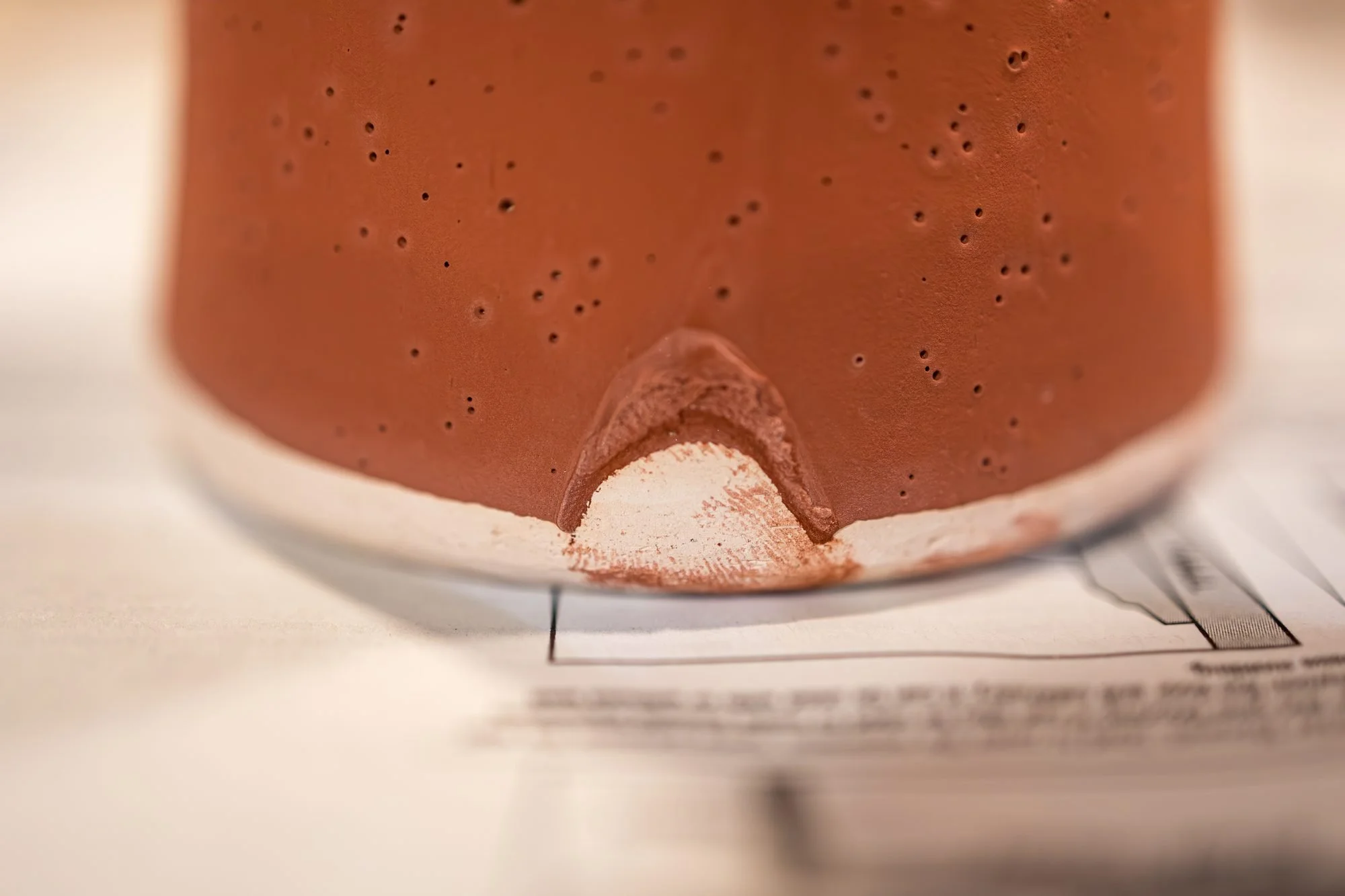
Everything above happened before the firing and was revealed by it. A dunt is different. It is a crack that opens as the pot cools, and it is usually clean, sharp, and long, often running from the rim straight down or around the belly in a ring. The glaze runs right to the edge of it with no rounding, because the glaze was already solid when the clay tore.
Two things cause it. The first is cooling too fast through the temperature ranges where silica in the clay body changes its crystal structure and changes size. Cracking the kiln door open early, or pulling pots while they are still too hot to hold, is the classic way to do it. The second is a glaze that fits the clay badly, so that as both cool, the glaze squeezes or stretches the body until it fails. Thick, even walls and a slow cool are the defense. So is a body and glaze that were made for each other, which matters even more at cone 10, where I fire.
Dunting also shows up later, in the kitchen. A pot that survived the kiln with a stressed glaze can still let go when it goes from a cold counter into hot water. That is one of the reasons I run my own pots through the dishwasher instead of babying them, and why I put is handmade pottery durable into words for buyers.
Wild clay is its own category
Wild clay cracks for all of the reasons above and then for a few of its own: uneven particle size, lumps of limestone or organic matter that expand or burn out, and shrinkage rates that no one ever measured because no one ever dug it before. The test rings at the top of this post are how I find out before a full pot does. I keep a running list of what I am learning in common problems with Utah wild clay, and a whole post on why wild clay cracks is coming, so I will leave it there.
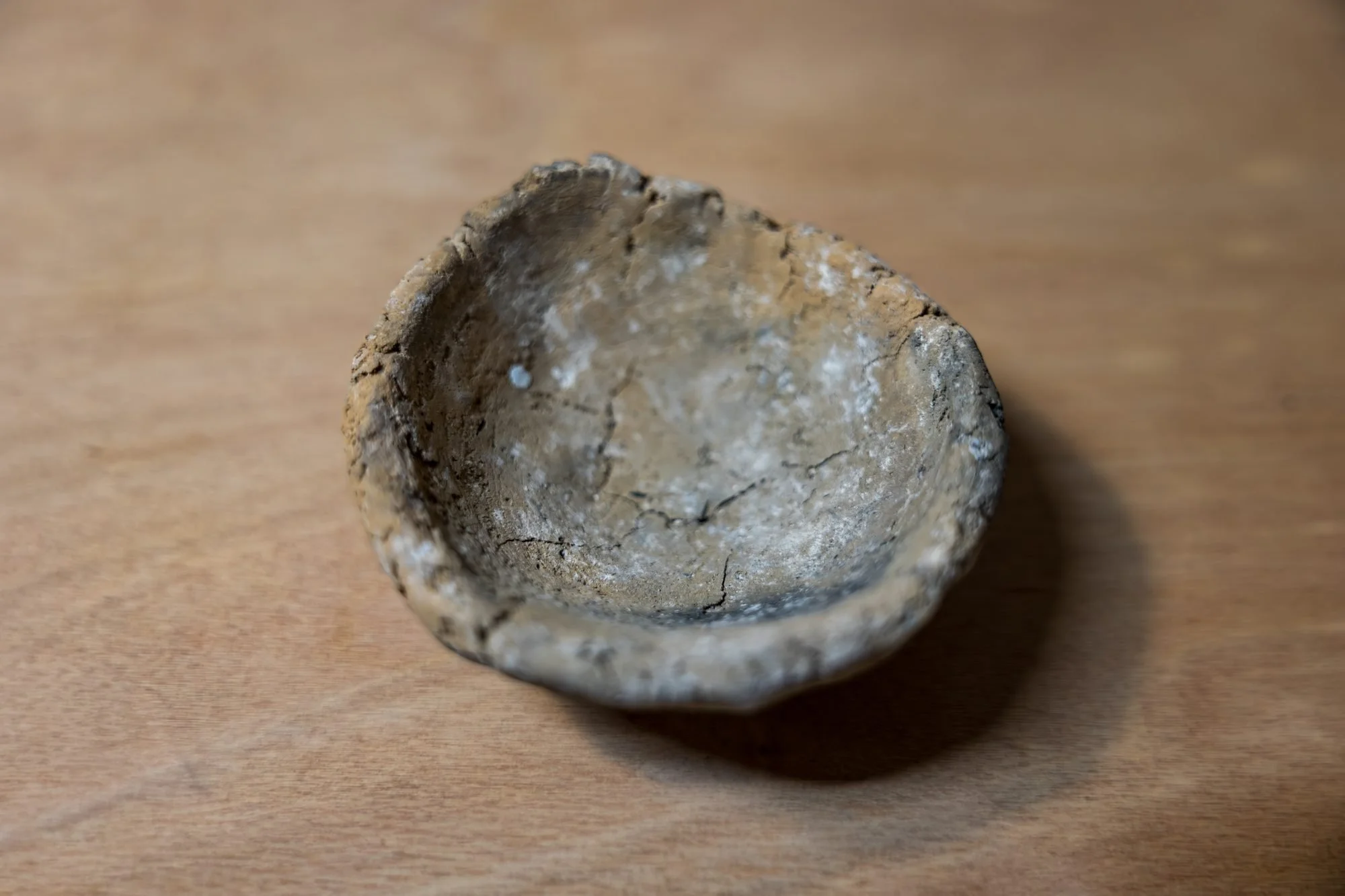
Once a thrown pot is stiff enough to handle, flip it upside down to finish drying. The base gets air, the rim is protected against the board, and the whole pot shrinks closer to the same speed. If you can only fix one drying habit, fix that one. It removes most S cracks and a fair number of rim cracks without changing anything else about how you throw.
A crack is bad news, but it is also the most honest note a pot will ever leave you. Read it before you throw it out.
